
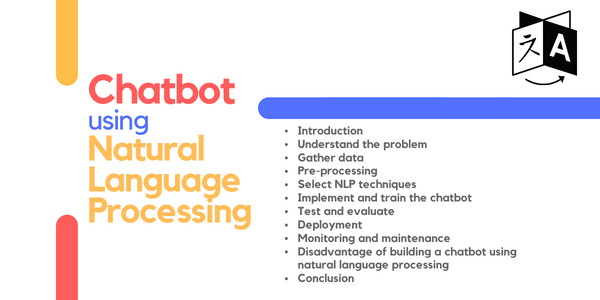
How to Build a Chatbot Using Natural Language Processing and Machine Learning: A Comprehensive Guide
Are you looking to create an intelligent, responsive conversational agent that can revolutionize customer service, streamline internal operations, or enhance user engagement? Delving into how to build a chatbot using Natural Language Processing (NLP) and Machine Learning (ML) is the definitive path to achieving this. This comprehensive guide will equip you with the expert knowledge and actionable steps required to develop a sophisticated conversational AI that truly understands and responds to human language. Unlock the power of artificial intelligence to craft a virtual assistant capable of handling complex queries, automating tasks, and providing seamless user experiences. We’ll explore the core concepts, essential tools, and best practices for developing a robust, ML-powered bot from the ground up.
Understanding the Core Components: NLP and Machine Learning
At the heart of any truly intelligent chatbot lies a sophisticated interplay between Natural Language Processing and Machine Learning. These two disciplines are not merely complementary; they are fundamentally intertwined in enabling a chatbot to interpret, understand, and generate human-like text.
What is Natural Language Processing (NLP)?
Natural Language Processing (NLP) is a subfield of artificial intelligence focused on enabling computers to understand, interpret, and generate human language in a valuable way. For chatbots, NLP is the foundational layer that allows them to make sense of user input. Key NLP techniques include:
- Tokenization: Breaking down text into smaller units (words, phrases).
- Part-of-Speech Tagging: Identifying the grammatical role of each word (noun, verb, adjective).
- Lemmatization/Stemming: Reducing words to their base or root form to handle variations.
- Named Entity Recognition (NER): Identifying and classifying key entities in text, such as names of people, organizations, locations, dates, or product names. This is crucial for extracting specific information from user queries.
- Intent Recognition: Determining the user's underlying goal or purpose behind their utterance. For instance, "I want to book a flight" would map to a "BookFlight" intent.
Without robust NLP capabilities, a chatbot would merely be a keyword matcher, unable to grasp the nuances, context, or true meaning behind a user's request. It’s the brain that processes the language.
The Role of Machine Learning in Chatbots
While NLP provides the tools for language understanding, Machine Learning (ML) provides the intelligence that allows the chatbot to learn from data, improve its performance over time, and make predictions or decisions based on patterns. ML algorithms are trained on vast datasets of conversations to identify patterns that link user inputs to specific intents and responses. This training process is what transforms raw data into actionable intelligence. Common ML paradigms employed include:
- Supervised Learning: This is the most common approach for intent recognition and entity extraction. You provide the model with labeled data (e.g., user utterances paired with their correct intent and extracted entities), and it learns to map new inputs to these labels.
- Unsupervised Learning: Used for tasks like clustering similar user queries or discovering hidden patterns in conversational data, often to improve dialogue management or identify common user pain points.
- Reinforcement Learning: Though less common in basic chatbots, it can be used for more complex conversational AI systems where the bot learns optimal conversational strategies through trial and error, based on rewards for successful interactions.
The synergy between NLP and ML is what creates a truly adaptive and intelligent AI model. NLP processes the raw text, and ML uses that processed information to make intelligent decisions about how to respond.
Why Combine NLP and ML for Chatbots?
Combining NLP and ML allows for the creation of highly dynamic and intelligent chatbots that go far beyond simple rule-based systems. A rule-based bot can only respond to pre-programmed phrases, leading to frustrating dead ends for users. An NLP and ML-powered chatbot, however, can:
- Understand variations: It can interpret different ways users might express the same intent (e.g., "I need a ticket," "Book me a flight," "Can I fly to Paris?").
- Handle ambiguity: By leveraging context and statistical models, it can often clarify ambiguous queries.
- Learn and improve: As it interacts with more users and is retrained on new data, its understanding and response accuracy continuously improve. This iterative refinement is key to long-term success.
- Scale effectively: Rather than manually adding rules for every possible permutation of a query, ML models generalize from data, making them much more scalable for complex applications.
This powerful combination is what enables modern virtual assistants and intelligent agents to provide genuinely helpful and intuitive interactions.
The Step-by-Step Process to Building Your Chatbot
Building an NLP and ML-driven chatbot is an iterative process that requires careful planning, robust data management, and continuous optimization. Here’s a detailed breakdown of the essential steps:
Step 1: Define Your Chatbot's Purpose and Scope
Before writing a single line of code, clearly define what your chatbot will do. What problem will it solve? Who is its target audience? What are its primary functions? Examples include customer support (answering FAQs, tracking orders), lead generation (qualifying prospects), internal HR assistance (policy lookups), or personal productivity. A well-defined scope prevents feature creep and ensures your chatbot delivers tangible value. Consider the specific use cases and user scenarios it will handle. This initial clarity is paramount for successful chatbot development.
Step 2: Data Collection and Preparation
This is arguably the most critical step for an ML-powered chatbot. The quality and quantity of your training data directly impact your bot's performance. You'll need:
- User Utterances: A diverse collection of phrases and sentences that users might say when interacting with your bot. These can come from existing chat logs, customer service transcripts, or brainstorming sessions.
- Intent Labels: For each utterance, you must manually label the corresponding intent (e.g., "Hi" -> "Greeting"; "What's my order status?" -> "CheckOrderStatus").
- Entity Annotations: Within utterances, identify and label specific pieces of information (entities) that your bot needs to extract (e.g., "I want to fly to London" where "London" is a "destination" entity).
Data cleaning, normalization, and augmentation (creating variations of existing data) are essential to build a robust dataset. Tools like data annotation platforms can significantly streamline this process.
Step 3: Designing the Conversational Flow and Architecture
Map out the conversational paths your chatbot will take. This involves:
- User Journey Mapping: Visualize how users will interact with the bot from start to finish for various tasks.
- Dialogue States: Define the different states the conversation can be in (e.g., "awaiting destination," "confirming order").
- Response Strategy: Determine how the bot will respond in different scenarios, including handling unexpected inputs or clarifying ambiguous queries.
A well-structured conversational flow ensures a smooth and intuitive user experience, preventing the bot from getting "stuck" or providing irrelevant responses. Consider creating flowcharts or state diagrams to visualize these interactions.
Step 4: Implementing NLP for Intent Recognition and Entity Extraction
This is where the magic of language understanding happens. You will use NLP libraries and frameworks to build models that perform:
- Intent Classification: Training a model (often a text classifier) to categorize user input into predefined intents. Popular choices include deep learning models like Recurrent Neural Networks (RNNs) or Transformer-based models (e.g., BERT, GPT).
- Entity Extraction (NER): Training a sequence labeling model to identify and extract specific data points from the user's utterance.
Frameworks like Rasa, Google Dialogflow, Microsoft Bot Framework, or open-source libraries like NLTK, spaCy, and Hugging Face Transformers provide robust tools for these tasks. The choice depends on your technical expertise, scalability needs, and desired level of customization.
Step 5: Choosing and Training Machine Learning Models
Once your data is prepared and NLP components are understood, you select and train the appropriate ML models. For intent recognition, common choices range from traditional algorithms like Support Vector Machines (SVMs) and Naive Bayes for simpler cases, to sophisticated deep learning architectures for more nuanced understanding. For entity extraction, Conditional Random Fields (CRFs) or more advanced neural networks are frequently used. The training process involves:
- Feature Engineering: Converting raw text into numerical features that ML models can understand (e.g., TF-IDF, word embeddings like Word2Vec or FastText).
- Model Selection: Choosing the right algorithm based on your data size, complexity, and computational resources.
- Training: Feeding your labeled dataset to the chosen ML algorithm.
- Evaluation: Testing the model's performance using metrics like accuracy, precision, recall, and F1-score on a separate validation dataset. Iteratively refine the model and its parameters until satisfactory performance is achieved.
This iterative process of training and evaluating models is central to building a highly accurate AI chatbot.
Step 6: Building the Dialogue Management System
The dialogue management system is the brain that orchestrates the conversation. It determines the next action based on the identified intent, extracted entities, and the current conversational context. This can range from simple rule-based state machines for straightforward interactions to complex reinforcement learning models for highly dynamic, context-aware conversations. Key aspects include:
- Context Tracking: Maintaining memory of previous turns in the conversation.
- Response Generation: Selecting or generating the appropriate response based on the dialogue state.
- Disambiguation: Asking clarifying questions when user input is ambiguous.
- Error Handling: Gracefully managing situations where the bot doesn't understand the user.
Frameworks like Rasa provide sophisticated dialogue management capabilities, allowing developers to define stories (example conversations) that the bot learns from.
Step 7: Integration and Deployment
Once your chatbot's core logic is developed, you need to integrate it with user-facing platforms. This typically involves:
- API Development: Exposing your chatbot's functionalities via a REST API.
- Platform Integration: Connecting your bot to popular messaging channels (e.g., WhatsApp, Facebook Messenger, Slack), websites, or mobile applications. Many frameworks offer connectors for these platforms.
- Hosting: Deploying your chatbot on cloud platforms (AWS, Google Cloud, Azure) or on-premise servers, ensuring it's always available and scalable.
Consider the infrastructure requirements and potential traffic when planning deployment. Ensuring robust security measures is also paramount, especially when handling sensitive user data.
Step 8: Testing, Iteration, and Continuous Improvement
Building a chatbot is not a one-time project; it's an ongoing process. Thorough testing is crucial before launch, including unit tests, integration tests, and user acceptance testing (UAT). After deployment, monitor your chatbot's performance closely:
- User Feedback: Collect direct feedback from users to identify pain points and areas for improvement.
- Conversation Logs Analysis: Analyze actual conversation logs to identify common misunderstandings, unhandled queries, or areas where the bot provides suboptimal responses.
- Model Retraining: Use new data gathered from live interactions to retrain and improve your NLP and ML models periodically. This continuous learning loop is vital for keeping your chatbot effective and relevant.
Embrace an agile development approach, releasing updates and improvements regularly based on performance metrics and user feedback.
Advanced Considerations for Robust Chatbot Development
Beyond the fundamental steps, several advanced considerations can significantly enhance your chatbot's capabilities and user satisfaction.
Handling Ambiguity and Out-of-Scope Queries
No chatbot can understand everything. Intelligent chatbots are designed to gracefully handle situations where they don't understand the user's intent or when the query falls outside their defined scope. This might involve:
- Confidence Scores: Using a threshold for intent recognition. If the confidence score is too low, the bot can ask clarifying questions or escalate to a human agent.
- Fallback Responses: Generic "I'm sorry, I don't understand" messages, often paired with suggestions for what the bot can do.
- Human Handoff: Seamlessly transferring the conversation to a human agent when the bot cannot resolve the query, ensuring a positive customer experience. This is a crucial element for enterprise-level chatbot development.
Personalization and Context Retention
A truly intelligent chatbot remembers past interactions and uses that information to personalize future responses. This involves:
- User Profiles: Storing user preferences, past purchases, or historical data.
- Session Management: Maintaining the context of the current conversation, so the user doesn't have to repeat information.
- Proactive Engagement: Using stored context to offer relevant information or suggestions without being prompted.
This level of personalization significantly enhances the user experience (UX) and makes interactions feel more natural and efficient.
Ethical AI and Bias Mitigation
As you delve into machine learning algorithms, it's crucial to be aware of potential biases in your training data. If your data reflects societal biases, your chatbot might inadvertently perpetuate them. Proactively address this by:
- Diversifying Training Data: Ensure your datasets represent a wide range of demographics and linguistic styles.
- Bias Detection Tools: Employ tools to identify and mitigate biases in your models.
- Fairness Metrics: Evaluate your models not just on accuracy, but also on fairness across different user groups.
Building an ethical AI is not just good practice; it's essential for user trust and responsible innovation.
Scalability and Performance Optimization
As your chatbot's user base grows, its underlying infrastructure must be able to handle increased load. This involves:
- Cloud Services: Leveraging scalable cloud computing resources (e.g., serverless functions, container orchestration).
- Efficient Models: Optimizing your NLP and ML models for faster inference times without sacrificing accuracy.
- Caching: Implementing caching mechanisms for frequently accessed data or responses.
Planning for scalability from the outset prevents performance bottlenecks and ensures a consistent user experience even during peak usage.
Actionable Tips for Successful Chatbot Implementation
- Start Small, Iterate Often: Begin with a narrow scope and specific use cases. Launch an MVP (Minimum Viable Product) and gather feedback to guide subsequent iterations.
- Prioritize User Experience (UX): Design conversations that are natural, intuitive, and efficient. Avoid jargon and provide clear options. A great UX is key to user adoption.
- Invest in Quality Training Data: This cannot be overstressed. Poor data leads to a poor chatbot. Dedicate significant resources to collecting, labeling, and cleaning your training datasets.
- Embrace Hybrid Models: Combine rule-based logic for predictable interactions (e.g., "Yes/No" questions, menu navigation) with ML for more complex, natural language understanding. This offers the best of both worlds.
- Monitor and Analyze Performance: Regularly review conversation logs, user feedback, and key performance indicators (KPIs) like resolution rate, user satisfaction, and human handoff rate. Use these insights to continuously improve.
- Consider Open-Source Frameworks: Tools like Rasa or Botpress offer extensive customization options and a vibrant community, allowing for greater control over your AI models and deployment.
- Plan for Human Handoff: For complex or sensitive queries, ensure there's a clear path to transfer the conversation to a human agent. A bot that knows its limits is more valuable than one that pretends to know everything.
Frequently Asked Questions
What is the difference between a rule-based chatbot and an NLP/ML chatbot?
A rule-based chatbot operates on predefined rules and keywords. It can only respond to exact phrases or patterns it has been explicitly programmed to recognize. If a user asks a question slightly differently, the bot might fail to understand. In contrast, an NLP/ML chatbot uses Natural Language Processing to understand the meaning, intent, and context of user input, even with variations in phrasing. It leverages Machine Learning models trained on data to learn patterns and make intelligent decisions, allowing for more natural, flexible, and scalable conversations. This makes the NLP/ML approach superior for complex conversational AI applications.
What programming languages are best for building AI chatbots?
Python is overwhelmingly the most popular and recommended programming language for building AI chatbots due to its extensive ecosystem of libraries and frameworks for NLP (NLTK, spaCy, Hugging Face Transformers) and Machine Learning (TensorFlow, PyTorch, Scikit-learn). Other languages like JavaScript (Node.js) are also used, especially for backend integration and web-based interfaces, but Python remains the go-to for the core AI and NLP components of chatbot development.
How much training data is required for an effective NLP chatbot?
The amount of training data required for an effective NLP chatbot varies significantly based on the complexity of its intended functions and the diversity of user inputs it needs to handle. For a basic chatbot with 5-10 intents, you might start with a few hundred to a thousand labeled utterances per intent. However, for a production-ready, highly accurate chatbot handling a wide range of complex queries, you could need tens of thousands to hundreds of thousands of labeled utterances. The key is not just quantity, but also the quality, diversity, and balanced representation of your training data to ensure robust performance across various scenarios.
Can a small business afford to build an NLP/ML chatbot?
Yes, a small business can absolutely afford to build an NLP/ML chatbot, especially with the proliferation of accessible tools and platforms. While custom development can be costly, platforms like Google Dialogflow, Microsoft Bot Framework, or open-source solutions like Rasa offer powerful capabilities at various price points, including free tiers for development and testing. These platforms abstract away much of the underlying complexity of NLP and ML, making chatbot development more feasible for businesses with limited technical resources. Focusing on a specific, high-value use case can also provide a significant return on investment.

0 Komentar