
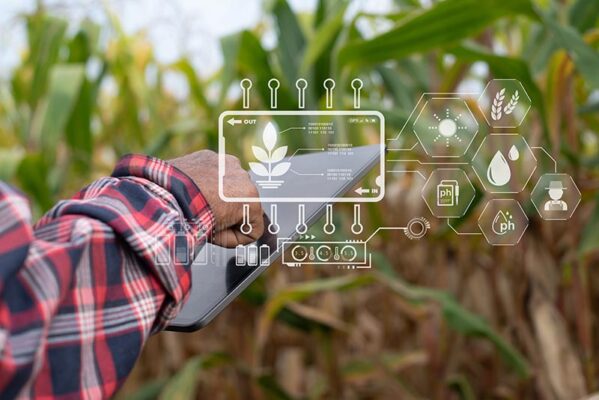
The Future is Now: Unlocking Smart Agriculture with 5G IoT Applications
The agricultural landscape is undergoing a revolutionary transformation, moving beyond traditional methods towards a data-driven, hyper-efficient future. At the forefront of this seismic shift are 5G IoT applications in smart agriculture, promising unprecedented levels of connectivity, precision, and automation. This comprehensive guide delves into how the convergence of ultra-fast 5G networks and the Internet of Things (IoT) is not just enhancing, but fundamentally redefining farming practices worldwide. Prepare to explore the cutting-edge technologies, tangible benefits, and practical implementations that are paving the way for a more sustainable, productive, and resilient food supply for our planet. We will uncover how real-time data, advanced sensors, and autonomous systems are empowering farmers to make smarter decisions, optimize resource use, and boost yields like never before, fundamentally reshaping the global food security landscape.
The Convergence: Why 5G and IoT are a Game-Changer for Agriculture
For decades, agriculture has sought ways to become more efficient, battling unpredictable weather, pests, and resource scarcity. While previous generations of technology introduced some automation, they often fell short in providing the seamless, real-time connectivity required for truly intelligent farming. This is where the synergy between 5G and IoT emerges as a pivotal advancement, addressing the critical limitations of older systems and unlocking the full potential of digital agriculture.
The Limitations of Traditional Farming and Current Connectivity
Traditional farming relies heavily on manual labor, historical data, and reactive decision-making. Even with the advent of basic sensors and GPS, data transmission has often been slow, unreliable, or limited by bandwidth. Wi-Fi and 4G networks, while useful, struggle with the sheer volume of data generated by thousands of sensors across vast fields, not to mention the latency issues that hinder truly autonomous operations. This has prevented widespread adoption of advanced agritech solutions that demand instant feedback and precise control over machinery and environmental factors.
How 5G's Capabilities Elevate IoT in Agri-tech
5G, the fifth generation of cellular technology, is not merely a faster version of 4G; it's a paradigm shift designed to support the massive scale and diverse requirements of IoT. Its core capabilities directly address the shortcomings faced by earlier agricultural technologies:
- Ultra-Low Latency: With response times as low as 1 millisecond, 5G enables near-instant communication between sensors, devices, and control systems. This is crucial for applications like autonomous tractors, real-time drone navigation, and immediate activation of irrigation systems based on sensor data. Predictive analytics become far more effective when data is fresh.
- Massive Connectivity: 5G can support up to a million devices per square kilometer, far exceeding previous generations. This means every single sensor in a vast field – from soil moisture probes to crop health monitors – can be connected simultaneously, providing an unprecedented density of data points without network congestion. This is vital for comprehensive farm automation.
- Enhanced Mobile Broadband (eMBB): High bandwidth allows for rapid transmission of large data files, such as high-resolution drone imagery, video feeds from livestock monitoring cameras, or detailed mapping data. This speed is essential for processing complex information quickly and efficiently.
- Network Slicing: 5G allows for the creation of dedicated virtual networks tailored to specific applications. For agriculture, this means critical applications like autonomous vehicle control can be guaranteed dedicated bandwidth and low latency, ensuring reliability and safety, even during peak network usage.
- Edge Computing Integration: 5G's architecture supports edge computing, where data processing happens closer to the source (e.g., on the farm itself) rather than in a distant cloud. This further reduces latency and minimizes the need to transmit massive amounts of raw data, making analysis faster and more efficient for smart sensors and devices.
These combined attributes make 5G the ideal backbone for a truly intelligent and interconnected agricultural ecosystem, propelling the vision of connected farms into a tangible reality. Explore how these innovations can transform your operations by considering these technological foundations.
Transformative 5G IoT Applications in Smart Agriculture
The practical implications of 5G-enabled IoT in agriculture are vast and revolutionary, touching every aspect of the farming lifecycle. From planting to harvest, and even post-harvest logistics, these applications are driving unparalleled efficiency and sustainability.
Precision Farming: Data-Driven Crop Management
Precision farming is perhaps the most impactful application of 5G IoT. It involves using data to make highly localized decisions about crop management, moving away from uniform treatment of entire fields. With 5G, thousands of sensors can collect real-time data on:
- Soil Conditions: Moisture levels, nutrient content (nitrogen, phosphorus, potassium), pH, and temperature are monitored continuously by buried sensors.
- Weather Patterns: Hyper-local weather stations provide immediate data on rainfall, humidity, wind speed, and temperature, enabling accurate short-term forecasts.
- Crop Health: Multispectral cameras on drones or ground robots identify early signs of stress, disease, or pest infestation, often before they are visible to the human eye.
This torrent of data, transmitted over 5G with minimal latency, feeds into AI-powered analytics platforms. Farmers receive actionable insights, allowing for variable rate application of water, fertilizers, and pesticides only where and when needed. This not only optimizes resource use but also significantly reduces waste and environmental impact. For instance, instead of broadly spraying an entire field, a drone might precisely target a small area identified with a specific fungal infection. Learn more about the components of a robust precision farming system.
Actionable Tip: Begin by implementing soil moisture sensors in key areas of your fields. Analyze the real-time data to understand water distribution and plant uptake, then gradually expand to include nutrient mapping and drone surveillance for comprehensive crop health monitoring.
Automated Irrigation and Water Conservation
Water is a precious resource, and agriculture accounts for a significant portion of global freshwater consumption. 5G IoT enables highly efficient, automated irrigation systems. Sensors placed strategically in fields monitor soil moisture and plant water requirements. This data is transmitted instantly via 5G to central control systems that can automatically activate or deactivate irrigation valves, delivering precise amounts of water only where and when necessary. This minimizes runoff, reduces evaporation, and conserves substantial amounts of water compared to traditional scheduled irrigation. Smart sprinklers can even adjust their spray patterns based on wind conditions and real-time plant needs.
Practical Advice: Integrate your automated irrigation system with local weather forecasts. If rain is predicted, the system can automatically delay or reduce irrigation cycles, preventing overwatering and further conserving resources.
Livestock Monitoring and Predictive Health
For livestock farming, 5G IoT solutions offer revolutionary improvements in animal welfare, health management, and productivity. Wearable sensors on individual animals can track vital signs (heart rate, temperature), activity levels, location, and even feeding patterns. This continuous flow of data, transmitted over 5G, allows farmers to:
- Detect Illness Early: Abnormal vital signs or changes in behavior can trigger immediate alerts, enabling prompt veterinary intervention and preventing widespread outbreaks.
- Monitor Breeding Cycles: Activity trackers can identify when animals are in heat, optimizing breeding success.
- Track Location and Prevent Theft: GPS-enabled tags provide real-time location data, crucial for large ranches or open grazing lands.
- Optimize Feeding: Sensors in feed troughs can monitor consumption patterns, allowing for customized feeding strategies based on individual animal needs.
This proactive approach improves animal health, reduces mortality rates, and enhances overall herd productivity, contributing to more efficient livestock tracking and management.
Drone-Based Surveillance and Crop Health Analysis
Drones equipped with high-resolution cameras (RGB, multispectral, thermal) are transforming how farmers survey their land. 5G connectivity enables these drones to transmit vast amounts of data in real-time to cloud platforms or edge devices for immediate analysis. Applications include:
- Pest and Disease Detection: Identifying localized infestations or disease outbreaks by analyzing changes in crop color or temperature signatures.
- Nutrient Deficiency Mapping: Pinpointing areas where crops are lacking essential nutrients, allowing for targeted fertilization.
- Yield Prediction: Estimating harvest yields based on plant health and growth patterns.
- Field Mapping and Planning: Creating highly accurate 3D maps of fields for optimized planting and machinery routes.
The low latency of 5G also enables more precise drone navigation and even autonomous spraying or seeding operations, significantly reducing manual labor and improving application accuracy. This is a critical component of modern agri-robotics.
Smart Greenhouses and Controlled Environment Agriculture (CEA)
In controlled environments like greenhouses or vertical farms, 5G IoT takes automation to another level. Sensors monitor every environmental parameter: temperature, humidity, CO2 levels, light intensity, and nutrient solution composition. 5G facilitates instantaneous adjustments to these parameters through automated systems, ensuring optimal growing conditions 24/7. This level of precision maximizes yield, minimizes resource consumption (especially water and energy), and allows for year-round cultivation regardless of external climate. Hydroponics and aeroponics benefit immensely from this real-time control, showcasing superior resource efficiency.
Supply Chain Optimization and Traceability
Beyond the farm gate, 5G IoT enhances the entire agricultural supply chain. Sensors embedded in produce containers or transportation vehicles can monitor temperature, humidity, and vibration, ensuring optimal conditions during transit. Real-time tracking provides complete visibility of goods from farm to fork, improving logistics, reducing spoilage, and enhancing food safety and consumer trust. Blockchain technology can be integrated with 5G IoT data to create immutable records, providing unparalleled traceability and transparency for consumers demanding to know the origin and journey of their food.
Tangible Benefits: The Impact of 5G IoT on Agricultural Productivity and Sustainability
The adoption of 5G IoT applications in smart agriculture is not just about adopting new gadgets; it's about fundamentally transforming the economic and environmental viability of farming operations. The benefits are far-reaching and impactful:
Enhancing Operational Efficiency and Resource Management
By automating tasks, providing real-time data, and enabling remote management, 5G IoT significantly boosts operational efficiency. Farmers can monitor multiple fields or livestock herds from a single device, reducing the need for constant physical presence. This leads to substantial reductions in labor costs and optimizes the use of expensive machinery. Precision application of inputs (water, fertilizer, pesticides) means less waste, directly translating into cost savings and higher returns on investment. The ability to react instantly to changing conditions minimizes losses from pests, diseases, or adverse weather, ensuring more predictable and stable yields. This is the essence of operational efficiency in modern farming.
Boosting Yields and Crop Quality
With precise data on soil health, plant needs, and environmental conditions, farmers can tailor their interventions to maximize plant growth and health. This results in higher crop yields per acre and improved quality of produce. For example, by optimizing irrigation and nutrient delivery, fruits and vegetables can grow larger, healthier, and with better taste profiles, commanding higher market prices. The proactive identification and treatment of issues prevent minor problems from escalating into significant crop losses, directly contributing to overall agricultural productivity.
Promoting Environmental Sustainability
Perhaps one of the most critical long-term benefits of 5G IoT in agriculture is its contribution to environmental sustainability. By enabling precision application, farmers can:
- Conserve Water: Targeted irrigation dramatically reduces water consumption, a crucial step in areas facing water scarcity.
- Reduce Chemical Runoff: Applying fertilizers and pesticides only where needed minimizes chemical runoff into waterways, protecting ecosystems and biodiversity.
- Lower Carbon Footprint: Optimized machinery routes, reduced fuel consumption, and efficient resource use contribute to a lower carbon footprint for agricultural operations.
- Enhance Biodiversity: Healthier soil and reduced chemical use can support greater biodiversity within and around farmlands.
These sustainable practices are not just good for the planet; they also align with growing consumer demand for environmentally responsible food production and contribute to long-term food security.
Navigating the Future: Challenges and Opportunities for 5G IoT Adoption
While the promise of 5G IoT in smart agriculture is immense, its widespread adoption faces several hurdles that need to be addressed. Understanding these challenges is key to developing effective strategies for implementation.
Addressing Infrastructure Gaps and Connectivity
The most significant challenge is the deployment of 5G infrastructure in rural and remote agricultural areas. While urban centers are seeing rapid 5G rollout, farms often lie far from existing cellular towers. Expanding this network requires substantial investment from telecommunication companies and potentially government support. Ensuring reliable and affordable 5G coverage across vast agricultural lands is paramount for the success of these applications. This includes considering alternative solutions like satellite broadband in ultra-remote areas, or private 5G networks on large farms.
Data Security, Privacy, and Interoperability
Connected farms generate enormous amounts of sensitive data, from crop yields and soil conditions to livestock health and financial information. Ensuring the security and privacy of this data is critical to prevent cyber threats, data breaches, and unauthorized access. Farmers need assurances that their data is protected and that they retain ownership and control over it. Furthermore, interoperability between different IoT devices, software platforms, and agricultural machinery from various manufacturers remains a challenge. Standardized protocols are necessary to ensure seamless communication and data exchange across diverse systems.
Bridging the Digital Divide: Training and Adoption
Despite the technological advancements, the human element remains crucial. Many farmers, particularly those in traditional settings, may lack the technical expertise or comfort level with complex digital systems. Bridging this digital divide requires accessible training programs, user-friendly interfaces, and ongoing support. Demonstrating the clear return on investment (ROI) and practical benefits of 5G IoT solutions is essential to encourage adoption and overcome initial skepticism. Government incentives, subsidies, and pilot programs can play a vital role in accelerating this transition.
Actionable Tip: For farmers considering adoption, start with pilot programs on a smaller scale. Work with agricultural tech providers who offer comprehensive training and support. Focus on one or two key areas where 5G IoT can deliver immediate, measurable benefits, such as automated irrigation or targeted fertilization, before expanding your farm automation efforts.
Frequently Asked Questions
How does 5G improve upon previous wireless technologies for IoT in agriculture?
5G significantly improves upon 4G and Wi-Fi for agricultural IoT through three key enhancements: ultra-low latency (near-instantaneous communication crucial for autonomous machinery and real-time control), massive connectivity (supporting millions of devices per square kilometer for dense sensor networks), and enhanced mobile broadband (high speeds for transmitting large data files like drone imagery). These capabilities enable a level of precision, automation, and data density previously unattainable, transforming traditional farming into digital agriculture.
What are the initial investment considerations for implementing 5G IoT in farming?
Initial investment for 5G IoT in farming involves several factors: the cost of 5G-compatible IoT sensors and devices (e.g., soil sensors, animal wearables, drone systems), the cost of specialized agricultural machinery or retrofits, software platforms for data analytics and management, and potentially the cost of establishing or accessing 5G network infrastructure in rural areas. While the upfront costs can be substantial, the long-term benefits in terms of increased yields, reduced resource consumption, and improved operational efficiency typically offer a strong return on investment, making it a worthwhile strategic decision for agritech advancement.
Can small farms benefit from 5G IoT applications, or is it only for large-scale operations?
While large-scale operations might see immediate and significant returns due to their size, small farms can absolutely benefit from 5G IoT applications. Many solutions are scalable and can be implemented incrementally. For instance, a small farm could start with a few soil moisture sensors and an automated irrigation system, or adopt targeted drone-based crop health monitoring. The principles of precision, resource efficiency, and data-driven decision-making apply universally, helping small farms optimize their limited resources, improve yields, and compete more effectively. The modular nature of many IoT systems allows for tailored adoption to specific needs and budgets, fostering agricultural innovation across all farm sizes.
What role does AI play alongside 5G IoT in smart agriculture?
AI (Artificial Intelligence) is the brain that processes the vast amounts of data collected by 5G IoT sensors. 5G IoT provides the robust, low-latency pipes for data transmission, while AI provides the intelligence to interpret that data. AI algorithms can analyze historical weather patterns, soil conditions, and crop growth data to make predictive analytics, optimize planting schedules, recommend precise fertilizer applications, identify disease outbreaks early, and even guide autonomous farm machinery. This synergy between 5G IoT (data collection and transmission) and AI (data analysis and decision-making) is what truly powers smart agriculture, transforming raw data into actionable insights for farmers.

0 Komentar