
Unlocking 5G's Full Potential: A Deep Dive into 5G NR Carrier Aggregation Explained
In the rapidly evolving landscape of wireless communication, 5G NR carrier aggregation stands out as a pivotal technology, fundamentally transforming how we experience mobile connectivity. As a cornerstone of the 5G New Radio (NR) standard, carrier aggregation is not just an incremental upgrade; it's a strategic imperative for achieving the unprecedented speeds, ultra-low latency, and massive capacity that define true 5G performance. This comprehensive guide will unravel the complexities of carrier aggregation in 5G NR, providing a detailed explanation of its mechanisms, benefits, challenges, and its critical role in optimizing network performance and user experience. Prepare to gain an authoritative understanding of how this advanced technique is pushing the boundaries of wireless communication.
Understanding the Fundamentals of 5G NR Carrier Aggregation
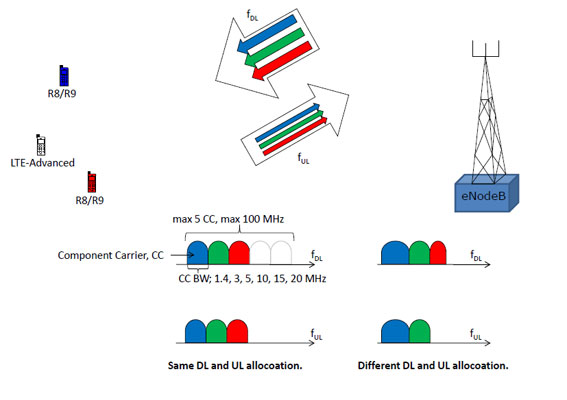
At its core, carrier aggregation (CA) is a clever technique that allows a 5G device (User Equipment or UE) to simultaneously connect to and utilize multiple distinct frequency blocks, or "component carriers," from the cellular network. Think of it like expanding a single-lane highway into a multi-lane superhighway. Instead of data flowing through one narrow channel, it can now flow through several channels in parallel, dramatically increasing the overall bandwidth and, consequently, the data throughput.
In the context of 5G New Radio, this capability is more critical than ever. Unlike previous generations, 5G operates across a much wider range of spectrum, including both the traditional sub-6 GHz spectrum (Frequency Range 1 or FR1) and the higher-frequency millimeter wave (mmWave) bands (Frequency Range 2 or FR2). While mmWave offers immense bandwidth for blazing-fast speeds, its propagation characteristics (short range, poor penetration) limit its coverage. Sub-6 GHz, conversely, provides better coverage but with less raw bandwidth. 5G NR carrier aggregation ingeniously bridges this gap, allowing operators to combine the strengths of different frequency bands to deliver a superior, more robust 5G experience.
The Problem Carrier Aggregation Solves for 5G
The vision for 5G – encompassing enhanced mobile broadband (eMBB), ultra-reliable low-latency communications (URLLC), and massive machine-type communications (mMTC) – demands significant advancements in network capabilities. One of the primary hurdles is the fragmentation of available radio spectrum. Regulators often allocate spectrum in non-contiguous blocks, making it challenging for a single carrier to offer the necessary bandwidth for high-speed data. Without carrier aggregation, a device would only be able to utilize one of these fragmented blocks at a time, severely limiting its potential throughput.
Furthermore, the demand for mobile data is skyrocketing. Users expect seamless streaming, instant downloads, and responsive real-time applications. To meet these expectations, networks need to provide not just peak speeds but also sustained high performance across diverse environments. Carrier aggregation technology directly addresses these challenges by enabling the efficient aggregation of disparate spectrum assets, thereby maximizing the total available bandwidth for each user and enhancing overall network capacity and spectrum efficiency. This multi-carrier operation is vital for delivering the promises of the 5G era.
How 5G NR Carrier Aggregation Works: A Technical Deep Dive
The technical implementation of 5G NR carrier aggregation involves sophisticated coordination between the 5G base station (gNB) and the User Equipment (UE). At its core, the gNB designates one component carrier as the Primary Cell (PCell). This PCell handles critical functions such as RRC (Radio Resource Control) connection management, security, and mobility. All other aggregated carriers are designated as Secondary Cells (SCells). SCells are activated and deactivated as needed to provide additional bandwidth, but they do not handle the core control plane functions of the PCell.
When a UE supports carrier aggregation and the network is configured for it, the gNB can dynamically schedule data transmissions across multiple component carriers simultaneously. The UE then receives and combines these data streams, effectively achieving a much higher data rate than would be possible with a single carrier. This dynamic allocation ensures optimal utilization of available radio resources based on real-time traffic demands and network conditions.
Types of Carrier Aggregation in 5G NR
The flexibility of 5G NR allows for several distinct types of carrier aggregation, each with its own advantages and use cases:
- Intra-band Contiguous CA: This is the simplest form, where multiple component carriers are aggregated within the same frequency band and are adjacent to each other. For example, combining two 20 MHz blocks within the 3.5 GHz band that are right next to each other. This type offers relatively straightforward implementation and good spectral efficiency.
- Intra-band Non-contiguous CA: Here, component carriers are aggregated within the same frequency band but are not adjacent. For instance, combining a 20 MHz block at 3.5 GHz and another 20 MHz block at 3.7 GHz within the same overall band. This requires more complex radio frequency (RF) processing in the UE and gNB but allows operators to utilize fragmented spectrum within a single band.
- Inter-band CA: This is arguably the most impactful type for 5G NR, involving the aggregation of component carriers from completely different frequency bands. This can be:
- Sub-6 GHz + Sub-6 GHz: Combining, for example, a 700 MHz carrier with a 3.5 GHz carrier. This enhances capacity and provides a good balance of coverage and speed.
- Sub-6 GHz + mmWave (FR1 + FR2): A game-changer for 5G. This combination leverages the excellent coverage and reliability of sub-6 GHz for the PCell, while using the high bandwidth of mmWave for SCells to deliver extreme data speeds. This is crucial for extending the reach of mmWave deployments and providing a robust enhanced mobile broadband experience.
- mmWave + mmWave: Aggregating multiple mmWave carriers to achieve truly massive bandwidth, often used for fixed wireless access (FWA) or specific high-capacity hotspots.
The ability to aggregate carriers across different frequency ranges (FR1 and FR2) is a defining feature of 5G NR, enabling truly versatile and high-performance 5G connectivity.
The Benefits of Implementing 5G NR Carrier Aggregation
The widespread adoption of 5G NR carrier aggregation is driven by a multitude of compelling benefits that directly translate into a superior user experience and more efficient network operations:
- Enhanced Data Throughput: This is the most direct and noticeable benefit. By combining multiple spectrum channels, devices can achieve significantly higher download and upload speeds, leading to faster content consumption, seamless video streaming, and rapid file transfers. This is key for unlocking the full potential of 5G speeds.
- Improved Network Capacity: Aggregating carriers allows the network to serve more users simultaneously without degradation in performance. This is vital in dense urban environments or at large events where many users are vying for network resources. It optimizes the utilization of available frequency bands.
- Reduced Latency: While not a direct speed improvement, increased bandwidth often contributes to lower effective latency. More data can be transmitted in a shorter period, leading to quicker response times for interactive applications and cloud services. This directly impacts the responsiveness of the radio access network (RAN).
- Better Coverage and Reliability: Especially with inter-band aggregation involving FR1 and FR2, carrier aggregation can dramatically improve the effective coverage of high-band mmWave deployments. By maintaining a robust connection on a sub-6 GHz PCell, the network can still deliver high speeds via mmWave SCells even when the mmWave signal might be weaker or partially obstructed. This hybrid approach ensures consistent network performance.
- Optimized Spectrum Utilization: Operators often hold fragmented spectrum licenses. CA allows them to efficiently combine these disparate blocks, making the most of their existing radio assets and avoiding the need for costly and complex refarming or new spectrum acquisitions. This is a critical aspect of spectrum efficiency.
- Enhanced User Experience: Ultimately, all these technical benefits converge to create a dramatically improved user experience. From smoother augmented reality (AR) and virtual reality (VR) applications to lag-free online gaming and instant access to cloud-based services, 5G NR carrier aggregation ensures that the promises of next-generation wireless are delivered directly to the end-user.
Challenges and Considerations for 5G NR Carrier Aggregation Deployment
While the benefits are substantial, deploying and managing 5G NR carrier aggregation is not without its complexities and challenges:
- Complexity of Network Planning and Optimization: Aggregating multiple carriers across different bands requires intricate network planning. Operators must carefully consider signal propagation characteristics of various bands, potential interference, and how to optimize handovers between different carrier combinations. This demands advanced simulation and planning tools.
- Device Compatibility and UE Capability: For carrier aggregation to work, the User Equipment (UE) must support the specific CA combinations being deployed by the network. Not all 5G devices support all possible inter-band or intra-band non-contiguous CA combinations, especially those involving mmWave. This necessitates careful coordination between network operators and device manufacturers to ensure a robust ecosystem. The UE capability signaling is crucial here.
- Increased Power Consumption: Operating multiple radio transceivers simultaneously to aggregate carriers can lead to higher power consumption in the UE, potentially impacting battery life. Device manufacturers are continuously working on optimizing power efficiency for CA-enabled devices.
- Interference Management: In dense deployments, aggregating carriers can increase the potential for interference, especially if different bands are used in close proximity. Robust interference mitigation techniques are essential to maintain signal quality and network stability.
- Standardization and Interoperability: Ensuring that equipment from different vendors and devices from various manufacturers can seamlessly interoperate across complex CA scenarios requires strict adherence to 3GPP standards and continuous testing.
- Regulatory Hurdles and Spectrum Availability: The availability of suitable spectrum blocks for aggregation varies by region and country. Regulatory bodies play a critical role in allocating and managing spectrum, which directly impacts an operator's ability to implement advanced CA strategies.
Practical Applications and Future Outlook of 5G NR CA
The practical applications of 5G NR carrier aggregation are already being realized across various sectors. In enhanced mobile broadband (eMBB), it's delivering the promised gigabit-level speeds to smartphones and other mobile devices, making applications like 4K video streaming, cloud gaming, and rich augmented reality experiences truly viable. For fixed wireless access (FWA), it enables operators to provide fiber-like broadband speeds to homes and businesses using 5G, particularly in areas where fiber deployment is challenging or costly. The ability to combine FR1 for reach and FR2 for capacity is a cornerstone of effective FWA deployments.
Looking ahead, the evolution of 5G NR carrier aggregation promises even greater capabilities. Future releases of the 3GPP standard will support the aggregation of even more component carriers (e.g., up to 16 component carriers in some theoretical scenarios, though practically fewer are deployed today), enabling even higher data rates and greater flexibility. The integration of CA with other advanced 5G technologies like Massive MIMO (Multiple-Input, Multiple-Output) and advanced beamforming will further amplify its benefits, leading to unprecedented levels of data throughput and latency reduction.
Actionable Tips for Network Operators and Device Manufacturers
For stakeholders in the telecommunications industry, a strategic approach to 5G NR carrier aggregation is paramount:
- Strategic Spectrum Acquisition: Operators should prioritize acquiring contiguous and non-contiguous spectrum blocks across both FR1 and FR2 to maximize their CA potential.
- Robust Network Planning and Optimization: Invest in advanced planning tools and expertise to design and optimize networks for multi-band, multi-carrier operation, considering propagation models and interference.
- Thorough Testing and Validation: Conduct extensive field testing with a wide range of UEs to validate CA performance under various real-world conditions, ensuring seamless handovers and stable connections.
- Collaboration with Ecosystem Partners: Foster strong partnerships with chipset vendors, device manufacturers, and infrastructure providers to ensure compatibility and accelerate the development of advanced CA capabilities.
- User Education: Inform consumers about the benefits of 5G NR CA and how it contributes to their overall mobile experience, especially when marketing devices and plans that leverage these advanced features.
Frequently Asked Questions
What is the main purpose of carrier aggregation in 5G NR?
The main purpose of carrier aggregation in 5G NR is to significantly increase the data throughput, network capacity, and overall performance of 5G networks. By allowing a device to simultaneously use multiple fragmented blocks of radio spectrum (component carriers), it creates a wider effective bandwidth, leading to much faster download and upload speeds, better spectrum efficiency, and a more robust connection, especially when combining sub-6 GHz and millimeter wave frequencies.
How does 5G NR carrier aggregation improve network coverage?
5G NR carrier aggregation improves network coverage, particularly for high-band millimeter wave (mmWave) deployments, by combining it with lower-frequency sub-6 GHz spectrum. The sub-6 GHz band (FR1) provides excellent foundational coverage due to its better propagation characteristics. By using a sub-6 GHz carrier as the Primary Cell (PCell) and aggregating mmWave carriers (FR2) as Secondary Cells (SCells), the network can leverage the mmWave's high capacity where available, while relying on the more pervasive sub-6 GHz for continuous connectivity and control signaling. This ensures a more consistent and reliable 5G connectivity experience, extending the effective reach of high-speed mmWave.
What are the different types of carrier aggregation supported in 5G New Radio?
5G New Radio supports three primary types of carrier aggregation: Intra-band Contiguous CA, where component carriers are adjacent within the same frequency band; Intra-band Non-contiguous CA, where carriers are in the same band but are separated; and most importantly, Inter-band CA, which combines carriers from completely different frequency bands, such as aggregating a sub-6 GHz carrier with a millimeter wave carrier (FR1+FR2). Each type offers distinct advantages for optimizing network performance and spectrum utilization based on available frequency bands.
Is 5G NR carrier aggregation available on all 5G devices?
No, 5G NR carrier aggregation capabilities vary significantly across different 5G devices. While most newer premium 5G smartphones support some form of CA, the specific combinations (e.g., inter-band, intra-band non-contiguous, or FR1+FR2 aggregation) depend on the device's chipset, hardware design, and the manufacturer's implementation. Consumers should check the technical specifications of their device or consult with their network provider to understand the specific UE capability and supported CA combinations for optimal mobile broadband performance.
How does carrier aggregation contribute to the overall 5G user experience?
Carrier aggregation profoundly enhances the overall 5G user experience by delivering faster, more consistent, and reliable mobile broadband. Users benefit from quicker downloads, smoother streaming of high-resolution content, more responsive online gaming, and enhanced performance for cloud-based applications. By maximizing data throughput and optimizing spectrum efficiency, 5G NR carrier aggregation ensures that the promises of 5G – such as ultra-low latency and gigabit speeds – are tangible realities for the end-user, leading to a truly superior enhanced mobile experience.

0 Komentar