
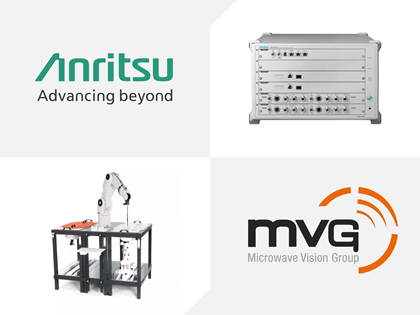
Unlocking 5G's Potential: Essential 5G Test Equipment and Measurement Solutions
The global rollout of 5G technology is transforming industries, promising unprecedented speeds, ultra-low latency, and massive connectivity. However, realizing this potential hinges critically on robust and precise 5G test equipment and measurement solutions. As a professional SEO expert and content writer, I understand that the success of any 5G network deployment, from initial research and development to ongoing network optimization, relies heavily on comprehensive testing. This article delves into the indispensable tools and methodologies that ensure 5G networks and devices perform flawlessly, meeting the stringent demands of next-generation applications. Discover how specialized RF testing, protocol testing, and over-the-air (OTA) testing are crucial for validating every facet of the 5G ecosystem, ensuring a reliable and high-performance future.
The Imperative of Precision: Why 5G Testing Demands Advanced Solutions
Unlike its predecessors, 5G introduces a host of complex technologies that necessitate a new generation of testing capabilities. From the utilization of higher frequency bands (millimeter wave - mmWave) to sophisticated antenna technologies like Massive MIMO and beamforming, the intricacies of 5G push the boundaries of traditional measurement. The sheer volume of data, the ultra-low latency requirements for mission-critical applications, and the dynamic nature of network slicing mean that every component, from base stations to user devices and the core network, must be rigorously validated.
Traditional 4G test methodologies simply fall short. The higher frequencies in mmWave bands are highly susceptible to path loss and blockage, requiring specialized over-the-air (OTA) testing environments. The dynamic nature of beamforming means that signals are not static, demanding real-time measurement and analysis of signal quality across various angles and distances. Furthermore, the concept of network slicing, where virtual networks are tailored for specific services, requires granular Quality of Service (QoS) and Service Level Agreement (SLA) validation to ensure each slice performs as intended.
Without adequate 5G test equipment and measurement solutions, operators risk deploying networks that fail to meet performance expectations, leading to poor user experience, service disruptions, and significant financial losses. Comprehensive testing throughout the entire lifecycle of 5G—from design and manufacturing to deployment and ongoing operation—is not merely an option; it's a fundamental requirement for success.
Key Challenges Driving 5G Test Innovation
- Millimeter Wave (mmWave) Frequencies: High propagation losses, susceptibility to blockage, and the need for highly directional antennas.
- Massive MIMO and Beamforming: Complex antenna arrays, dynamic beam steering, and the need to characterize multiple spatial streams.
- Ultra-Reliable Low-Latency Communication (URLLC): Stringent latency and reliability requirements for industrial automation, autonomous vehicles, and remote surgery.
- Enhanced Mobile Broadband (eMBB): Delivering multi-gigabit throughput for demanding applications like 8K video and VR/AR.
- Massive Machine Type Communication (mMTC): Connecting billions of IoT devices, requiring efficient signaling and power management.
- Network Slicing: Ensuring isolated performance and resource allocation for diverse services.
- Open RAN (O-RAN) Architectures: Testing interoperability between multi-vendor components.
Core Categories of 5G Test Equipment and Measurement Solutions
The breadth of 5G technologies necessitates a diverse portfolio of test tools. Each category serves a distinct purpose, contributing to the overall validation and optimization of the 5G ecosystem.
1. Radio Frequency (RF) Test Equipment
At the heart of any wireless system are the RF signals themselves. For 5G, RF testing becomes even more critical due to the higher frequencies and complex modulation schemes.
- Spectrum Analyzers: Essential for visualizing and measuring the power of signals across a frequency spectrum. Modern 5G-capable spectrum analyzers offer wider bandwidths, lower noise floors, and faster sweep times to capture the dynamic nature of 5G signals. They are vital for identifying interference, measuring signal power, and ensuring compliance with regulatory masks for both sub-6 GHz and mmWave bands.
- Signal Generators: Used to create precise 5G signals (e.g., NR signals) for testing components, modules, and entire transceivers. These sophisticated devices can simulate various 5G waveforms, modulation schemes, and channel conditions, allowing engineers to stress-test designs under controlled environments.
- Vector Network Analyzers (VNAs): Critical for characterizing the RF performance of passive and active components, antennas, and cables. VNAs measure S-parameters (scattering parameters) to assess impedance matching, insertion loss, return loss, and isolation, which are paramount for high-frequency 5G designs.
- Power Meters: Accurately measure the power output of RF devices, crucial for ensuring transmitters operate within specified limits and for optimizing power efficiency.
- Channel Emulators: Recreate real-world radio propagation environments in a lab setting, allowing engineers to test device and network performance under realistic fading, multipath, and interference conditions without the need for extensive field testing.
2. Protocol and Conformance Test Solutions
Beyond the physical RF layer, 5G's complexity extends to its protocols and signaling. Protocol testers ensure that devices and network elements communicate correctly according to 3GPP standards.
- Protocol Analyzers: Decode and analyze the signaling messages exchanged between the device under test (DUT) and the network. These tools are indispensable for debugging interoperability issues, verifying call setup and teardown procedures, and ensuring data integrity.
- Conformance Test Systems: Automate the execution of thousands of standardized test cases to ensure that 5G devices (User Equipment - UE) and base stations (gNBs) comply with 3GPP specifications. These systems cover a vast array of functionalities, from physical layer performance to higher-layer protocols and security features.
- Network Emulators / Testbeds: Create a controlled, virtualized 5G network environment in the lab, allowing developers to test 5G devices and applications under various network conditions, including different latency and throughput scenarios, before live deployment. This is crucial for core network assurance and validating network slicing functionalities.
3. Over-the-Air (OTA) Test Chambers
Given the reliance on mmWave and Massive MIMO with beamforming, traditional conducted testing (where devices are connected via cables) is often insufficient or impossible. OTA testing is paramount.
- Anechoic Chambers: These shielded environments prevent external RF interference and absorb internal reflections, creating a controlled space for accurate OTA measurements.
- Compact Antenna Test Ranges (CATR): Specialized anechoic chambers equipped with reflectors that transform spherical waves from the DUT into plane waves, enabling accurate far-field antenna measurements in a compact space.
- Reverberation Chambers: Used for measuring total radiated power (TRP) and total isotropic sensitivity (TIS) in a statistically uniform RF environment, often more cost-effective for certain measurements than anechoic chambers.
- OTA Test Systems: Integrate RF test equipment with robotic positioners and specialized software to characterize the performance of antennas, modules, and entire devices in 3D space, capturing parameters like radiated power, sensitivity, and beamforming performance. This is particularly vital for validating the effectiveness of Massive MIMO deployments.
4. Field Testing and Drive Test Solutions
Once 5G networks are deployed, real-world performance validation becomes critical. Field testing provides insights into actual network performance under live conditions.
- Drive Test Tools: Portable systems installed in vehicles that collect RF data (signal strength, quality, interference) and network performance metrics (throughput, latency, call drops) as the vehicle drives through a coverage area. These are essential for network optimization and identifying coverage gaps or performance bottlenecks.
- Portable Spectrum Analyzers and Network Scanners: Handheld or backpack-mounted devices used by field technicians for on-site troubleshooting, interference hunting, and basic 5G network deployment verification.
- Benchmarking Solutions: Compare the performance of different 5G networks or different regions within the same network, providing competitive intelligence and identifying areas for improvement.
Strategic Application of 5G Measurement Solutions Across the Lifecycle
The effective deployment and operation of 5G require a strategic approach to testing, with specific solutions applied at different stages.
1. Research & Development (R&D) and Design Verification
In the early stages, engineers focus on validating new concepts, designs, and prototypes. This phase heavily relies on high-precision lab equipment.
- Component Characterization: Using VNAs and signal analyzers to test individual RF components (amplifiers, filters, antennas) for optimal performance at 5G frequencies.
- Module and Subsystem Testing: Integrating components into modules (e.g., RF front-end modules) and testing their combined performance, often using signal generators and analyzers to simulate 5G signals.
- Pre-conformance Testing: Using testbeds and emulators to simulate a 5G network environment and conduct preliminary protocol and performance tests, identifying potential issues early in the design cycle before formal conformance testing.
Actionable Tip: Invest in flexible, software-defined test platforms in R&D. This allows for rapid adaptation to evolving 5G standards and supports iterative design processes without significant hardware overhauls.
2. Manufacturing and Production Testing
Ensuring quality and consistency for mass-produced 5G devices and network components.
- Automated Test Equipment (ATE): High-speed, automated test systems are used on production lines to quickly verify the functionality and performance of every unit. This includes testing RF parameters, power consumption, and basic functional tests.
- Calibration and Verification: Ensuring that each manufactured unit meets precise specifications, often involving calibration against known standards using highly accurate RF measurement tools.
Expert Insight: The cost-efficiency and speed of manufacturing test solutions are paramount. Manufacturers seek solutions that offer high throughput without compromising measurement accuracy.
3. Network Deployment and Installation
Bringing the 5G network to life requires precise installation and activation.
- Site Acceptance Testing: Verifying that newly installed base stations (gNBs) and their antennas are correctly configured and operating as expected. This involves measuring signal strength, interference levels, and ensuring proper antenna alignment for beamforming effectiveness.
- Fiber Optic Testing: With 5G's reliance on high-capacity fiber backhaul, optical power meters, OTDRs (Optical Time Domain Reflectometers), and fiber inspection scopes are crucial for verifying fiber integrity and performance.
- Over-the-Air Validation: For mmWave deployments, portable OTA solutions may be used to verify the actual coverage and performance of beamforming from the gNB.
Practical Advice: Field engineers should be equipped with user-friendly, robust test tools that can withstand harsh outdoor conditions and provide immediate, accurate feedback on site performance. Consider tools that offer remote connectivity for real-time data sharing with central operations centers.
4. Network Optimization and Assurance
Post-deployment, continuous monitoring and optimization are vital for maintaining network performance and subscriber satisfaction.
- Quality of Service (QoS) Monitoring: Probing and monitoring solutions continuously assess key performance indicators (KPIs) like latency, throughput, jitter, and packet loss across the 5G network.
- Troubleshooting and Fault Isolation: When performance issues arise, specialized diagnostic tools are used to pinpoint the root cause, whether it's RF interference, network congestion, or software glitches. This often involves detailed spectrum analysis and protocol tracing.
- Network Analytics and AI/ML: Advanced software platforms leverage big data analytics and machine learning to identify trends, predict potential issues, and automate network optimization efforts, ensuring consistent Quality of Service (QoS) and efficient resource utilization.
- Service Assurance: Ensuring that Service Level Agreements (SLAs) for critical applications (e.g., for enterprise customers leveraging network slicing) are consistently met. This requires end-to-end visibility and real-time performance validation.
Frequently Asked Questions
What makes 5G test equipment different from 4G test equipment?
The primary differences stem from 5G's advanced technologies. 5G test equipment must support significantly wider bandwidths (up to 400 MHz for NR), operate at much higher frequencies (including mmWave bands up to 52 GHz and beyond), and handle complex antenna systems like Massive MIMO and beamforming. This necessitates specialized over-the-air (OTA) testing capabilities, higher precision in RF testing, and more sophisticated protocol analysis tools to manage network slicing and ultra-low latency requirements. Traditional 4G tools are simply not designed for these parameters.
Why is Over-the-Air (OTA) testing so crucial for 5G?
OTA testing is critical for 5G, especially for mmWave and Massive MIMO technologies, because the antennas are often integrated directly into the device or base station and cannot be connected via cables for traditional conducted measurements. Beamforming also means that the radiated performance of a device or base station depends heavily on its interaction with the air interface. OTA chambers and systems allow engineers to accurately measure critical performance parameters like total radiated power (TRP), total isotropic sensitivity (TIS), and beamforming efficiency in a controlled, repeatable environment, simulating real-world radio propagation.
How do 5G test solutions address network slicing and latency requirements?
5G test solutions address network slicing and latency through advanced protocol testing, core network assurance tools, and network emulators. These solutions can simulate specific slices, inject traffic, and measure end-to-end performance metrics like latency and throughput within each slice. They verify that resources are correctly allocated and isolated, and that the desired Quality of Service (QoS) is maintained for each unique service. For ultra-low latency applications, specialized testbeds can simulate real-time traffic scenarios and precisely measure round-trip times and jitter, identifying any bottlenecks that could impede URLLC performance.
What role does automation play in 5G testing?
Automation is paramount in 5G testing due to the sheer volume of test cases, the complexity of the technologies, and the need for efficiency. Automated test equipment (ATE) and software-defined test platforms enable rapid execution of thousands of conformance, performance, and functional tests. This reduces manual effort, minimizes human error, and accelerates the time-to-market for 5G products and services. Automation also facilitates continuous integration and continuous deployment (CI/CD) pipelines, allowing for faster iterations and updates in the ever-evolving 5G landscape. It's particularly important for repetitive tasks in manufacturing and for continuous network optimization in live deployments.

0 Komentar