
Predictions for Global Technology Adoption in 2025: Navigating the Next Wave of Innovation
The pace of technological evolution is accelerating, transforming every facet of our lives and industries. As we peer into the near future, specifically towards 2025, the global technology landscape is poised for a seismic shift. This comprehensive guide delves deep into the most compelling predictions for global technology adoption in 2025, offering a critical look at the innovations set to redefine our digital existence. We'll explore how emerging technologies are not just theoretical concepts but are rapidly moving into mainstream application, demanding strategic foresight from businesses and individuals alike. Prepare to understand the next wave of disruptive tech, from advanced AI to the expanding metaverse, and how these forces will shape our collective future.
The AI Tsunami: Beyond Automation and Towards Intelligent Augmentation
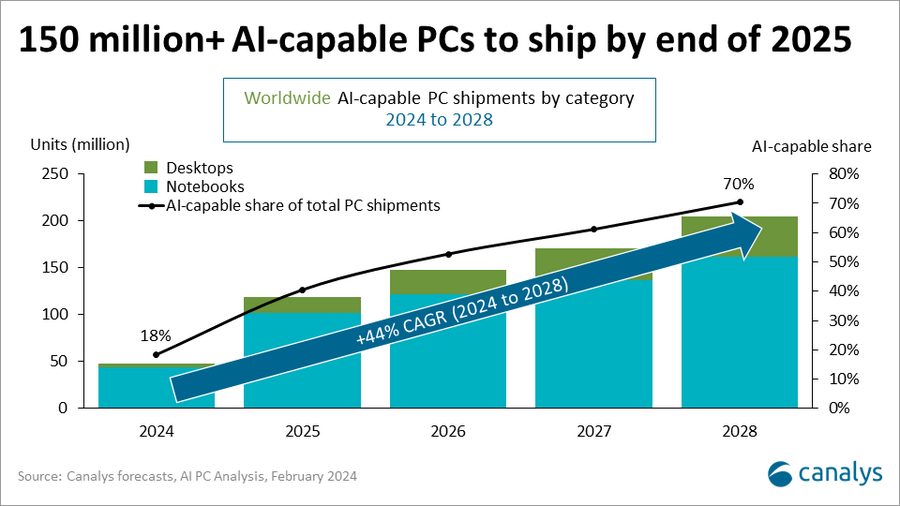
Artificial intelligence (AI) will undoubtedly remain at the forefront of technological advancements, but its adoption in 2025 will transcend simple automation. We're moving towards a paradigm of intelligent augmentation, where AI systems don't just perform tasks but genuinely enhance human capabilities and decision-making. Generative AI, in particular, will see exponential growth, moving beyond content creation to design, code generation, and even scientific discovery. Expect to see advanced machine learning models integrated into virtually every software layer, driving hyper-personalization and predictive analytics at an unprecedented scale.
AI in Business Operations and Strategic Decision-Making
- Enhanced Business Intelligence: AI-powered analytics will move from descriptive to prescriptive, offering actionable insights for supply chain optimization, market forecasting, and customer behavior prediction. Businesses will leverage AI to identify nuanced patterns in vast datasets, informing critical strategic decisions with greater accuracy.
- Intelligent Process Automation (IPA): Robotic Process Automation (RPA) will evolve significantly, incorporating AI and machine learning to handle more complex, unstructured data and adapt to changing conditions. This will lead to more resilient and efficient operational workflows across finance, HR, and customer service.
- Hyper-Personalization and Customer Experience: AI will enable truly individualized experiences, from dynamic website content to tailored product recommendations and proactive customer support. This level of customization will become a baseline expectation for consumers, driving significant competitive advantage for early adopters.
The Metaverse and Web3 Technologies: Building New Digital Realities
While the initial hype around the metaverse has somewhat stabilized, 2025 will mark a crucial period for its foundational development and practical application. The adoption of Web3 technologies, including blockchain, NFTs, and decentralized autonomous organizations (DAOs), will underpin the creation of more immersive, interoperable, and user-owned digital environments. We anticipate a steady increase in the use of virtual reality (VR) and augmented reality (AR) devices, not just for entertainment but increasingly for professional training, remote collaboration, and digital commerce. The concept of digital identity and digital ownership will become more robust and integrated into daily online interactions.
Enterprise Metaverse Applications and Digital Twins
- Industrial Metaverse: Beyond consumer-facing applications, the industrial metaverse will gain traction. Companies will use digital twins – virtual replicas of physical assets, processes, and systems – to simulate scenarios, optimize operations, and facilitate remote maintenance and training. This will be particularly impactful in manufacturing, healthcare, and urban planning.
- Collaborative Workspaces: VR/AR will transform remote work, offering more engaging and spatially aware collaboration platforms. Teams will meet in persistent virtual rooms, interact with 3D models, and conduct workshops that mimic in-person experiences, overcoming geographical barriers more effectively.
- Decentralized Finance (DeFi) Integration: While still nascent, the principles of DeFi will begin to permeate traditional finance, offering more transparent, efficient, and accessible financial services. The underlying blockchain technology will gain broader acceptance for secure record-keeping and transaction verification. For a deeper dive into blockchain's transformative potential, explore our dedicated content.
Edge Computing and 5G/6G: The Distributed Digital Backbone
The proliferation of IoT devices and the demand for real-time data processing will accelerate the adoption of edge computing. Moving computation closer to the data source reduces latency, conserves bandwidth, and enhances data security. This trend is inextricably linked with the continued rollout and maturation of 5G networks, and the early stages of 6G development, which promise even greater speeds, lower latency, and massive connectivity. By 2025, edge computing will be a critical enabler for smart cities, autonomous vehicles, and advanced industrial automation.
Real-Time Data Processing and IoT Proliferation
- Smart Infrastructure: Cities will increasingly deploy IoT sensors and edge devices for smart traffic management, public safety, and environmental monitoring, leveraging real-time data for immediate responses and improved urban living.
- Industrial IoT (IIoT) Advancement: Factories and industrial sites will become highly automated and interconnected, with edge devices monitoring machinery, predicting maintenance needs, and optimizing production lines. This will drive significant gains in efficiency and reduce downtime.
- Enhanced User Experiences: From cloud gaming with minimal lag to seamless augmented reality applications on mobile devices, the combination of 5G/6G and edge computing will unlock new possibilities for highly responsive and data-intensive user experiences.
Quantum Computing's Dawn: From Lab to Limited Application
While full-scale, fault-tolerant quantum computing remains a longer-term goal, 2025 will see significant strides in its practical application. We anticipate the emergence of more powerful noisy intermediate-scale quantum (NISQ) devices capable of tackling specific, complex problems that are intractable for classical computers. Early adoption will likely be seen in highly specialized fields such as drug discovery, materials science, financial modeling, and advanced cryptography. Companies that invest in quantum readiness now will be best positioned to leverage its eventual breakthrough potential.
Early Use Cases and Strategic Imperatives
- Drug Discovery and Materials Science: Quantum simulations can model molecular interactions with unparalleled accuracy, accelerating the discovery of new drugs and the development of novel materials with bespoke properties.
- Financial Optimization: Quantum algorithms show promise in optimizing complex financial models, portfolio management, and fraud detection, offering a competitive edge in high-frequency trading and risk assessment.
- Post-Quantum Cryptography: As quantum computers pose a theoretical threat to current encryption standards, research and development into quantum-resistant cryptographic algorithms will accelerate significantly, becoming a critical area for cybersecurity resilience.
Cybersecurity as a Foundational Imperative: Adapting to Evolving Threats
As digital adoption expands, so too does the attack surface for cyber threats. In 2025, cybersecurity will no longer be an afterthought but a foundational imperative integrated into every layer of technology adoption. We'll see a shift towards more proactive, AI-driven security measures and the widespread adoption of "zero-trust" architectures, where no user or device is inherently trusted, regardless of their location within the network. The focus will be on resilience, threat intelligence sharing, and automated response capabilities.
Data Privacy, Regulatory Compliance, and Threat Intelligence
- Evolving Data Privacy Regulations: Global data privacy frameworks, similar to GDPR and CCPA, will continue to expand and become more stringent, pushing organizations towards robust data governance and transparent data handling practices. Compliance will be a continuous, complex challenge.
- AI-Powered Threat Detection: AI and machine learning will be crucial for detecting sophisticated, evolving cyber threats, including polymorphic malware and advanced phishing attacks, by identifying anomalous patterns and behaviors in real-time.
- Supply Chain Security: Attacks targeting software supply chains will necessitate greater scrutiny of third-party vendors and the implementation of robust security protocols throughout the entire digital ecosystem. Organizations will prioritize visibility and control over their interconnected systems.
Sustainability Technology and Green Innovation: Tech for a Better Planet
With increasing global awareness and regulatory pressure, technology adoption in 2025 will also be heavily influenced by sustainability goals. We'll see a surge in "green tech" innovations aimed at reducing carbon footprints, optimizing resource consumption, and fostering circular economies. This includes everything from AI-driven energy management systems and smart grids to advanced materials science for sustainable manufacturing and precision agriculture technologies. Companies that integrate environmental, social, and governance (ESG) principles into their tech strategies will gain a significant competitive advantage and appeal to a growing segment of conscious consumers and investors.
Key Areas of Sustainable Tech Adoption
- Renewable Energy Management: AI and IoT will optimize the performance of renewable energy sources, predict demand, and manage smart grids for efficient energy distribution.
- Circular Economy Solutions: Technologies facilitating product lifecycle management, waste reduction, and resource recovery (e.g., blockchain for supply chain transparency, AI for material sorting) will become more prevalent.
- Climate Tech for Mitigation and Adaptation: Innovation will accelerate in areas like carbon capture, sustainable agriculture (e.g., vertical farming, drone-based crop monitoring), and climate modeling to predict and mitigate environmental risks.
Actionable Insights for Businesses and Individuals
Navigating the rapid currents of technological advancements in 2025 requires proactive strategies. For businesses, this means fostering a culture of continuous innovation, investing in talent development, and building resilient, adaptable IT infrastructures. For individuals, it's about embracing lifelong learning and developing digital literacy to thrive in an increasingly tech-driven world.
Strategic Imperatives for Organizations
- Invest in Reskilling and Upskilling: The talent gap for emerging technologies will widen. Prioritize training programs for your existing workforce in AI, data analytics, cloud architecture, and cybersecurity. Consider strategic partnerships with educational institutions.
- Adopt a "Test and Learn" Mindset: The future is uncertain. Establish innovation labs or dedicated teams to experiment with new technologies on a small scale, learn from failures, and rapidly iterate. This agile approach minimizes risk while maximizing learning.
- Prioritize Data Governance and Security: As data becomes the new oil, robust data governance frameworks and state-of-the-art cybersecurity measures are non-negotiable. This builds trust with customers and ensures regulatory compliance.
- Foster Cross-Functional Collaboration: Break down silos between IT, operations, marketing, and R&D. The most impactful innovations often emerge from interdisciplinary collaboration, leveraging diverse perspectives.
Empowering Individuals for the Future Tech Landscape
- Embrace Lifelong Learning: The shelf life of skills is shortening. Dedicate time to continuous learning through online courses, certifications, and industry workshops, focusing on areas like data science, AI ethics, and digital tools.
- Cultivate Digital Literacy: Understand the fundamentals of how new technologies work, their potential impacts, and their ethical implications. This empowers you to make informed decisions and adapt to new digital tools.
- Develop "Soft" Skills: While technical skills are vital, critical thinking, problem-solving, creativity, adaptability, and emotional intelligence will become even more valuable as automation handles routine tasks.
- Network and Collaborate: Connect with professionals in emerging tech fields. Participate in online communities, attend virtual conferences, and collaborate on projects to expand your knowledge and opportunities.
Frequently Asked Questions
What are the biggest predictions for global technology adoption in 2025?
The biggest predictions center around the continued maturation and widespread integration of Artificial Intelligence (AI), particularly generative AI and machine learning, across all industries. We also anticipate significant strides in the practical application of Web3 technologies and the metaverse, driven by enhanced VR/AR capabilities and blockchain. Furthermore, the expansion of edge computing and 5G/6G networks will enable real-time data processing, while cybersecurity threats will necessitate more sophisticated, AI-driven defenses. Finally, a strong emphasis on sustainability technology will guide innovation.
How will AI impact businesses by 2025?
By 2025, AI will transform businesses by driving intelligent automation, enabling hyper-personalization for customers, and providing prescriptive analytics for strategic decision-making. AI will move beyond simple task automation to augment human capabilities, optimize supply chains, enhance customer experience, and accelerate product development through advanced machine learning models and generative AI tools. Companies leveraging AI will see significant gains in efficiency, innovation, and competitive advantage.
Will the metaverse be mainstream by 2025?
While a fully immersive, interconnected "Ready Player One" style metaverse may not be entirely mainstream by 2025, significant foundational progress and practical applications will emerge. We'll see increased adoption of VR/AR devices for specific use cases like remote collaboration, industrial training, and digital commerce. Enterprise metaverse applications, including digital twins, will gain traction. The underlying Web3 technologies, such as blockchain for digital ownership and identity, will also see broader, albeit perhaps niche, integration, paving the way for future mainstream adoption.
What role will cybersecurity play in 2025 tech adoption?
Cybersecurity will be a critical foundational element for all technology adoption in 2025, rather than an afterthought. As the digital attack surface expands, there will be a strong shift towards proactive, AI-driven security measures, widespread adoption of zero-trust architectures, and an increased focus on supply chain security. Data privacy regulations will continue to tighten globally, making robust data governance and compliance paramount for organizations. Investing in advanced cybersecurity will be essential for maintaining trust and operational resilience.

0 Komentar