
The Future of Connected Vehicle Technology 2025: Navigating the Smart Mobility Revolution
The automotive landscape is undergoing a profound transformation, driven by an unprecedented convergence of digital innovation and transportation needs. By 2025, the concept of a "connected vehicle" will transcend mere internet access, evolving into a sophisticated, intelligent hub that communicates seamlessly with its environment. This article delves deep into the anticipated advancements in connected vehicle technology, exploring the pivotal role of V2X communication, artificial intelligence, and cutting-edge infrastructure in shaping the future of mobility. Prepare to discover how these innovations are not just enhancing driving experiences but fundamentally reshaping urban planning, safety protocols, and the very economics of transportation.
The Foundational Pillars of Connected Mobility by 2025
The rapid acceleration of connected vehicle capabilities is underpinned by several critical technological advancements. These foundational pillars are not isolated but intricately woven together, creating a robust ecosystem for the next generation of smart transportation.
Advanced Connectivity: Beyond 5G
- 5G and Its Evolution: By 2025, 5G will be the standard for high-bandwidth, low-latency communication in connected vehicles. This enables real-time data exchange crucial for autonomous driving capabilities and complex V2X scenarios. However, the industry will already be looking towards 5G Advanced and preliminary 6G research, pushing the boundaries of connectivity even further, supporting massive IoT deployments and enhanced mobile broadband for in-cabin experiences.
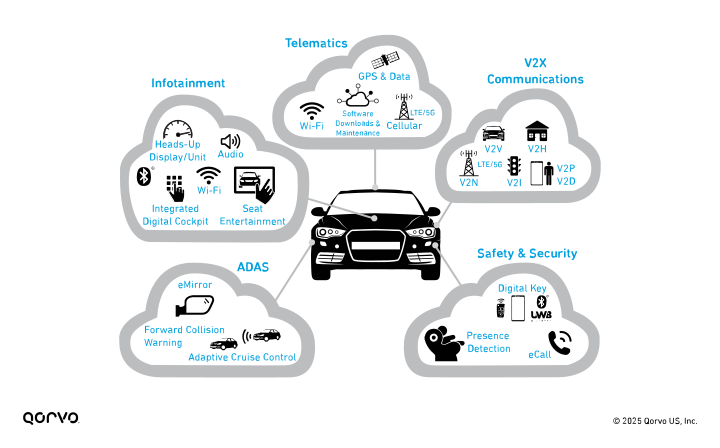
- V2X Communication Maturation: Vehicle-to-Everything (V2X) communication will be a cornerstone. This encompasses:
- Vehicle-to-Vehicle (V2V): Direct communication between cars for collision avoidance and platooning.
- Vehicle-to-Infrastructure (V2I): Interaction with traffic lights, road sensors, and smart infrastructure for optimized routing and congestion management.
- Vehicle-to-Pedestrian (V2P): Detecting and communicating with pedestrians and cyclists for enhanced safety.
- Vehicle-to-Network (V2N): Cloud-based services, software updates, and remote diagnostics.
Artificial Intelligence and Edge Computing Integration
The sheer volume of data generated by connected vehicles demands sophisticated processing. By 2025, artificial intelligence (AI) integration will move beyond simple voice commands. AI will power predictive analytics for maintenance, optimize driving efficiency, and enable advanced decision-making for semi-autonomous and fully autonomous systems.
- Edge Computing: To minimize latency and process critical data instantly, much of the AI processing will occur at the "edge" – directly within the vehicle or at nearby roadside units. This reduces reliance on constant cloud connectivity for immediate safety-critical functions, enhancing reliability and responsiveness.
- Machine Learning for Predictive Capabilities: Machine learning algorithms will analyze driving patterns, sensor data, and external factors to predict potential hazards, optimize fuel consumption, and even anticipate driver needs. This extends to predictive maintenance, where vehicle systems can forecast component failures before they occur, scheduling proactive service and minimizing downtime.
Transformative Applications of Connected Vehicle Technology in 2025
The advancements in connectivity and AI will unlock a myriad of applications, fundamentally changing how we interact with vehicles and transportation systems.
Enhanced Safety and Accident Prevention
Safety remains the paramount driver for connected vehicle development. By 2025, expect a significant leap in preventative safety measures.
- Advanced Driver-Assistance Systems (ADAS): Already prevalent, ADAS will become more sophisticated, leveraging V2X data for real-time awareness. This includes cross-traffic alerts from vehicles around blind corners, dynamic speed adjustments based on upcoming traffic light signals, and proactive warnings about road hazards detected by other vehicles.
- Collision Avoidance Systems: Integration of radar, lidar, cameras, and V2X data will create highly robust collision avoidance systems that can react faster and more intelligently than human drivers, significantly reducing accident rates.
- Emergency Services Integration: Connected vehicles will automatically alert emergency services in the event of a collision, providing precise location data and vehicle diagnostics to aid rapid response.
Optimized Traffic Flow and Urban Mobility
The dream of a congestion-free city moves closer to reality with connected vehicles.
- Smart Traffic Management: Intelligent transportation systems (ITS) will utilize real-time data from connected cars to dynamically adjust traffic light timings, manage lane usage, and provide optimal routing suggestions, leading to reduced travel times and fuel consumption.
- Dynamic Ride-Sharing and Fleet Management: Connected platforms will enable more efficient ride-sharing services and logistics for commercial fleets. Vehicles will communicate their availability and location, optimizing routes and minimizing empty miles.
- Parking Assistance: Real-time information on available parking spaces, even predicting future availability, will drastically reduce time spent searching for parking, easing urban congestion.
Revolutionizing the In-Cabin Experience
The interior of a connected vehicle will become an extension of our digital lives, transforming travel time into productive or leisure time.
- Personalized Infotainment Systems: Infotainment systems will offer highly personalized content, streaming services, and productivity tools, seamlessly integrating with smart home devices and personal digital assistants. Over-the-air (OTA) updates will ensure these systems remain current with the latest features and security patches.
- Health and Wellness Monitoring: Sensors within the cabin could monitor driver alertness, vital signs, and stress levels, offering personalized recommendations or even taking control in emergency situations.
- Seamless Digital Integration: Payments for fuel, tolls, or parking will be automated, and vehicles will integrate with smart city services, enabling easy access to public transport or local amenities.
Advanced Predictive Maintenance and Diagnostics
The era of unexpected breakdowns is slowly fading, thanks to proactive vehicle health monitoring.
- Telematics Solutions: Advanced telematics solutions will continuously monitor vehicle performance, identifying anomalies and potential issues before they escalate. This data is transmitted to manufacturers or service centers, allowing for proactive scheduling of maintenance.
- Over-the-Air (OTA) Updates: Beyond infotainment, OTA updates will extend to core vehicle software, including engine management, braking systems, and autonomous driving algorithms, allowing for continuous improvement and feature rollouts without dealership visits. This capability is crucial for keeping vehicles secure and optimized throughout their lifespan.
New Business Models and Mobility Services
Connected vehicle technology is not just about the car itself but the ecosystem of services it enables.
- Mobility-as-a-Service (MaaS): By 2025, MaaS platforms will gain significant traction, offering integrated access to various transportation options – from ride-sharing and car-sharing to public transport and micro-mobility – all managed through a single app. Connected vehicles will be central to these offerings.
- Data Monetization: The vast amounts of anonymized data collected by connected vehicles will be a valuable asset, leading to new revenue streams through partnerships with urban planners, advertisers, and insurance companies.
- Personalized Insurance: Usage-based insurance models, leveraging telematics data, will become more common, offering premiums based on actual driving behavior and vehicle health.
Challenges and Critical Considerations for 2025
While the potential is immense, the road to a fully connected vehicle ecosystem is not without hurdles.
Cybersecurity and Data Privacy
The more connected a vehicle becomes, the larger its digital attack surface. Protecting against cyber threats is paramount.
- Robust Cybersecurity Frameworks: Manufacturers must implement multi-layered cybersecurity measures, from secure boot processes to encrypted communication protocols. Regular over-the-air updates for security patches will be non-negotiable.
- Data Privacy Concerns: The collection of vast amounts of personal and vehicle data raises significant privacy questions. Strict regulations and transparent data handling policies will be essential to build consumer trust. Consumers will demand clear control over their data.
Regulatory Frameworks and Standardization
Harmonizing regulations across different regions is crucial for the global deployment of connected vehicle technologies.
- Interoperability Standards: Ensuring that vehicles from different manufacturers can communicate seamlessly, and that V2X infrastructure is universally compatible, requires robust international standards.
- Legal and Ethical Implications: As autonomous capabilities advance, questions of liability in accidents and ethical decision-making algorithms will require clear legal frameworks.
Infrastructure Investment and Deployment
The vision of smart cities and intelligent transportation systems hinges on significant investment in supporting infrastructure.
- 5G Network Expansion: Widespread, reliable 5G coverage, especially in rural areas and along major transportation corridors, is fundamental.
- Smart Roadside Units (RSUs): Deploying and maintaining smart infrastructure like intelligent traffic lights, sensors, and edge computing nodes will require substantial public and private investment.
Consumer Adoption and Trust
Ultimately, the success of connected vehicle technology depends on public acceptance.
- Building Trust in Automation: Overcoming skepticism about autonomous driving capabilities and ensuring drivers feel safe and in control will be critical.
- Understanding Value Proposition: Clearly articulating the benefits of connectivity – from safety enhancements to convenience – will drive adoption.
The Road Ahead: Beyond 2025 and Actionable Insights
While 2025 marks a significant milestone, the evolution of connected vehicle technology is an ongoing journey. We will see increasing integration of vehicles into smart grids, enabling vehicle-to-grid (V2G) capabilities where electric vehicles can supply energy back to the grid during peak demand, enhancing energy resilience. The concept of digital twins for vehicles will gain traction, allowing for virtual testing and optimization throughout a vehicle's lifecycle.
Actionable Insights for Stakeholders:
- For Automotive Manufacturers: Prioritize software-defined vehicle architectures that allow for rapid iteration, OTA updates, and robust cybersecurity. Invest heavily in AI and edge computing capabilities to deliver truly intelligent vehicle systems.
- For Urban Planners and Governments: Develop clear policies and invest in smart infrastructure that supports V2X communication and integrates with public transport. Prioritize pilot programs for intelligent traffic management.
- For Technology Developers: Focus on interoperability, open standards, and robust data security solutions. Explore new mobility services and data analytics platforms that leverage connected vehicle data ethically.
- For Consumers: Stay informed about the capabilities and limitations of connected features. Understand the privacy implications of data sharing and advocate for robust data protection policies. Embrace the convenience and safety benefits while exercising due diligence.
Frequently Asked Questions
What is the primary benefit of V2X communication in connected vehicles by 2025?
The primary benefit of V2X communication by 2025 will be significantly enhanced road safety and accident prevention. By allowing vehicles to directly communicate with each other, infrastructure, pedestrians, and the network, V2X provides a 360-degree real-time awareness that goes beyond what on-board sensors can achieve. This enables proactive warnings about hidden hazards, impending collisions, and dynamic traffic conditions, leading to a substantial reduction in road incidents and fatalities.
How will 5G connectivity impact autonomous driving capabilities in the next few years?
5G connectivity is crucial for advancing autonomous driving capabilities by 2025 due to its ultra-low latency and high bandwidth. This enables real-time data exchange between vehicles, roadside units, and cloud servers, which is essential for critical decision-making in autonomous systems. It supports complex sensor data fusion, over-the-air software updates, and reliable communication for cooperative maneuvers, pushing towards higher levels of autonomous driving where vehicles can react instantly to dynamic environments.
What are the biggest cybersecurity challenges for connected vehicles by 2025?
The biggest cybersecurity challenges for connected vehicles by 2025 revolve around protecting increasingly complex software systems and vast amounts of sensitive data. Key concerns include preventing unauthorized access to vehicle control systems, safeguarding personal data collected through telematics and infotainment, and ensuring the integrity of over-the-air updates. Robust encryption, continuous monitoring, and rapid patch deployment will be critical to mitigate these evolving threats and maintain consumer trust.
Will connected vehicle technology lead to more sustainable transportation by 2025?
Yes, connected vehicle technology is expected to contribute significantly to more sustainable transportation by 2025. By enabling intelligent traffic management, optimized routing, and dynamic ride-sharing, it can reduce congestion, lower fuel consumption, and decrease emissions. Furthermore, its integration with electric vehicles (EVs) through features like smart charging and Vehicle-to-Grid (V2G) capabilities will enhance energy efficiency and grid stability, supporting a greener mobility ecosystem.

0 Komentar