
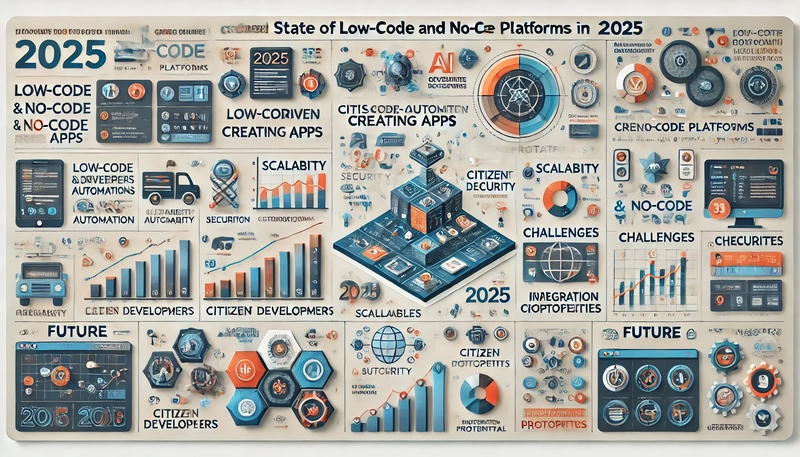
The Future of Low Code No Code Platforms in 2025: Unlocking Unprecedented Business Agility
The landscape of software development is undergoing a seismic shift, and at its epicenter are low code no code platforms. By 2025, these revolutionary tools are poised to fundamentally redefine how organizations approach application development, democratizing technology and empowering a new generation of citizen developers. This comprehensive guide delves deep into the anticipated evolution of LCNC, exploring its transformative potential for digital transformation, enhanced developer productivity, and the strategic advantages it offers in an increasingly competitive global market. Prepare to discover how visual development environments will not only streamline processes but also unlock unprecedented levels of enterprise agility.
The Ascendance of Low Code No Code: A Foundation for 2025
The journey of low code no code (LCNC) platforms from niche tools to mainstream enterprise solutions has been rapid and impactful. Driven by the urgent need for faster application delivery and the persistent skill gap in traditional programming, LCNC has emerged as a critical enabler for businesses striving for digital transformation. By 2025, this momentum will only accelerate, propelled by advancements in AI, cloud infrastructure, and a growing understanding of LCNC's strategic value beyond mere rapid application development.
Historically, building custom software was a lengthy, resource-intensive process, often bottlenecked by a limited pool of highly specialized developers. LCNC platforms dismantle these barriers by abstracting away complex coding, allowing users to build sophisticated applications through intuitive drag-and-drop interfaces and visual modeling. This shift means that individuals with deep business domain knowledge but limited coding experience can actively participate in solution creation, leading to applications that are more closely aligned with actual business needs from inception.
Key Drivers Shaping LCNC's Future by 2025:
- Accelerated Digital Transformation: Businesses worldwide are under immense pressure to digitize operations, enhance customer experiences, and innovate rapidly. LCNC provides the agility needed to respond to these demands swiftly.
- Democratization of Development: The rise of the citizen developer is a defining trend. By 2025, a significant portion of new applications will be built by non-IT professionals, freeing up professional developers for more complex, core system integrations and innovative projects.
- Persistent Developer Shortage: The global demand for skilled software engineers continues to outstrip supply. LCNC platforms mitigate this by amplifying the productivity of existing teams and enabling new contributors.
- Focus on Business Outcomes: With LCNC, the emphasis shifts from coding syntax to solving specific business problems, leading to solutions that deliver faster Return on Investment (ROI).
Transformative Capabilities: What to Expect from LCNC by 2025
The future of low code no code platforms is not just about faster development; it's about deeper integration, enhanced intelligence, and unparalleled flexibility. Expect these platforms to evolve into sophisticated ecosystems capable of handling a vast array of enterprise needs.
Advanced AI and Machine Learning Integration
By 2025, AI integration will be a cornerstone of advanced LCNC platforms. This isn't just about adding AI components; it's about AI enhancing the development process itself:
- Intelligent Automation: LCNC platforms will leverage AI to suggest optimal workflows, pre-fill data fields, and even auto-generate basic application components based on user intent or historical data.
- Predictive Analytics in Applications: Business applications built with LCNC will seamlessly incorporate predictive analytics, allowing users to forecast trends, identify anomalies, and make data-driven decisions without needing to write complex algorithms.
- Enhanced User Experience (UX) Design: AI-powered design assistants will help citizen developers create more intuitive and engaging user interfaces, ensuring applications are not only functional but also user-friendly.
Hyper-Automation and Business Process Automation (BPA)
LCNC platforms will become the backbone of hyper-automation strategies. By 2025, they will facilitate the orchestration of complex business process automation across various systems and departments, moving beyond simple task automation to end-to-end digital process transformation. This includes seamless integration with Robotic Process Automation (RPA), Intelligent Document Processing (IDP), and advanced analytics, enabling truly autonomous workflows.
Robust Integration Capabilities and Ecosystems
One of the critical determinants of LCNC success is its integration capabilities. By 2025, platforms will offer:
- API-First Design: Native support for API management will be standard, allowing LCNC applications to effortlessly connect with existing legacy systems, third-party services, and other enterprise applications.
- Pre-built Connectors: An ever-expanding library of pre-built connectors for popular CRMs, ERPs, cloud services, and databases will drastically reduce integration time and complexity.
- Microservices Architecture Support: LCNC platforms will increasingly support the development and deployment of microservices, enabling more modular, scalable, and resilient applications.
This enhanced connectivity will ensure that LCNC-built applications are not isolated silos but integral parts of a larger, interconnected enterprise architecture, driving holistic enterprise agility.
Overcoming Challenges and Ensuring Scalability and Security
While the potential of LCNC is immense, addressing common concerns regarding scalability and security will be paramount for widespread enterprise adoption by 2025. Leading platforms are already investing heavily in these areas.
Scalability for Enterprise Growth
Modern LCNC platforms are inherently designed to be cloud-native, leveraging the elasticity and robustness of cloud infrastructure. By 2025, their scalability will rival that of traditionally coded applications:
- Elastic Cloud Deployment: Applications built on LCNC platforms will automatically scale resources up or down based on demand, ensuring high performance even during peak loads.
- Containerization and Orchestration: Underlying LCNC infrastructure will increasingly utilize technologies like Docker and Kubernetes for efficient deployment and management of applications, ensuring consistent performance and portability.
- Hybrid Cloud Strategies: Support for hybrid cloud deployments will be crucial, allowing organizations to maintain sensitive data on-premise while leveraging public cloud resources for flexibility.
Fortifying Security and Governance
Security remains a top concern for IT leaders. LCNC platforms in 2025 will feature advanced security measures by default:
- Built-in Security Protocols: Robust authentication, authorization, data encryption, and compliance features (e.g., GDPR, HIPAA) will be standard, reducing the burden on developers.
- Granular Access Control: Fine-grained permission management will ensure that only authorized users can access specific data and functionalities.
- Automated Security Testing: Integration of automated security scanning and penetration testing tools into the development pipeline will help identify and mitigate vulnerabilities early.
- Governance Frameworks: Comprehensive governance capabilities will allow IT departments to maintain control over application sprawl, ensure adherence to organizational standards, and manage application lifecycles effectively.
Establishing clear governance frameworks and fostering collaboration between IT and business units will be critical to harness LCNC's power responsibly. Explore best practices for LCNC governance here.
The Evolution of the Developer Role and Skill Sets
The rise of LCNC does not diminish the role of professional developers; rather, it elevates and transforms it. By 2025, developers will be less focused on writing boilerplate code and more on strategic initiatives.
Professional Developers as Architects and Integrators
The future sees professional developers as architects of the LCNC ecosystem. Their expertise will be vital in:
- Platform Customization and Extension: Developing custom components, connectors, and APIs that extend the capabilities of LCNC platforms to meet unique business requirements.
- Complex Integration Strategies: Designing and implementing robust integration layers between LCNC applications and critical legacy systems or complex enterprise software.
- Governance and Security Oversight: Ensuring that LCNC initiatives align with enterprise architecture standards, security policies, and compliance regulations.
- Mentoring Citizen Developers: Guiding and enabling business users, providing technical support, and ensuring that applications built by citizen developers adhere to best practices. This directly contributes to overall developer productivity.
The Rise of the "Fusion Team"
The concept of "fusion teams" – a collaborative unit comprising professional developers, IT specialists, and business-focused citizen developers – will become the norm. These teams will leverage the strengths of each member to accelerate application development and deliver highly relevant solutions. This collaborative model is a key element of future digital transformation success.
Actionable Tips for Embracing Low Code No Code by 2025
For organizations looking to capitalize on the future of LCNC, proactive planning and strategic implementation are essential.
1. Start Small, Think Big
Begin with pilot projects that address specific, high-value business problems. This allows your organization to gain experience, demonstrate quick wins, and build internal champions. For example, automate a specific departmental workflow or create a simple customer-facing portal. As confidence grows, scale your initiatives.
2. Invest in Training and Enablement
Empowering citizen developers requires more than just providing a platform. Invest in training programs that teach both platform usage and fundamental application development concepts (e.g., data modeling, process design). Foster communities of practice where users can share knowledge and best practices. Find resources for training your citizen developers.
3. Establish a Robust Governance Framework
To avoid "shadow IT" and ensure security and compliance, IT must establish clear guidelines for LCNC usage. This includes:
- Defining roles and responsibilities for IT and business users.
- Setting standards for application quality, performance, and data management.
- Implementing a clear process for application deployment, monitoring, and maintenance.
- Establishing a Center of Excellence (CoE) for LCNC to provide guidance and support.
4. Prioritize Integration and Scalability
When selecting a platform, prioritize those with strong integration capabilities with your existing systems and a proven track record for scalability. Future-proof your LCNC investments by choosing platforms that support API-first strategies and can grow with your business needs.
5. Foster Collaboration Between IT and Business
The success of LCNC hinges on breaking down traditional silos. Encourage regular communication and collaboration between IT and business units. IT should act as an enabler and a strategic partner, providing guidance and infrastructure, rather than a gatekeeper.
Future Trends and Niche Applications
Beyond core enterprise applications, LCNC platforms will increasingly cater to specialized needs and emerging technologies by 2025.
IoT and Edge Computing Applications
LCNC will simplify the development of applications for Internet of Things (IoT) devices and edge computing. Imagine citizen developers creating dashboards to monitor factory sensors, manage smart city infrastructure, or optimize supply chain logistics without writing complex embedded code. The visual nature of LCNC is perfectly suited for managing the flow of data from numerous endpoints.
Blockchain and Web3 Interoperability
As blockchain technology matures, LCNC platforms may begin to offer modules or connectors that simplify interaction with decentralized networks. This could enable business users to build applications that leverage smart contracts, manage digital assets, or track supply chain provenance with relative ease, without needing deep cryptographic knowledge.
Augmented Reality (AR) and Virtual Reality (VR) Prototypes
While full-fledged AR/VR applications still require specialized expertise, LCNC could facilitate the rapid prototyping of simple immersive experiences for training, product visualization, or interactive marketing. This could involve dragging and dropping 3D models into virtual environments or defining simple interactive sequences.
The continued evolution of customization features within LCNC platforms will ensure they can adapt to these diverse and complex use cases, moving beyond standard business applications into truly innovative domains.
Frequently Asked Questions
What is the primary benefit of low code no code platforms in 2025?
The primary benefit of low code no code platforms in 2025 will be their ability to significantly accelerate application development and foster digital transformation by empowering citizen developers. This leads to faster time-to-market for new solutions, improved enterprise agility, and a substantial reduction in the IT skill gap, ultimately driving higher Return on Investment (ROI) for technology initiatives.
Will low code no code replace traditional coding by 2025?
No, low code no code platforms will not completely replace traditional coding by 2025. Instead, they will complement it. LCNC excels at rapid application development, automating business process automation, and empowering citizen developers for specific use cases. Traditional coding will remain essential for highly complex, performance-critical, or deeply customized core systems, as well as for extending the capabilities of LCNC platforms themselves. The future is a "fusion" approach, where both coexist and collaborate.
How will security be addressed in low code no code platforms by 2025?
By 2025, security in low code no code platforms will be addressed through a combination of built-in features and robust governance. Platforms will offer native security protocols like granular access control, data encryption, and automated security testing. Organizations will implement comprehensive governance frameworks to manage application sprawl, ensure compliance, and oversee the entire application lifecycle, fostering a secure development environment for both professional and citizen developers.
What role will AI play in low code no code platforms by 2025?
By 2025, AI integration will be a transformative force within low code no code platforms. AI will enhance the development process itself by suggesting optimal workflows, auto-generating components, and improving UI/UX design. Furthermore, AI will be seamlessly embedded into applications built on these platforms, enabling features like predictive analytics, intelligent automation, and personalized user experiences, without requiring manual coding of complex AI models.
How can my organization start adopting low code no code effectively?
To effectively adopt low code no code platforms, your organization should start with small, high-impact pilot projects to gain experience and demonstrate value. Invest in training and enablement programs for citizen developers, focusing on both platform usage and fundamental development concepts. Establish a robust governance framework to ensure security, compliance, and control over application sprawl. Prioritize platforms with strong integration capabilities and scalability, and most importantly, foster close collaboration between IT and business units to maximize the benefits of these powerful tools for digital transformation.

0 Komentar