
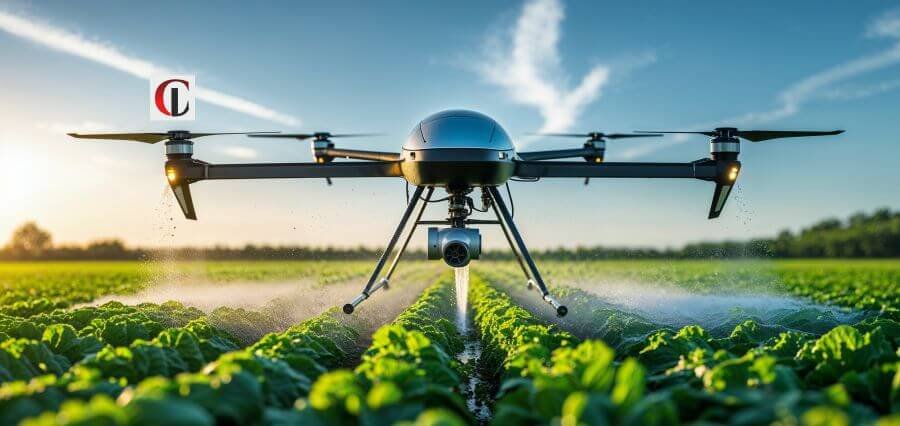
The Future of Precision Farming with Drones 2025: Revolutionizing Agriculture with Aerial Intelligence
The future of precision farming with drones by 2025 is not merely a distant concept; it's an accelerating reality, poised to fundamentally transform how we cultivate crops and manage agricultural landscapes. This article delves deep into how advanced drone technology is reshaping crop management, data collection, and decision-making for a smarter, more productive, and inherently more sustainable farm. As an SEO expert, I recognize the immense value in understanding this paradigm shift, which promises unparalleled efficiency and a significant boost in crop yield optimization for the global food supply.
The Dawn of Drone-Powered Agriculture: A New Era of Efficiency
For centuries, farming has relied on manual labor and traditional methods. However, the advent of agricultural technology has ushered in an era of unprecedented innovation. Drones, or Unmanned Aerial Vehicles (UAVs), have emerged as a pivotal tool in this evolution, moving beyond mere novelty to become indispensable instruments for modern farmers. By 2025, their integration will be so profound that the very definition of smart farming will be inextricably linked to aerial intelligence.
The primary appeal of drones lies in their ability to collect vast amounts of granular data from the sky, swiftly and cost-effectively. Unlike satellite imagery, drones offer superior resolution and on-demand deployment, making them ideal for dynamic agricultural environments. This immediate access to high-quality information empowers farmers to make data-driven decisions, leading to optimized resource allocation, reduced waste, and ultimately, enhanced profitability. The shift from reactive farming to proactive, predictive agriculture is being spearheaded by these aerial workhorses.
Key Advantages of Drone Integration in Farming
- Unmatched Data Granularity: Drones can capture images with resolutions far superior to satellite imagery, identifying issues at a plant-by-plant level.
- Rapid Deployment: Farmers can deploy drones on demand to assess immediate concerns like disease outbreaks or water stress.
- Cost-Effectiveness: Over time, the investment in drone technology can significantly reduce operational costs associated with labor, water, and chemicals.
- Reduced Environmental Impact: Precision application of inputs minimizes runoff and chemical exposure, contributing to sustainable agriculture.
- Improved Worker Safety: Drones can perform tasks in hazardous or hard-to-reach areas, reducing human exposure to risks.
Key Applications of Drones in Precision Farming by 2025
By 2025, the versatility of drones in agriculture will expand dramatically, covering nearly every facet of the farming lifecycle. Their capabilities will extend far beyond simple aerial photography, encompassing complex analytical and operational roles.
Crop Monitoring and Health Assessment
One of the most impactful applications of drones is comprehensive crop monitoring. Equipped with advanced sensors such as multispectral, hyperspectral, and thermal cameras, drones can capture data invisible to the human eye. This allows for:
- Early Disease and Pest Detection: Multispectral imagery can identify changes in plant health before visible symptoms appear, enabling timely intervention and preventing widespread damage. This is critical for effective pest detection and management.
- Nutrient Deficiency Identification: By analyzing plant reflectance, drones can pinpoint areas lacking essential nutrients, allowing for targeted fertilization.
- Growth Stage Analysis: Tracking plant growth and canopy cover provides crucial insights for yield estimation and harvest planning, directly impacting crop yield optimization.
- Stress Mapping: Thermal cameras can detect water stress by identifying temperature variations in the canopy, guiding precise irrigation management.
Automated Spraying and Fertilization
The ability of drones to carry payloads has revolutionized the application of inputs. By 2025, drone spraying will be commonplace for:
- Precision Pesticide Application: Drones can target specific affected areas with pesticides, reducing overall chemical usage by up to 90% compared to traditional methods. This minimizes environmental impact and chemical drift.
- Variable Rate Fertilization: Based on soil health maps and nutrient deficiency data, drones can apply fertilizers precisely where needed, optimizing nutrient uptake and preventing over-fertilization.
- Weed Management: Drones equipped with AI can differentiate between crops and weeds, applying herbicides only to the targeted weeds, drastically cutting down on herbicide use.
Irrigation Management and Soil Health Analysis
Water is a precious resource, and drones are becoming indispensable in its efficient management:
- Water Stress Detection: Thermal imaging identifies areas of water stress or over-irrigation, enabling farmers to adjust irrigation schedules and conserve water.
- Drainage Mapping: Drones can create detailed topographic maps, identifying problematic drainage areas and guiding land leveling efforts.
- Soil Moisture Mapping: Specialized sensors can estimate soil moisture content across fields, informing precise irrigation decisions. This directly impacts soil health and prevents waterlogging or drought stress.
Planting and Seeding
While still emerging, drone-based planting and seeding is gaining traction:
- Reforestation and Cover Cropping: Drones can rapidly sow seeds in difficult or inaccessible terrains, accelerating reforestation efforts and facilitating the planting of cover crops for soil health.
- Precision Seeding: In certain specialized crops, drones can plant seeds at optimal spacing and depth, improving germination rates and uniformity.
Livestock Management and Surveillance
Beyond crop fields, drones offer significant benefits for livestock farmers:
- Herd Monitoring: Drones can quickly survey large pastures, locating animals, checking their health, and identifying strays.
- Boundary Patrol: Automated drone patrols can monitor fences and detect potential breaches, enhancing farm security.
- Thermal Imaging for Animal Health: Thermal cameras can detect sick animals by identifying elevated body temperatures, allowing for early intervention.
Technological Advancements Driving the Future
The rapid evolution of drone technology advancements is not just about better hardware; it's about the synergistic integration of multiple cutting-edge disciplines.
AI and Machine Learning Integration
The true power of agricultural drones lies in their ability to collect vast amounts of data. However, raw data is useless without interpretation. By 2025, Artificial Intelligence (AI) and Machine Learning (ML) algorithms will be the brains behind the drone operations:
- Automated Data Analysis: AI will process drone imagery in real-time, identifying anomalies, diseases, or nutrient deficiencies without human intervention. This enables instant insights and actionable recommendations for farm management.
- Predictive Analytics: ML models will use historical data combined with current drone observations to predict future outcomes, such as yield estimates or the likelihood of pest outbreaks, allowing for proactive strategies. This is the essence of predictive analytics in agriculture.
- Autonomous Decision-Making: Future drones might autonomously adjust spray patterns or flight paths based on real-time analysis, optimizing efficiency on the fly.
Improved Sensor Technology
The quality and variety of sensors will continue to improve, offering even more detailed insights:
- Hyper-spectral Imaging: Providing a much finer spectral resolution than multispectral, allowing for the detection of subtle changes in plant biochemistry.
- Lidar (Light Detection and Ranging): Creating highly accurate 3D models of fields, valuable for terrain mapping, biomass estimation, and precise volume calculations.
- Enhanced Thermal and RGB Cameras: Higher resolution and better light sensitivity will provide clearer images and more accurate temperature readings.
Enhanced Battery Life and Autonomy
Longer flight times and increased payload capacity are crucial for widespread adoption:
- Advanced Battery Technologies: Innovations in battery chemistry and design will enable drones to cover larger areas on a single charge, reducing downtime.
- Swarm Robotics: Multiple drones operating collaboratively, managed by a single operator or autonomously, will dramatically increase coverage and efficiency for large farms.
- Beyond Visual Line of Sight (BVLOS): Regulatory advancements and technological reliability will increasingly allow drones to operate autonomously over vast distances, significantly expanding their utility.
Regulatory Frameworks and Infrastructure
For drones to truly revolutionize agriculture, robust regulatory frameworks and supporting infrastructure are essential. By 2025, we expect clearer guidelines for BVLOS operations, standardized data formats, and more accessible airspace for agricultural UAVs. Furthermore, improved rural internet connectivity will be vital for real-time data transfer and remote drone operation.
Actionable Strategies for Adopting Drone Technology
For farmers considering integrating drones into their operations, a structured approach is key to maximizing return on investment and ensuring successful implementation. This isn't just about buying a drone; it's about building a new pillar of your precision agriculture strategy.
Step 1: Needs Assessment and Goal Setting
Before any purchase, identify specific challenges on your farm that drones could solve. Are you struggling with water management? High pesticide costs? Labor shortages? Define clear, measurable objectives for drone integration. For example, "Reduce water usage by 15% through precision irrigation" or "Decrease fertilizer costs by 10%." This clarity will guide your technology choices and ensure your investment aligns with your farm's unique requirements.
Step 2: Choosing the Right Drone and Sensors
The market offers a wide array of agricultural drones. Your choice should depend on your specific needs identified in Step 1. Consider:
- Farm Size: Larger farms may require drones with longer flight times or multiple drone systems.
- Crop Type: Different crops may benefit more from specific sensor types (e.g., thermal for water-intensive crops, multispectral for row crops).
- Required Data: Do you need basic RGB imagery, or advanced multispectral, thermal, or LiDAR data?
- Payload Capacity: If spraying or seeding is a goal, payload capacity is paramount.
- Software Compatibility: Ensure the drone's data output is compatible with your chosen farm management software.
Step 3: Data Management and Interpretation
Collecting data is only half the battle; interpreting it is where the real value lies. Invest in robust data processing software and consider cloud-based solutions for storage and analysis. Many platforms offer AI-driven analytics that translate raw data into actionable insights, such as prescription maps for variable rate application. Training yourself or your staff in basic data analytics and interpretation will be invaluable.
Step 4: Pilot Training and Safety Protocols
Operating agricultural drones, especially those carrying payloads, requires specialized skills and adherence to regulations. Obtain necessary certifications and licenses. Develop strict safety protocols for pre-flight checks, flight operations, and emergency procedures. Adherence to local aviation authorities' guidelines is non-negotiable for safe and legal operation.
Step 5: Integration with Existing Farm Systems
For maximum benefit, drone data should seamlessly integrate with your existing farm management systems, such as GPS-guided tractors, irrigation systems, and yield monitors. This creates a holistic ecosystem where all data points contribute to a unified decision-making process. Look for platforms that offer open APIs or direct integrations with popular agricultural software.
Challenges and Considerations for Widespread Adoption
While the benefits are clear, several challenges must be addressed for the full potential of drones in agriculture to be realized by 2025.
- Initial Investment Cost: High-end agricultural drones and their specialized sensors represent a significant upfront investment for many farmers, especially small and medium-sized operations.
- Regulatory Hurdles: Airspace regulations, particularly for BVLOS operations and drone spraying, can be complex and vary by region, hindering widespread adoption.
- Data Security and Privacy: The vast amounts of data collected raise concerns about data ownership, security, and privacy, necessitating robust protocols and clear legal frameworks.
- Skill Gap: Operating drones and interpreting their data requires new skills, and a shortage of trained professionals in rural areas could impede adoption.
- Connectivity Issues: Reliable internet connectivity in remote farming areas is crucial for real-time data transfer and cloud-based processing, which remains a challenge in many regions.
The Economic and Environmental Impact
The widespread adoption of drones in agriculture promises profound economic and environmental benefits, contributing significantly to global food security and sustainable agriculture goals.
- Increased Profitability: By optimizing input usage (water, fertilizers, pesticides), reducing labor costs, and improving yields, drones directly enhance farmers' bottom lines. The ability to make timely, informed decisions minimizes losses and maximizes returns.
- Resource Conservation: Precision application significantly reduces the overall consumption of water, chemicals, and energy. This not only cuts costs but also lessens the environmental footprint of farming, mitigating issues like soil degradation and water pollution.
- Enhanced Food Security: By increasing efficiency and productivity, drones help meet the growing global demand for food, especially as arable land becomes scarcer and climate change poses new challenges.
- Environmental Stewardship: The reduced use of harmful chemicals and optimized water management fosters healthier ecosystems, preserves biodiversity, and promotes long-term agricultural sustainability. This shift towards more responsible farming practices is a cornerstone of the future of precision farming with drones 2025.
The transformation driven by drones signifies a move towards a more data-centric, efficient, and environmentally conscious agricultural sector. Farmers who embrace these innovations will be at the forefront of this revolution, securing their future in a rapidly evolving global landscape.
Frequently Asked Questions
What is precision farming with drones?
Precision farming with drones involves using Unmanned Aerial Vehicles (UAVs) equipped with advanced sensors and cameras to collect highly detailed data about crops, soil, and livestock. This data is then analyzed to provide actionable insights, enabling farmers to make precise, targeted decisions regarding irrigation, fertilization, pest control, and planting, thereby optimizing resource use and improving yields. It's about applying the right amount of input, at the right time, in the right place, guided by aerial intelligence.
How will drones change agriculture by 2025?
By 2025, drones are expected to become an indispensable tool in agriculture, profoundly changing it by enabling unprecedented levels of efficiency and sustainability. They will facilitate widespread adoption of predictive analytics for crop health, automate precision spraying and fertilization, improve irrigation management through thermal mapping, and enhance livestock monitoring. The integration of AI and machine learning with drone data will lead to more autonomous decision-making in farm management, significantly boosting productivity and reducing environmental impact across the agricultural sector.
What are the main benefits of using drones in farming?
The main benefits of using drones in farming include significant improvements in crop yield optimization, reduced operational costs due to precise application of inputs (water, fertilizers, pesticides), enhanced resource conservation leading to more sustainable agriculture, and improved decision-making through real-time data. Drones also offer capabilities like early disease and pest detection, efficient mapping of fields for soil health analysis, and increased safety for farm workers by automating hazardous tasks.
Is drone technology affordable for small farms?
While high-end agricultural drones can be a significant investment, the market for drone technology advancements is rapidly expanding, offering a range of solutions for various budgets. Entry-level mapping drones are becoming increasingly affordable. Furthermore, service providers who offer drone-as-a-service (DaaS) are emerging, allowing small farms to access advanced drone capabilities without the upfront capital expenditure. The long-term savings from optimized resource use and increased yields often justify the investment, making it increasingly accessible even for smaller operations.
What kind of data do agricultural drones collect?
Agricultural drones collect a wide array of data using various sensors. Common data types include: RGB imagery (standard visual photos for general field overview), Multispectral imagery (captures light across specific bands to assess plant health, nutrient levels, and stress), Hyperspectral imagery (more detailed spectral data for precise detection of subtle plant changes), Thermal imagery (measures temperature variations to detect water stress or disease), and Lidar data (creates 3D models of terrain and crop height for volume estimation and drainage analysis). This rich data forms the backbone of modern precision agriculture, enabling detailed data analytics.

0 Komentar