
The Future of Reusable Rocket Technology 2025: Redefining Space Access and Beyond
The dawn of a new era in space exploration is being heralded by a revolutionary concept: reusable rocket technology. By 2025, this innovative approach is set to profoundly reshape our access to orbit, driving down costs, increasing launch frequency, and unlocking unprecedented opportunities for scientific discovery, commercial ventures, and even human settlement beyond Earth. This comprehensive guide delves into the transformative impact of recoverable launch vehicles, exploring the cutting-edge advancements, the evolving landscape, and the strategic implications that position reusability as the cornerstone of tomorrow's space economy. Prepare to discover how rapid reusability is not just a technological marvel but the fundamental enabler for a truly sustainable and expansive future in the cosmos.
The Genesis of Reusability: A Paradigm Shift in Space Access
For decades, space launches were synonymous with single-use, expendable rockets – an incredibly expensive and resource-intensive endeavor. Each mission required a brand-new, multi-million-dollar vehicle, akin to building a new airplane for every flight. This inherent inefficiency severely limited the frequency of launches and kept the cost of placing payloads into orbit astronomically high, stifling innovation and broader participation in space. The pursuit of reusability emerged as the logical next step, promising to turn rockets from disposable tools into durable, aircraft-like assets.
Evolution of Reusable Launch Vehicles (RLVs)
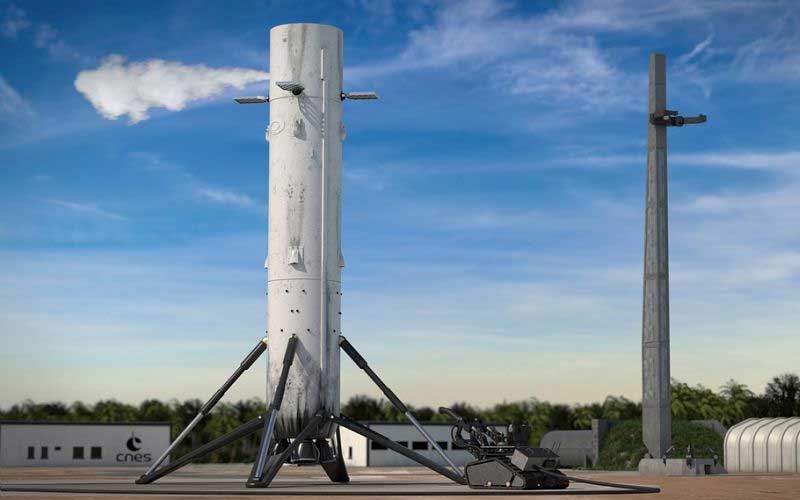
The journey towards practical reusable rockets has been long and arduous, marked by visionary concepts and persistent engineering challenges. While early attempts like the Space Shuttle demonstrated partial reusability, its complex and costly refurbishment process limited its economic advantage. The true game-changer arrived with the advent of propulsive vertical landing, pioneered most notably by SpaceX's Falcon 9. Its ability to land its first stage autonomously back at the launch site or on a drone ship revolutionized the industry. This breakthrough dramatically reduced operational costs and turnaround times, proving that full and rapid reusability was not just a dream but an achievable reality.
- SpaceX's Falcon 9 & Falcon Heavy: These workhorses have demonstrated hundreds of successful reflights, proving the economic viability of first-stage reuse. Their impact on launch costs has been unparalleled, democratizing access to Low Earth Orbit (LEO) for a multitude of satellite constellations and scientific missions.
- SpaceX Starship: Looking beyond 2025, Starship represents the epitome of SpaceX's reusable vision – a fully and rapidly reusable spacecraft and super heavy-lift rocket designed for Mars colonization, lunar missions, and point-to-point travel on Earth. Its large payload capacity and ambitious refueling capabilities in orbital mechanics are set to unlock new frontiers.
- Blue Origin's New Glenn: Jeff Bezos's Blue Origin is developing New Glenn, a heavy-lift orbital rocket with a reusable first stage, designed to land vertically on a ship. This system aims to compete directly in the heavy-lift market, emphasizing reliability and a high launch cadence.
- United Launch Alliance (ULA) Vulcan Centaur: While not fully reusable in the same vein, ULA's Smart Reusability concept for Vulcan Centaur aims to recover the BE-4 engines (the most expensive part of the first stage) via a mid-air capture system. This approach offers a different pathway to cost reduction.
Key Technological Advancements Driving Future Reusability
The success of reusable rocket technology is not solely dependent on a single innovation but on a confluence of advanced engineering disciplines working in concert. By 2025, several key areas will see continued refinement and breakthroughs, pushing the boundaries of what's possible for sustainable space travel.
Advanced Materials and Manufacturing
The ability to withstand extreme temperatures, immense structural loads, and repeated flight cycles is paramount for reusable rockets. Future advancements will focus on:
- High-Performance Alloys & Composites: Development of new nickel-based alloys for engine components and advanced carbon fiber composites for airframes that maintain integrity through multiple re-entries and landings.
- Additive Manufacturing (3D Printing): Widespread use of 3D printing for complex engine parts, structural components, and even entire sections of rockets, allowing for rapid prototyping, reduced part count, and optimized designs for strength and weight. This contributes significantly to faster production and maintenance.
- Thermal Protection Systems (TPS): More durable, lighter, and easier-to-inspect TPS materials for re-entry vehicles, reducing refurbishment time and costs between flights.
Precision Landing Systems and Autonomous Operations
The ability to land a rocket stage accurately and safely is a cornerstone of reusability. By 2025, these systems will become even more sophisticated:
- Enhanced Navigation & Guidance: Integration of advanced GPS, inertial navigation systems, and real-time trajectory correction algorithms for pinpoint accuracy in landing.
- Advanced Sensors & Computer Vision: Utilization of LiDAR, radar, and optical cameras for precise altitude, velocity, and position sensing, enabling more robust autonomous landing in varying weather conditions.
- AI & Machine Learning for Flight Control: AI-driven flight control systems that can adapt to unexpected conditions, identify anomalies, and optimize landing trajectories in real-time, improving safety and reliability.
Engine Durability and Rapid Turnaround
The engine is the heart of the rocket, and its ability to withstand numerous flights without extensive overhaul is critical for economic reusability.
- Improved Engine Materials & Cooling: Research into new materials and cooling techniques for rocket engine components (e.g., combustion chambers, nozzles) to extend their operational lifespan significantly.
- Automated Inspection & Diagnostics: Development of robotic inspection systems and AI-powered diagnostic tools that can quickly assess engine health post-flight, identifying potential issues before they become critical, thereby facilitating rapid reusability.
- Modular Engine Design: Designing engines with easily replaceable modules to streamline maintenance and reduce downtime.
Propellant Management and Refueling in Orbit
For ambitious missions beyond LEO, orbital refueling becomes essential. This is particularly relevant for Starship and future deep-space missions.
- Cryogenic Propellant Transfer: Mastering the complex process of transferring super-cooled propellants (like liquid oxygen and methane) between spacecraft in the vacuum of space, minimizing boil-off and maximizing transfer efficiency.
- Orbital Depots: Establishment of propellant depots in orbit that can be stocked by reusable tankers, serving as cosmic gas stations for missions heading to the Moon, Mars, or beyond. This is a critical enabler for truly expansive space exploration.
The Future Landscape: Reusable Rocket Technology in 2025 and Beyond
The ripple effects of widespread reusable rocket technology will be felt across every facet of the space industry and beyond, creating new industries and expanding existing ones. By 2025, the trajectory is clear: a more accessible, sustainable, and vibrant space economy.
Cost Reduction and Accessibility
The most immediate and profound impact of reusable rockets is the dramatic reduction in launch costs. As companies perfect their recovery and refurbishment processes, the cost per kilogram to orbit continues to plummet. This enables:
- Proliferation of Satellite Constellations: Cheaper launches mean more satellites, leading to global internet coverage, enhanced Earth observation, and improved communication networks.
- Democratization of Space: Startups, academic institutions, and even individual nations with smaller budgets can now afford to develop and launch their own payloads, fostering unprecedented innovation.
- New Commercial Ventures: Reduced costs open doors for space manufacturing, in-orbit servicing, and potentially even space tourism becoming a more tangible reality.
Increased Launch Cadence and Responsiveness
The ability to reuse rocket stages means faster turnarounds between missions. This leads to:
- Daily Launch Capabilities: While not fully realized by 2025, the groundwork is being laid for rockets to launch multiple times a day or week, much like commercial aircraft. This will be critical for mega-constellations and responsive national security missions.
- Rapid Deployment: The military and disaster relief agencies can benefit from rapid deployment of assets into orbit, providing crucial services in times of crisis.
Sustainable Space Economy and In-Situ Resource Utilization (ISRU)
Reusability is inherently more sustainable, but its impact extends further:
- Reduced Space Debris: By not discarding rocket stages into space, reusable rockets contribute to a cleaner orbital environment.
- Enabling Lunar & Martian Bases: Cheaper, more frequent, and larger-payload launches are essential for building and sustaining permanent human settlements on the Moon and Mars. This directly ties into the development of in-situ resource utilization (ISRU), where resources like water ice are extracted from celestial bodies to produce fuel and life support.
Emergence of New Players and Global Competition
The success of pioneers like SpaceX has spurred a global race in reusable rocket technology. By 2025, we will see:
- Increased Competition: More companies from established space powers like Europe (ArianeGroup), China (various state-owned and private entities), India (ISRO), and Japan (JAXA) are investing heavily in their own reusable launch capabilities, driving further innovation and efficiency.
- Diversification of Reusability Approaches: While vertical landing is dominant, other methods like winged recovery or mid-air capture might gain traction for specific use cases.
Challenges and Hurdles on the Path to Full Reusability
Despite the immense progress, the path to fully realized and economically optimal reusable rocket technology is not without its challenges. Addressing these hurdles will be crucial for sustained success beyond 2025.
Technical Complexities and Reliability Concerns
Repeated exposure to the harsh conditions of launch, space, and re-entry puts immense stress on rocket components.
- Wear and Tear: Identifying and mitigating fatigue, material degradation, and thermal stress on engines, structures, and avionics over multiple flights.
- Refurbishment vs. Manufacturing Cost: The cost of inspecting, repairing, and recertifying a used rocket stage must remain significantly lower than manufacturing a new one. This balance is constantly being optimized.
- Launch Success Rate: Ensuring that reusability does not compromise the overall reliability and safety of launch missions is paramount. Every failure carries significant financial and reputational costs.
Regulatory Frameworks and Space Traffic Management
The increased frequency of launches due to reusability presents new challenges for managing orbital space.
- Orbital Debris Mitigation: With more objects in orbit, even if they are functional, the risk of collisions increases, necessitating robust international guidelines for debris mitigation.
- Launch and Re-entry Corridors: Managing increasingly busy launch windows and re-entry paths, especially for propulsive landings, requires sophisticated air and space traffic control systems.
- International Cooperation: Developing harmonized international regulations for space activities, including licensing for reusable vehicles and their ground operations.
Economic Viability Beyond Initial Investments
While the long-term cost savings are clear, the upfront investment in developing reusable technology is substantial.
- Infrastructure Costs: Building and maintaining robust landing pads, processing facilities, and specialized ground support equipment for reusable rockets requires significant capital.
- Market Demand: The overall demand for launch services needs to grow sufficiently to justify the high flight rates that make reusability maximally cost-effective. The burgeoning satellite deployment market is a strong driver here.
Actionable Insights and Strategic Implications
Understanding the future of reusable rocket technology is not just about appreciating engineering prowess; it's about recognizing the strategic opportunities and challenges it presents for various stakeholders.
For Governments and Space Agencies
- Invest in R&D: Continue funding research into advanced materials, AI for autonomous flight, and in-space propellant transfer technologies.
- Foster Public-Private Partnerships: Collaborate with private companies to accelerate technological development and de-risk ambitious programs.
- Develop Agile Regulatory Frameworks: Adapt existing regulations and create new ones that facilitate safe and frequent reusable rocket operations while ensuring environmental stewardship and space sustainability. Learn more about space policy.
For Private Industry and Investors
- Identify Niche Markets: Beyond mega-constellations, explore opportunities in in-orbit servicing, space debris removal, and lunar logistics, all enabled by cheaper access to space.
- Optimize Supply Chains: Invest in companies that provide durable components, advanced manufacturing solutions, and automated inspection systems crucial for rapid turnaround.
- Venture Capital Opportunities: Look for startups innovating in engine life extension, advanced propulsion, or ground support automation for reusable systems.
For Aspiring Space Professionals
- Focus on Interdisciplinary Skills: Expertise in aerospace engineering, robotics, AI, data science, and materials science will be highly sought after.
- Embrace Automation: The future of rocket operations involves increasing levels of automation; understanding these systems will be key.
- Consider Careers in Space Logistics: As space becomes more accessible, the need for efficient logistics, maintenance, and traffic management will grow exponentially.
Frequently Asked Questions
What is the primary benefit of reusable rocket technology?
The primary benefit of reusable rocket technology is the dramatic reduction in the cost of accessing space. By allowing rocket components, particularly the first stage and potentially the upper stage, to be recovered and reflown, the need to build entirely new vehicles for each launch is eliminated. This significantly lowers the operational expenses per mission, making space more accessible for various purposes like satellite deployment, scientific research, and future human exploration.
How does reusable rocket technology impact space exploration?
Reusable rocket technology profoundly impacts space exploration by making ambitious missions more feasible and affordable. Lower launch costs mean more scientific probes can be sent to distant planets, more telescopes can be placed in orbit, and larger, more complex structures can be assembled in space. Crucially, it is a key enabler for establishing permanent human bases on the Moon and Mars, as it allows for the frequent and cost-effective transport of large amounts of cargo, supplies, and personnel.
Which companies are leading the reusable rocket race?
Currently, the companies at the forefront of the reusable rocket technology race are primarily SpaceX with its Falcon 9, Falcon Heavy, and the ambitious Starship program, and Blue Origin with its New Shepard suborbital vehicle and the orbital New Glenn rocket under development. Other players like United Launch Alliance (ULA) are also incorporating elements of reusability into their designs, such as ULA's Smart Reusability for the Vulcan Centaur. Many other global players and startups are also entering this competitive and rapidly evolving field.
Will reusable rockets make space travel affordable for everyone by 2025?
While reusable rocket technology is rapidly driving down launch costs and making space more accessible, it is unlikely to make space travel affordable for "everyone" by 2025. The immediate impact is primarily on commercial and government space activities, enabling more frequent and cheaper satellite launches and scientific missions. For individual space tourism, costs will still be substantial, though significantly lower than previous estimates. The long-term trajectory suggests a gradual decrease in prices, potentially making space travel a more common luxury within the next few decades, rather than by 2025.

0 Komentar