
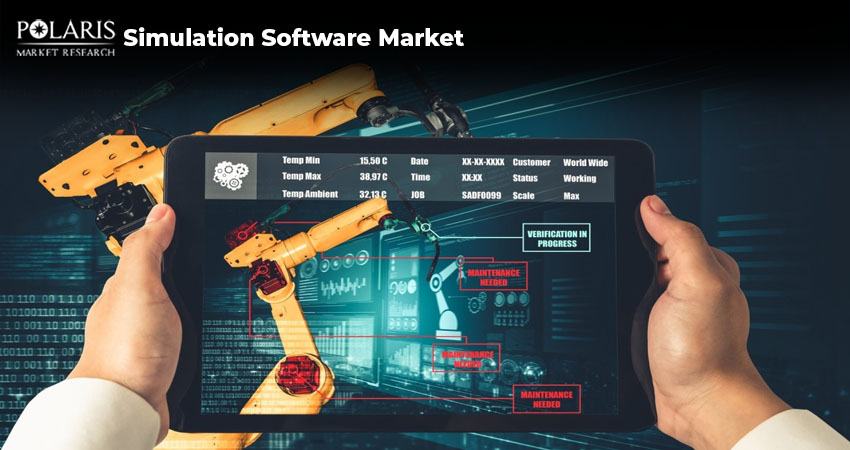
The Future of Simulation Technology in 2025: A Deep Dive into Transformative Innovation
Prepare for a paradigm shift. By 2025, simulation technology is poised to transcend its traditional boundaries, evolving from a specialized engineering tool into an indispensable, pervasive force driving innovation across virtually every sector. This isn't merely an incremental upgrade; we are on the cusp of a revolution where highly sophisticated, real-time simulation environments, powered by advanced artificial intelligence and integrated with the burgeoning metaverse, will redefine how we design, train, operate, and even interact with the world. This article delves deep into the transformative trajectory of simulation, exploring key technological drivers, its profound impact on industries, and the strategic imperatives for businesses seeking to harness its unparalleled potential.
The Evolving Landscape of Simulation Technology Towards 2025
The journey of simulation has been one of continuous advancement, from rudimentary physical models to complex computational fluid dynamics and finite element analysis. However, the pace of evolution has accelerated dramatically, fueled by exponential growth in computing power, the proliferation of data, and breakthroughs in machine learning. As we approach 2025, simulation is moving beyond mere analysis; it's becoming a dynamic, predictive, and interactive mirror of reality. This shift is fundamentally altering how organizations approach problem-solving, risk mitigation, and strategic planning. The concept of digital transformation is no longer abstract; it's being concretized through the pervasive integration of advanced simulation models into daily operations.
The convergence of several cutting-edge technologies is propelling this evolution. We are seeing a blurring of lines between the physical and virtual worlds, enabling unprecedented levels of insight and control. Businesses that recognize this trend and proactively invest in next-generation simulation capabilities will be the ones leading their respective fields, gaining significant competitive advantages through enhanced efficiency, reduced costs, and accelerated time-to-market. The ability to model complex systems, predict outcomes with high fidelity, and train personnel in risk-free, immersive environments is no longer a luxury but a strategic necessity.
Key Drivers Shaping Simulation's Future in 2025
Several technological pillars are underpinning the rapid advancement and widespread adoption of simulation by 2025. Understanding these drivers is crucial for anticipating the capabilities and applications that will become commonplace.
Artificial Intelligence and Machine Learning Integration
The synergy between AI in simulation is perhaps the most impactful development. Traditional simulations often require extensive manual setup, parameter tuning, and computational resources. AI and machine learning (ML) are automating these processes, making simulations faster, more accurate, and more accessible. AI algorithms can learn from vast datasets, optimizing simulation parameters, predicting outcomes, and even generating new scenarios. This leads to significantly enhanced predictive modeling capabilities, allowing for more precise forecasting and decision-making.
- Automated Model Generation: AI can interpret real-world data to automatically construct or refine simulation models, significantly reducing development time.
- Optimized Parameter Tuning: Machine learning algorithms can explore vast parameter spaces to find optimal configurations for desired outcomes, from product design to operational efficiency.
- Accelerated Computation: AI-powered surrogate models can approximate complex simulations in fractions of the time, enabling real-time analysis and rapid iteration.
- Enhanced Predictive Accuracy: By learning from historical data and real-time sensor inputs, AI-driven simulations can predict system behavior with unprecedented fidelity, crucial for applications like autonomous systems testing.
Actionable Tip: Businesses should explore integrating AI/ML frameworks with their existing simulation tools to unlock advanced scenario planning capabilities and accelerate design cycles. This involves investing in data infrastructure and talent skilled in both simulation and data science.
The Rise of Digital Twins and Metaverse Integration
Perhaps no concept embodies the future of simulation technology in 2025 more profoundly than the digital twin. A digital twin is a virtual replica of a physical asset, process, or system, continuously updated with real-time data from its physical counterpart. By 2025, digital twins will be ubiquitous, providing a dynamic, living model that enables proactive maintenance, performance optimization, and predictive analysis across entire lifecycles.
The evolution of digital twins is inextricably linked to the burgeoning concept of the metaverse. As the metaverse matures, these highly detailed, interactive digital twins will not just exist in isolated applications but will become integral components of interconnected, persistent virtual worlds. This allows for:
- Collaborative Virtual Prototyping: Engineers and designers from disparate locations can interact with a virtual prototype in a shared metaverse space, making real-time adjustments and collaborating seamlessly.
- Immersive Training Environments: Complex industrial processes or surgical procedures can be practiced in a fully interactive, risk-free metaverse environment, enhancing skill acquisition and retention.
- Lifecycle Management: From design and manufacturing to operation and decommissioning, digital twins in the metaverse will provide a comprehensive, real-time overview of an asset's entire journey, optimizing every stage.
Practical Advice: Organizations should begin by identifying critical assets or processes for which a digital twin would yield the highest return on investment. Focus on integrating IoT sensors for real-time data feeds and developing clear use cases for virtual prototyping and operational optimization.
Hyper-Realistic Immersive Experiences (VR/AR/MR)
The advancements in virtual reality (VR), augmented reality (AR), and mixed reality (MR) hardware and software are transforming how we interact with simulations. By 2025, these immersive technologies will provide unparalleled realism and engagement, making simulated experiences virtually indistinguishable from reality in many contexts. This is critical for:
- Immersive Training: From intricate surgical procedures to complex machinery operation, VR/AR enables hands-on, experiential learning without risk or costly physical resources. This includes high-fidelity surgical training simulators and industrial equipment operation training.
- Product Design Visualization: Designers can walk through a virtual model of a new car, building, or product, interacting with it as if it were real, identifying flaws and iterating rapidly before physical production.
- Remote Assistance and Collaboration: AR overlays real-time simulation data onto the physical world, allowing remote experts to guide on-site technicians through complex repairs or installations.
The increased fidelity and reduced latency of VR/AR headsets, coupled with more intuitive interaction methods, will make these virtual reality simulation and augmented reality solutions indispensable tools across various industries, enhancing both efficiency and safety.
Transformative Applications Across Industries by 2025
The influence of advanced simulation technology will permeate almost every industry, driving efficiency, safety, and innovation. Here’s a glimpse into specific sectoral impacts:
Manufacturing and Engineering: Beyond Prototyping
In manufacturing, simulation will extend far beyond traditional product design and testing. By 2025, industrial simulation will encompass entire factories, supply chains, and production lines. Manufacturers will leverage digital twins for virtual commissioning of new assembly lines, simulating every robot and machine interaction before physical installation. This significantly reduces downtime, optimizes throughput, and minimizes costly errors. Real-time simulation will monitor production flows, predict bottlenecks, and suggest optimal adjustments. The focus shifts to:
- Predictive Maintenance: Simulating wear and tear on machinery to predict failures and schedule maintenance proactively.
- Production Optimization: Running countless "what-if" scenarios to fine-tune production schedules, resource allocation, and quality control.
- Supply Chain Resilience: Simulating disruptions (e.g., natural disasters, geopolitical events) to build robust and adaptive supply chains.
The smart factory of 2025 will be a highly simulated environment, where every component and process is modeled and optimized digitally.
Healthcare: Precision, Training, and Patient Care
The healthcare simulation sector is undergoing a profound transformation. By 2025, simulation will be integral to personalized medicine, surgical planning, and medical education. High-fidelity surgical training simulators will allow aspiring and experienced surgeons to practice complex procedures repeatedly without risk to patients. Beyond training, patient-specific digital twins, derived from MRI, CT scans, and other medical data, will enable surgeons to simulate operations on a patient's unique anatomy, predicting outcomes and identifying potential complications beforehand. This leads to:
- Personalized Treatment Plans: Simulating drug efficacy on a patient's unique biological model to determine optimal dosages and therapies.
- Medical Device Development: Rapidly prototyping and testing new medical devices in virtual environments, accelerating innovation and ensuring safety.
- Epidemiological Modeling: Simulating disease spread and intervention strategies to inform public health policy.
Actionable Tip: Healthcare providers should invest in advanced simulation platforms for continuous professional development and integrate patient-specific modeling into their pre-operative planning processes to enhance patient safety and outcomes.
Automotive and Aerospace: Autonomous Systems and Safety
The development and deployment of autonomous systems, particularly in the automotive and aerospace industries, are heavily reliant on simulation. By 2025, autonomous vehicle simulation will be the primary method for testing self-driving cars across billions of miles in virtual environments, encountering every conceivable road condition, weather pattern, and pedestrian interaction. This is crucial for validating safety and performance before real-world deployment.
Similarly, in aerospace, aerospace engineering simulation continues to advance, from designing next-generation aircraft to training pilots and air traffic controllers. High-fidelity flight simulators provide realistic environments for emergency procedure training, while aerodynamic simulations optimize fuel efficiency and structural integrity. The future sees:
- Virtual Validation: Thoroughly testing complex systems like self-driving car software or aircraft control systems in simulation, reducing the need for costly and time-consuming physical tests.
- Human-Machine Interface Optimization: Simulating driver or pilot interactions with new systems to ensure intuitive and safe operation.
- Predictive Maintenance for Fleets: Using digital twins of vehicles and aircraft to predict component failures and optimize maintenance schedules for entire fleets.
Practical Advice: Companies in these sectors must prioritize investment in robust simulation platforms capable of handling vast datasets and complex physics, alongside developing strong data validation protocols to ensure simulation accuracy.
Urban Planning and Smart Cities: Sustainable Development
Simulation is becoming an indispensable tool for urban planning simulation and developing smart city solutions. By 2025, city planners will use comprehensive digital twins of urban environments to simulate everything from traffic flow and public transport efficiency to energy consumption and disaster response. This enables data-driven decision-making for sustainable development:
- Traffic Optimization: Simulating different road layouts, traffic light timings, and public transport routes to alleviate congestion and reduce emissions.
- Energy Grid Management: Modeling energy demand and supply to optimize smart grids, integrate renewable energy sources, and prevent blackouts.
- Disaster Preparedness: Simulating natural disasters (e.g., floods, earthquakes) to test evacuation plans, emergency response protocols, and infrastructure resilience.
- Resource Allocation: Optimizing the placement of public services, parks, and housing to create more livable and efficient urban spaces.
These simulations provide a risk-free sandbox for experimenting with urban interventions, allowing planners to foresee impacts and refine strategies before implementation.
Overcoming Challenges and Future-Proofing Your Strategy
While the prospects for simulation technology are incredibly exciting, several challenges must be addressed to fully realize its potential by 2025.
Data Integrity and Computational Power
The accuracy and reliability of any simulation are directly tied to the quality and quantity of input data. As simulations become more complex and integrated with real-world systems, ensuring data integrity and security becomes paramount. Furthermore, the computational demands of hyper-realistic, real-time simulations are immense, requiring significant investments in high-performance computing (HPC), cloud infrastructure, and potentially quantum computing solutions in the longer term. Organizations must develop robust data governance strategies and secure access to scalable computing resources.
Interoperability and Standardization
Currently, many simulation tools operate in silos, making it challenging to integrate models from different disciplines or software vendors. By 2025, there will be a growing need for greater interoperability and established simulation standards to facilitate seamless data exchange and model integration across diverse platforms and organizations. This will enable the creation of more comprehensive and interconnected simulations, fostering true system integration and collaborative innovation.
Ethical Considerations and Human-in-the-Loop Design
As simulations become more autonomous and predictive, ethical considerations come to the forefront. Biases in training data for AI-driven simulations can lead to biased outcomes. Questions around accountability, transparency, and the potential for misuse must be addressed. Emphasizing human-in-the-loop simulation design ensures that human oversight and decision-making remain central, preventing over-reliance on purely automated systems and addressing the ethical implications of increasingly powerful simulation models.
Actionable Strategies for Embracing Simulation's Future
To capitalize on the transformative potential of simulation technology by 2025, organizations should adopt a proactive and strategic approach:
- Invest in Scalable Infrastructure: Prioritize cloud-based simulation platforms and access to HPC resources to handle the increasing computational demands and ensure scalability.
- Develop Cross-Functional Talent: Foster teams with expertise spanning engineering, data science, AI, and domain-specific knowledge to build and interpret advanced simulation models effectively.
- Embrace Data-Driven Decision Making: Implement robust data collection, management, and analytics strategies to feed high-quality data into your simulations and derive actionable insights.
- Pilot Digital Twin Initiatives: Start with focused digital twin projects for critical assets or processes to gain experience, demonstrate value, and build internal capabilities.
- Explore Immersive Training Solutions: Integrate VR/AR into training programs to enhance skill development, reduce risks, and improve learning outcomes for complex tasks.
- Foster Collaborative Ecosystems: Engage with technology providers, academic institutions, and industry peers to share best practices, develop standards, and co-create innovative solutions.
- Prioritize Ethical AI and Human Oversight: Design simulation systems with transparency, fairness, and human-in-the-loop controls to ensure responsible and beneficial deployment.
The future of simulation technology in 2025 is not a distant vision but an imminent reality. By strategically embracing these advancements, businesses can unlock unparalleled efficiencies, drive innovation, and establish a significant competitive edge in an increasingly complex and data-driven world. Start exploring these possibilities today to shape your future.
Frequently Asked Questions
What is a digital twin and how will it evolve by 2025?
A digital twin is a virtual replica of a physical object, process, or system, continuously updated with real-time data from its physical counterpart. By 2025, digital twins will evolve from individual asset models to interconnected systems of systems, forming comprehensive virtual representations of entire factories, cities, or even supply chains. They will integrate more deeply with AI for predictive analysis and optimization, and become integral components of the nascent metaverse, enabling more immersive and collaborative interaction and decision-making for lifecycle management.
How will AI impact the accuracy of simulation models?
AI will profoundly enhance the accuracy of simulation models by automating complex tasks, learning from vast datasets, and optimizing parameters. Machine learning algorithms can identify subtle patterns and relationships within data that human modelers might miss, leading to more precise predictive modeling. AI can also accelerate computation through surrogate models, allowing for more iterations and higher fidelity in real-time, ultimately resulting in more reliable and accurate simulation outcomes for diverse applications, from industrial simulation to healthcare.
What industries will see the most significant transformation from simulation by 2025?
While all industries will benefit, sectors poised for the most significant transformation by 2025 include manufacturing and engineering (through virtual prototyping, virtual commissioning, and smart factories), healthcare (with surgical training simulators and personalized medicine), automotive and aerospace (for autonomous vehicle simulation and system validation), and urban planning (for smart city solutions and infrastructure optimization). These industries inherently deal with complex systems where the ability to model, predict, and optimize offers immense value in terms of efficiency, safety, and innovation.
Is simulation technology accessible for small and medium-sized businesses (SMBs)?
Absolutely. While advanced simulation used to require significant investment, the rise of cloud-based simulation platforms and software-as-a-service (SaaS) models is making powerful simulation tools increasingly accessible for SMBs. These solutions often offer pay-as-you-go pricing, reduced IT overhead, and user-friendly interfaces, democratizing access to capabilities previously reserved for large enterprises. SMBs can start with specific, high-impact use cases to demonstrate ROI before scaling their simulation adoption.
What are the primary challenges in adopting advanced simulation solutions?
The primary challenges in adopting advanced simulation solutions include acquiring and managing high-quality, relevant data for accurate models (data integrity), securing sufficient computational resources (often requiring high-performance computing or cloud access), addressing the skills gap in building and interpreting complex simulations, ensuring interoperability between different software platforms, and navigating the ethical considerations of AI-driven simulations, particularly in safety-critical applications. Overcoming these challenges requires strategic planning, investment in technology, and continuous talent development.

0 Komentar