
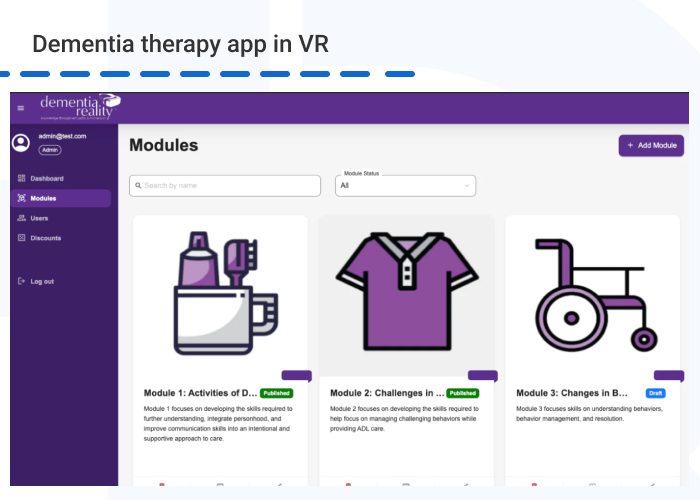
The Future of Virtual Reality Therapy Applications 2025: A Deep Dive into Immersive Healing
The landscape of healthcare is undergoing a profound transformation, with virtual reality therapy emerging as a groundbreaking frontier. As we approach 2025, the potential for immersive healing through advanced VR applications is not just a concept but a rapidly materializing reality. This comprehensive guide explores how VR therapy is set to revolutionize patient care, offering unparalleled opportunities for personalized, engaging, and highly effective therapeutic interventions. From enhanced mental health support to innovative pain management solutions, the future promises a significant expansion of digital therapeutics, fundamentally altering how we approach wellness and recovery.
Understanding the Trajectory: VR Therapy's Evolution Towards 2025
Virtual reality has transcended its gaming origins to become a powerful tool in clinical settings. Initially explored for niche applications like phobia treatment and pain distraction, its capabilities have expanded dramatically. By 2025, we anticipate a maturation of the technology, moving beyond proof-of-concept to widespread adoption in various medical disciplines. This evolution is driven by significant advancements in hardware, software, and a growing body of evidence from rigorous clinical trials demonstrating its efficacy across diverse conditions. The focus shifts from merely simulating environments to creating highly interactive, data-rich therapeutic experiences that can be tailored to individual patient needs.
Key Drivers Propelling VR Therapy Forward
- Technological Refinements: Lighter, more affordable, and higher-resolution headsets with improved tracking and haptic feedback enhance the sense of presence and realism, crucial for effective immersive therapy.
- Artificial Intelligence (AI) Integration: AI algorithms are enabling dynamic, adaptive virtual environments that respond in real-time to patient physiological and psychological states, personalizing the therapeutic journey.
- Data Analytics and Biofeedback: The ability to collect and analyze vast amounts of patient data during VR sessions, combined with real-time biofeedback (e.g., heart rate, skin conductance), allows for precise monitoring and adjustment of interventions.
- Increased Research and Validation: A growing number of peer-reviewed studies are solidifying VR therapy's evidence base, paving the way for broader acceptance and integration into standard care protocols.
- Telehealth Convergence: The acceleration of telehealth adoption has created a fertile ground for remote VR therapy delivery, enhancing accessibility and continuity of care.
Transformative Applications: Where VR Therapy Will Shine by 2025
The scope of virtual reality therapy applications is set to broaden considerably, addressing some of the most pressing challenges in healthcare. We foresee VR becoming an indispensable component in several key therapeutic areas, offering unique advantages over traditional methods.
Mental Health Innovation and Psychological Well-being
One of the most impactful areas for VR therapy is mental health. By 2025, VR will be a frontline tool for a wide range of psychological conditions, offering safe, controlled, and repeatable environments for therapeutic interventions.
- Anxiety Disorders and Phobias: Exposure therapy in VR allows patients to gradually confront fears (e.g., fear of heights, public speaking, social anxiety) in a controlled setting, reducing avoidance behaviors and promoting habituation without the logistical challenges or risks of real-world exposure.
- Post-Traumatic Stress Disorder (PTSD): VR can create customized, trauma-informed scenarios for controlled exposure and processing of traumatic memories, significantly aiding PTSD recovery. Therapists can adjust variables to manage patient distress levels effectively.
- Depression and Mood Disorders: Immersive virtual environments designed for mood regulation, mindfulness, and cognitive restructuring can help patients develop coping mechanisms and improve emotional regulation. Scenarios focused on positive reinforcement and skill-building will be prevalent.
- Stress Management and Relaxation: Guided meditations and tranquil virtual environments will provide effective tools for stress management and relaxation, accessible even outside clinical settings.
- Social Skills Training: For individuals with social anxiety or autism spectrum disorder, VR offers a safe space to practice social interactions and communication skills in simulated social settings, promoting confidence and real-world transfer.
Advanced Pain Management Solutions
Chronic and acute pain continue to be significant global health burdens. VR therapy provides a non-pharmacological, engaging alternative for pain relief and management.
- Chronic Pain Management: VR can distract patients from pain by engaging their senses in alternative realities, reducing pain perception. Furthermore, it can be used for guided imagery, mindfulness, and even virtual physical therapy exercises that might be too painful or difficult in a traditional setting. This offers a powerful pain management solution.
- Acute Pain and Medical Procedures: During painful medical procedures (e.g., wound care, injections, dental work), VR acts as a powerful distraction, reducing the need for analgesics and improving patient comfort.
- Physical Rehabilitation: VR-guided exercises offer engaging, gamified approaches to physical therapy, motivating patients to adhere to their rehabilitation programs and providing real-time feedback on performance. This is particularly useful in neurological rehabilitation.
Neurological Rehabilitation and Cognitive Enhancement
For patients recovering from neurological injuries or living with neurodegenerative conditions, VR offers dynamic and measurable therapeutic pathways.
- Stroke and Traumatic Brain Injury (TBI) Recovery: VR environments can simulate real-world tasks, helping patients regain motor skills, balance, and cognitive functions in a safe and repeatable manner. Customized challenges can target specific deficits, enhancing neurological rehabilitation outcomes.
- Cognitive Training: VR applications designed to improve memory, attention, problem-solving, and executive functions will become increasingly sophisticated, aiding individuals with cognitive decline or learning difficulties.
- Parkinson's Disease and Multiple Sclerosis: VR can provide engaging platforms for gait training, balance exercises, and fine motor skill practice, improving mobility and quality of life.
Technological Innovations Shaping the 2025 Landscape
The rapid pace of technological innovation is the bedrock upon which the future of VR therapy is built. By 2025, we anticipate several key advancements to become mainstream, significantly enhancing the efficacy and accessibility of VR interventions.
Seamless Integration and Enhanced Realism
- Standalone, Wireless Headsets: The widespread availability of powerful, untethered VR headsets will remove barriers to adoption, making therapy more comfortable and accessible in diverse settings, from clinics to homes.
- Advanced Haptics and Biometric Feedback: Haptic vests and gloves will provide tactile sensations, making virtual interactions more realistic. Integrated biometric sensors (e.g., eye-tracking, heart rate variability, galvanic skin response) will allow VR systems to intelligently adapt experiences based on a patient's real-time physiological and emotional state, creating truly personalized therapeutic interventions.
- AI-Driven Personalization and Adaptive Environments: AI will move beyond simple branching narratives to create truly dynamic virtual environments that adapt in real-time to a patient's progress, challenges, and emotional responses. This means the VR environment itself becomes a "smart therapist," subtly adjusting difficulty, pacing, and content to maximize therapeutic impact.
- Cloud-Based Platforms and Data Security: Secure, cloud-based platforms will facilitate remote access, data sharing (with appropriate consent), and continuous updates to VR therapy content. Robust cybersecurity measures will be paramount to protect sensitive patient data, building trust in healthcare technology.
The Imperative of Personalization and Data-Driven Care
The future of virtual reality therapy is inherently personalized. Gone are the days of one-size-fits-all approaches. By 2025, VR therapy will leverage vast datasets and advanced analytics to tailor experiences with unprecedented precision.
The integration of machine learning will enable VR systems to learn from each patient's interactions, identifying patterns and predicting optimal pathways for recovery. This means a VR program for anxiety reduction might dynamically adjust the intensity of a simulated social gathering based on a patient's real-time anxiety levels, as measured by biofeedback. For patient engagement, this level of responsiveness keeps individuals invested and motivated.
Furthermore, data collected during VR sessions—such as gaze patterns, movement tracking, physiological responses, and verbal cues—will provide clinicians with objective, quantifiable insights into patient progress that are often difficult to obtain through traditional methods. This data-driven approach will refine treatment protocols, enhance research, and ultimately lead to more effective and efficient care, solidifying VR's role as a cornerstone of future digital therapeutics.
Integration with Telehealth and Hybrid Care Models
The rapid expansion of telehealth during recent years has paved a clear path for VR therapy to become a core component of remote and hybrid care models. By 2025, it will be common for patients to receive VR therapy sessions from the comfort of their homes, supervised remotely by a clinician.
This integration offers immense benefits:
- Increased Accessibility: Patients in rural areas or those with mobility issues can access specialized VR therapy without needing to travel to a physical clinic.
- Continuity of Care: Therapy can continue uninterrupted, even if patients are unable to attend in-person sessions.
- Reduced Stigma: Receiving therapy at home can reduce the stigma associated with seeking mental health support.
- Cost-Effectiveness: Reduced overhead for clinics and travel costs for patients can make therapy more affordable.
Hybrid models, where patients alternate between in-person and remote VR sessions, will likely become the norm, offering flexibility while maintaining crucial human connection and oversight. This seamless blending of virtual and physical care environments represents the true promise of future healthcare technology.
Challenges and Opportunities for Widespread Adoption
While the future of virtual reality therapy applications 2025 is bright, several hurdles must be addressed for widespread adoption. Understanding these challenges also reveals significant opportunities for innovation and growth.
- Regulatory Pathways: As VR therapy gains traction, clear and streamlined regulatory approval processes (e.g., FDA clearance in the US) are essential to ensure safety, efficacy, and trust.
- Cost and Reimbursement: The initial investment in VR hardware and software, coupled with the need for robust reimbursement models from insurance providers, remains a significant barrier. Demonstrating clear cost-effectiveness and improved patient outcomes will be key.
- Clinician Training and Acceptance: Healthcare professionals require specialized training to effectively integrate VR into their practice. Education programs, certifications, and user-friendly platforms will be crucial for broader clinician acceptance.
- Patient Acceptance and Digital Literacy: While younger generations may readily embrace VR, older demographics or those less digitally literate may require more support and education to feel comfortable with the technology.
- Evidence-Based Research and Standardization: Continued rigorous research is needed to solidify the evidence base for specific conditions and to develop standardized protocols and best practices for VR therapy delivery.
These challenges present opportunities for developers to create more intuitive, affordable, and clinically validated solutions, and for policymakers to establish supportive frameworks that accelerate the integration of this transformative technology into mainstream healthcare.
Actionable Insights for Navigating the VR Therapy Landscape
For healthcare providers, innovators, and patients alike, understanding how to engage with the evolving VR therapy landscape is critical. Here are some practical tips:
- For Healthcare Providers:
- Stay Informed: Regularly review new research and developments in VR applications for therapy.
- Pilot Programs: Consider implementing small-scale pilot programs within your practice to gain hands-on experience and assess feasibility.
- Seek Training: Invest in training for yourself and your staff on how to effectively integrate VR into existing therapeutic frameworks.
- Collaborate: Partner with VR developers or research institutions to contribute to the evidence base and shape future solutions.
- For VR Developers and Innovators:
- Focus on Clinical Validation: Prioritize rigorous clinical trials and seek regulatory approvals to build trust and market acceptance for your digital therapeutics.
- User-Centric Design: Design applications with input from clinicians and patients to ensure usability, comfort, and therapeutic efficacy.
- Interoperability: Develop solutions that can easily integrate with existing electronic health record (EHR) systems and telehealth platforms.
- Address Accessibility: Consider diverse patient needs, including those with physical limitations or sensory sensitivities, when designing VR experiences.
- For Patients and Caregivers:
- Ask Your Provider: Inquire if VR therapy is an option for your condition and if your current healthcare provider offers or recommends it.
- Research Reputable Programs: Look for VR therapy programs backed by scientific evidence and offered by qualified professionals.
- Understand the Benefits: Educate yourself on how immersive therapy works and its potential advantages for your specific needs.
- Provide Feedback: Your feedback on VR experiences is invaluable for developers and clinicians to refine and improve applications.
Frequently Asked Questions
What is virtual reality therapy (VR therapy)?
Virtual reality therapy, often referred to as immersive therapy, is a therapeutic intervention that uses virtual reality technology to create simulated environments for patient treatment. These environments can be highly realistic or entirely fantastical, designed to help individuals confront fears, manage pain, practice social skills, or undergo cognitive rehabilitation in a safe, controlled, and repeatable setting. It's a cutting-edge form of digital therapeutics that leverages technology to enhance traditional therapeutic approaches.
How will VR therapy evolve by 2025 compared to today?
By 2025, VR therapy applications will be significantly more sophisticated, personalized, and integrated into mainstream healthcare. Today, many applications are still emerging or niche. In 2025, expect lighter, wireless headsets, advanced haptic feedback, and real-time biometric integration. AI will enable dynamic, adaptive environments that respond to individual patient needs, offering truly personalized therapeutic interventions. We'll also see a broader range of clinically validated applications, particularly in areas like mental health innovation, pain management solutions, and neurological rehabilitation, often delivered through integrated telehealth platforms.
Is VR therapy effective for mental health conditions like anxiety or PTSD?
Yes, virtual reality therapy has shown significant promise and growing evidence of effectiveness for various mental health conditions. For anxiety disorders and phobias, it excels in controlled exposure therapy, allowing patients to gradually face their fears without real-world risks. For PTSD recovery, it provides safe environments for trauma processing. VR also facilitates mindfulness, relaxation techniques, and social skills training, making it a powerful tool for anxiety reduction and improving overall psychological well-being. The immersive nature of VR can create a stronger sense of presence and engagement than traditional methods, leading to more impactful therapeutic outcomes.
What are the primary benefits of using VR for pain management?
The primary benefits of using VR for pain management are its ability to distract patients from pain and facilitate therapeutic exercises. By immersing patients in engaging virtual environments, VR diverts their attention from painful stimuli, effectively reducing pain perception. This can be particularly useful during acute procedures or for managing chronic pain conditions. Additionally, VR can gamify physical therapy exercises, making them more engaging and motivating for patients, thereby improving adherence to rehabilitation programs and contributing to more effective pain management solutions without relying solely on medication.

0 Komentar