
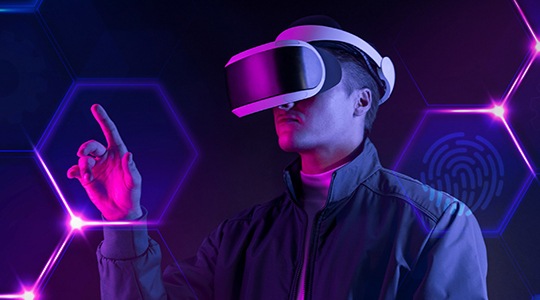
The Future of Virtual Reality Training Simulations 2025: Revolutionizing Workforce Development
The landscape of professional development is on the cusp of a profound transformation, with virtual reality training simulations poised to redefine how we acquire skills and prepare for the challenges of tomorrow. By 2025, these advanced immersive environments will move beyond novelty, becoming indispensable tools for workforce development across virtually every industry. Imagine learning complex surgical procedures, navigating hazardous industrial sites, or mastering intricate customer service scenarios in a risk-free, highly engaging digital realm. This evolution promises not only unparalleled skill acquisition but also a dramatic improvement in retention rates and operational efficiency. As an SEO expert, our aim is to delve deep into the technological advancements, strategic implementations, and profound benefits that will characterize the future of VR training, ensuring your organization is ready to harness its full potential.
The Current Landscape: Paving the Way for 2025
While the concept of VR training might seem futuristic, its foundational elements are already making significant strides. Today, companies are leveraging virtual reality for a myriad of applications, from onboarding new employees to practicing high-stakes procedures in fields like aviation, healthcare, and manufacturing. Early adopters have reported impressive VR training benefits, including reduced training costs, accelerated learning curves, and enhanced safety. However, current iterations often face limitations in terms of graphical fidelity, haptic feedback sophistication, and widespread accessibility. These challenges, rather than roadblocks, serve as catalysts for the rapid innovation we anticipate by 2025. The journey towards truly immersive learning environments is well underway, with significant investment pouring into research and development to overcome these hurdles and unlock VR's full potential as a transformative training medium.
Key Technological Drivers Shaping VR Training by 2025
The leap from current VR capabilities to the projected sophistication of 2025 will be powered by several converging technological breakthroughs. These innovations will collectively elevate virtual reality training simulations to an unprecedented level of realism, personalization, and accessibility, making them an integral part of any forward-thinking talent development strategy.
Enhanced Realism and Haptic Feedback
- Visual and Auditory Fidelity: By 2025, VR headsets will offer significantly higher resolutions (e.g., 8K per eye or beyond) and wider fields of view, virtually eliminating the "screen door" effect and making simulated environments indistinguishable from real ones. Advanced spatial audio will create truly immersive soundscapes, crucial for realistic scenario training.
- Advanced Haptic Feedback: The tactile experience will move beyond simple vibrations. Next-generation haptic gloves and full-body suits will simulate textures, temperatures, pressure, and resistance with remarkable accuracy. Imagine a surgeon feeling the resistance of tissue during a virtual operation, or an engineer feeling the weight and vibration of a simulated tool. This enhanced haptic feedback will dramatically improve motor skill development and muscle memory, directly contributing to real-world performance improvement.
AI Integration for Personalized Learning Paths
- Adaptive Learning Algorithms: Artificial intelligence will be the brain behind future VR training. AI will analyze a learner's performance in real-time, identifying strengths, weaknesses, and areas requiring more focus. This data-driven approach will allow the simulation to dynamically adjust difficulty, present tailored scenarios, and provide immediate, personalized feedback.
- Intelligent Virtual Tutors: AI-powered virtual instructors will guide learners, answer questions, and even role-play complex interactions. These tutors will adapt their teaching style to the individual, ensuring optimal engagement and comprehension. The integration of AI in VR training will create truly personalized learning paths, maximizing efficiency and effectiveness for every user.
Cloud-Based VR and 5G Connectivity
- Democratizing Access: The shift towards cloud-rendered VR will eliminate the need for expensive, high-end local hardware, making advanced simulation training accessible to a broader audience. Learners will be able to stream high-fidelity VR experiences to more affordable headsets or even mobile devices.
- Seamless Remote Collaboration: The widespread adoption of 5G networks will provide the low latency and high bandwidth necessary for smooth, lag-free cloud VR experiences. This will facilitate truly effective remote training solutions, enabling geographically dispersed teams to collaborate in shared virtual environments, conduct joint exercises, and receive instruction from anywhere in the world. This scalability and accessibility will make enterprise VR a more viable and cost-effective training solution for large organizations.
Digital Twins and XR Convergence
- Real-World Replication with Digital Twins: The concept of digital twins for training will become prominent. Companies will create precise virtual replicas of their physical assets – factories, machinery, entire facilities – allowing employees to train on exact digital counterparts before interacting with real equipment. This reduces wear and tear, minimizes downtime, and enhances safety.
- Extended Reality (XR) Integration: By 2025, the lines between virtual reality (VR), augmented reality (AR), and mixed reality (MR) will blur into a cohesive Extended Reality (XR) ecosystem. This means VR training simulations can be seamlessly integrated with AR overlays in the real world, providing on-the-job guidance and performance support. These XR training platforms will offer unprecedented flexibility and utility, moving beyond pure simulation to real-time assistance.
Sector-Specific Transformations: Where VR Training Will Soar
The impact of advanced VR simulations for training will be felt across diverse industries, each benefiting from tailored applications that address their unique challenges and training needs.
Healthcare and Medical Training
Healthcare professionals will increasingly rely on VR for surgical simulations, emergency response drills, and patient interaction practice. The ability to perform complex procedures in a risk-free environment, repeat scenarios endlessly, and receive objective feedback will dramatically improve surgical outcomes and patient safety. Medical students will gain hands-on experience with rare conditions, and nurses can practice empathetic communication with virtual patients, enhancing soft skills critical for patient care.
Manufacturing and Industrial Operations
For industries dealing with heavy machinery, intricate assembly lines, and hazardous materials, VR offers an unparalleled safe training ground. Employees can practice equipment maintenance, troubleshoot complex systems, and learn safety protocols without the risk of injury or damaging expensive equipment. This includes training for robotic operations, quality control, and even advanced logistics, leading to significant reductions in accidents and operational inefficiencies.
Public Safety and Emergency Services
Police, firefighters, and paramedics will utilize VR for realistic crisis management, tactical training, and de-escalation scenarios. The ability to simulate high-stress situations – from active shooter events to natural disasters – allows first responders to practice coordination, decision-making under pressure, and refine their responses in a controlled, repeatable environment. This leads to better preparedness and improved outcomes in real-world emergencies.
Corporate and Soft Skills Development
Beyond technical skills, VR is proving incredibly effective for developing crucial soft skills. Corporate training will leverage VR for leadership development, diversity and inclusion training, sales negotiation, and customer service simulations. The immersive nature of VR fosters empathy and allows individuals to practice difficult conversations or manage challenging interactions in a safe space, leading to more confident and competent employees. This is a prime example of how virtual reality education extends beyond manual tasks.
Actionable Strategies for Adopting Future VR Training
To successfully integrate the future of VR training simulations 2025 into your organization, a strategic and phased approach is essential. Proactive planning and a willingness to embrace innovation will be key to unlocking its transformative potential.
Pilot Programs and Scalability
- Start Small, Prove Value: Begin with targeted pilot programs in specific departments or for particular training needs where VR can deliver clear, measurable benefits. Focus on a single, high-impact use case to demonstrate ROI.
- Gather Feedback Iteratively: Continuously collect feedback from trainees and instructors to refine the simulation content and experience. This agile approach ensures the training is effective and engaging.
- Plan for Scalability: Once a pilot proves successful, develop a roadmap for scaling the VR training across the organization. Consider the infrastructure, content development pipeline, and support mechanisms needed for broader deployment. This strategic scaling supports long-term workforce development goals.
Content Creation and Curriculum Design
- Collaborate with Subject Matter Experts: The realism and effectiveness of VR simulations hinge on accurate content. Partner closely with internal subject matter experts to ensure the scenarios, procedures, and feedback mechanisms are technically sound and relevant.
- Invest in Instructional Design: Beyond technology, strong instructional design principles are paramount. Ensure that VR experiences are structured to facilitate learning objectives, provide clear instructions, and offer meaningful assessments. This ensures the immersive training technologies truly educate.
- Leverage Authoring Tools: As VR becomes more mainstream, user-friendly authoring tools will emerge, allowing organizations to create or customize their own VR training content without extensive coding knowledge.
Measuring ROI and Performance Metrics
Defining and tracking key performance indicators (KPIs) is critical to demonstrate the value of VR training. Focus on metrics such as:
- Training Time Reduction: How much faster are employees learning complex tasks?
- Error Rate Reduction: Are there fewer mistakes in real-world application after VR training?
- Cost Savings: Reductions in travel, equipment wear-and-tear, and instructor time.
- Retention Rates: Are learners retaining information more effectively?
- Skill Proficiency: Objective measures of skill acquisition and actual performance improvement in real-world scenarios, often tracked through integrated AI analytics.
Addressing Ethical Considerations and Data Privacy
As VR training becomes more sophisticated, organizations must proactively address ethical considerations and data privacy. This includes:
- Data Security: Protecting sensitive performance data collected within VR simulations.
- Bias in AI: Ensuring AI algorithms used for personalized learning are free from bias.
- Digital Well-being: Monitoring for potential issues like VR sickness or excessive screen time.
- Transparency: Being transparent with employees about how their performance data is collected and used.
The Human Element: Beyond Technology in VR Training
While technology drives the advancements in virtual reality training simulations, the human element remains paramount. The most effective VR training programs will be those that prioritize learner engagement, motivation, and the overall experience. It's not just about creating realistic simulations; it's about crafting compelling learning journeys that resonate with individuals.
Future VR training will increasingly embrace hybrid models, where the immersive digital experience complements and enhances traditional instructor-led training. Human instructors will evolve into facilitators and coaches, using VR data to provide targeted, personalized feedback and lead discussions that deepen understanding. The goal is to create truly immersive learning experiences that foster curiosity and intrinsic motivation, leading to sustained skill development and a more adaptable, resilient workforce. The human connection, even within a virtual setting, remains vital for truly impactful learning outcomes.
Frequently Asked Questions
What makes VR training in 2025 different from today?
By 2025, VR training simulations will be characterized by significantly enhanced realism (higher resolution, advanced haptics), pervasive AI integration for personalized learning paths, widespread cloud-based accessibility via 5G, and the convergence with augmented and mixed reality (XR). This means more sophisticated scenarios, real-time adaptive feedback, greater affordability, and seamless integration with real-world tasks, leading to unparalleled skill acquisition and performance improvement.
How can organizations prepare for advanced VR training simulations?
Organizations should start by researching potential VR applications relevant to their industry, investing in pilot programs to test the technology's effectiveness and ROI, and collaborating with VR solution providers. It's crucial to align VR training initiatives with broader workforce development strategies, prepare IT infrastructure for cloud-based VR, and begin cultivating internal expertise in instructional design for immersive environments. Prioritizing content quality and user experience is key.
What are the primary benefits of investing in future VR training?
The primary benefits include a significant reduction in training costs (e.g., travel, physical equipment wear-and-tear), accelerated learning curves, enhanced safety by practicing in risk-free simulated environments, improved knowledge retention due to immersive learning, and the ability to scale training globally. It also allows for consistent, standardized training experiences and provides valuable data for performance analysis, directly contributing to cost-effective training and operational excellence.
Will VR training replace traditional methods entirely?
While virtual reality training simulations will become a dominant force, they are unlikely to entirely replace traditional methods by 2025. Instead, a hybrid approach is expected to prevail. VR will excel at practical skill development, scenario-based training, and remote collaboration, while traditional methods (e.g., in-person mentorship, classroom discussions) will continue to play a vital role in fostering critical thinking, complex problem-solving, and human connection. VR will augment and enhance, rather than fully substitute, existing training paradigms.
What role does AI play in the future of VR training simulations?
AI's role in the future of VR training simulations is transformative. AI will power adaptive learning algorithms that personalize training paths based on individual performance, providing dynamic difficulty adjustments and targeted feedback. AI-driven virtual tutors will offer real-time guidance and answer questions, creating intelligent, responsive learning companions. Furthermore, AI will analyze vast amounts of performance data to provide deep insights into learner progress, optimize content, and predict future training needs, making AI in VR training a cornerstone of its effectiveness.

0 Komentar