
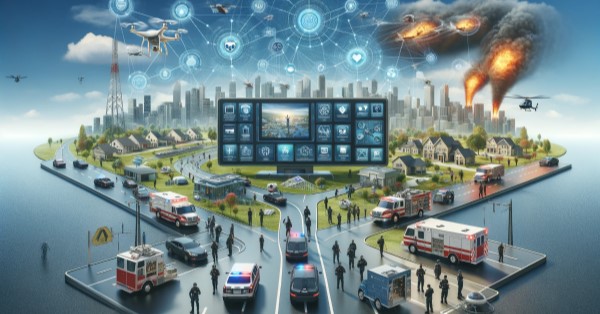
5G for Public Safety: Revolutionizing Emergency Response and First Responder Capabilities
The dawn of the 5G era promises to reshape industries and redefine connectivity, but perhaps no sector stands to benefit more profoundly than public safety and emergency response. Imagine a world where first responders have instant access to high-definition video feeds, real-time biometric data from victims, and augmented reality overlays guiding them through complex disaster zones. This isn't science fiction; it's the transformative power of 5G for public safety. This comprehensive guide delves into how this next-generation wireless technology is not just an upgrade, but a paradigm shift, providing unprecedented capabilities for our emergency services and enhancing critical communications when every second counts.
The Imperative Need for Next-Generation Critical Communications
In high-stakes scenarios, the ability to communicate, coordinate, and access information instantaneously is paramount. Traditional communication systems, while foundational, often face limitations in bandwidth, latency, and resilience, especially during large-scale incidents or natural disasters. The sheer volume of data required for modern emergency response – from live drone footage and body camera streams to precise location tracking and biometric monitoring – often overwhelms existing networks. This is where 5G technology steps in, offering a robust solution tailored to the unique demands of mission-critical applications.
For decades, public safety networks have relied on dedicated land mobile radio (LMR) systems or evolving LTE solutions. While effective for voice, these systems often struggle with the data-intensive requirements of today's complex incidents. 5G's fundamental architectural improvements, including its massive capacity, ultra-low latency, and enhanced reliability, directly address these shortcomings, paving the way for truly intelligent and interconnected emergency services.
Key 5G Pillars Powering Public Safety
Understanding the core attributes of 5G is crucial to grasping its impact on first responders:
- Enhanced Mobile Broadband (eMBB): Delivering multi-gigabit speeds, eMBB allows for the rapid transmission of large data files, high-definition video, and complex 3D models from incident sites. This means real-time information flow, crucial for commanders making swift decisions.
- Ultra-Reliable Low-Latency Communications (URLLC): With latency potentially as low as 1 millisecond, URLLC is vital for applications requiring instantaneous feedback, such as remote-controlled robots for hazardous material assessment, haptic feedback for remote surgery, or precise drone navigation in cluttered environments. This ensures commands are executed without perceptible delay, critical for safety.
- Massive Machine-Type Communications (mMTC): Enabling connectivity for millions of IoT devices per square kilometer, mMTC supports a vast ecosystem of sensors. Think smart city infrastructure providing environmental data, connected medical devices monitoring vital signs, or smart uniforms tracking a first responder's location and well-being. This allows for unparalleled situational awareness.
Transformative Use Cases of 5G in Emergency Response
The capabilities of 5G unlock a new realm of possibilities for emergency management, moving beyond simple voice communication to truly integrated data-driven operations.
Advanced Situational Awareness and Data Collection
One of the most immediate benefits of 5G for public safety is the dramatic improvement in situational awareness. High-bandwidth connections allow for:
- Real-Time Video Streaming: Body cameras, drone-mounted cameras, and fixed surveillance cameras can stream high-definition video back to command centers without lag or pixelation. This provides an unvarnished, up-to-the-second view of an evolving incident, crucial for tactical planning and resource allocation.
- IoT Sensor Networks: Deploying networks of low-power, wide-area IoT sensors can monitor everything from air quality in a fire zone to structural integrity in a collapsed building, or even the presence of hazardous chemicals. 5G's mMTC capabilities make these extensive sensor deployments feasible and reliable, feeding continuous data for informed decision-making.
- Augmented Reality (AR) and Virtual Reality (VR): First responders can use AR overlays on their visors or tablets to view building blueprints, identify hazardous materials, or even see the real-time location of team members and victims within a structure. VR can be used for immersive training simulations, preparing responders for complex scenarios before they ever face them in the field.
Enhanced Communication and Coordination
5G fundamentally changes how first responders communicate and coordinate their efforts:
- Push-to-Talk (PTT) over 5G: While LMR systems are robust for voice, 5G can provide an IP-based PTT solution with superior audio quality, immediate call setup, and the ability to seamlessly integrate data alongside voice.
- Group Communications and Multimedia Sharing: Beyond voice, 5G enables rapid sharing of photos, videos, documents, and maps among incident command, field units, and even external agencies, fostering unparalleled inter-agency coordination.
- Dynamic Ad-Hoc Networks: In areas where infrastructure is compromised (e.g., during a natural disaster), 5G-enabled devices can form self-healing mesh networks, ensuring connectivity even in the most challenging environments.
Autonomous Systems and Remote Operations
The low latency and high bandwidth of 5G are critical enablers for autonomous systems and remote operations, minimizing risk to human lives:
- Drones and UAVs: 5G allows for precise, real-time control of drones for search and rescue, damage assessment, delivering medical supplies, or even providing temporary communications in remote areas. The low latency ensures immediate response to pilot commands, while high bandwidth supports simultaneous high-resolution video streams.
- Robotics for Hazardous Environments: Robots equipped with 5G connectivity can be deployed into chemical spills, collapsed buildings, or active shooter situations, relaying critical data and performing tasks without endangering human responders. The ultra-low latency is crucial for delicate remote manipulation.
- Remote Medical Assistance: In remote or dangerous locations, paramedics can use 5G to connect with specialists in real-time, transmitting patient vital signs, high-definition images, and even enabling remote-guided procedures, potentially saving lives by bringing expert care to the point of injury.
The Role of Network Slicing and Private Networks
One of 5G's most revolutionary features for public safety is network slicing. This allows mobile operators to create multiple virtual, isolated networks on a single physical 5G infrastructure, each optimized for specific applications.
- Dedicated Slices for Public Safety: A dedicated network slice can be provisioned exclusively for emergency services, guaranteeing bandwidth, prioritizing traffic, and ensuring ultra-low latency even during peak network congestion. This means critical communications will always get through, regardless of civilian network usage.
- Customizable Performance: This slice can be tailored for specific public safety needs – one slice for high-bandwidth video, another for ultra-reliable push-to-talk, and yet another for massive IoT sensor deployments.
- Enhanced Security and Isolation: By isolating public safety traffic, network slicing inherently enhances security and reduces vulnerabilities, a critical concern for sensitive operations.
Beyond network slicing, the option for private 5G networks is gaining traction for large organizations or specific public safety entities. These dedicated networks offer complete control, enhanced security, and tailored coverage within a specific area, ideal for large hospitals, airports, military bases, or large-scale disaster zones where temporary, robust connectivity is needed. For example, a fire department could deploy a private 5G network at a major incident, ensuring dedicated, high-performance connectivity for all their equipment and personnel.
Addressing Challenges and Future Considerations
While the benefits of 5G for public safety are immense, successful implementation requires addressing several key challenges:
- Coverage and Infrastructure Deployment: Full 5G coverage, especially in rural or hard-to-reach areas often impacted by disasters, is still evolving. Significant investment in infrastructure, including small cells and robust backhaul, is required.
- Interoperability: Ensuring seamless communication and data exchange between different agencies, jurisdictions, and even different 5G equipment vendors remains a complex challenge. Standards bodies and collaborative efforts are crucial.
- Security and Resilience: While 5G offers advanced security features, the expanded attack surface due to massive IoT connectivity and software-defined networks necessitates robust cybersecurity protocols and constant vigilance. Networks must also be resilient to cyberattacks and physical damage during disasters.
- Cost and Funding: The deployment and maintenance of 5G infrastructure, along with the procurement of 5G-enabled devices for thousands of first responders, represent a significant financial undertaking for government agencies.
- Training and Adoption: Emergency services personnel will require comprehensive training to effectively utilize the new tools and capabilities offered by 5G, ensuring that the technology translates into tangible operational improvements.
Actionable Tips for Agencies Planning 5G Integration
For public safety agencies looking to leverage 5G, consider these practical steps:
- Pilot Programs: Start with small-scale pilot projects focusing on specific high-impact use cases (e.g., drone integration, real-time video streaming) to understand capabilities and identify challenges before full-scale deployment.
- Vendor Collaboration: Engage early with 5G network providers and equipment manufacturers to understand their public safety offerings and ensure solutions align with agency needs.
- Cross-Agency Planning: Foster collaboration with other local, state, and federal agencies to develop shared strategies for 5G deployment, ensuring interoperability and maximizing resource utilization.
- Cybersecurity First: Prioritize cybersecurity planning from the outset, integrating robust encryption, authentication, and threat detection mechanisms into all 5G deployments.
- Training and Skill Development: Invest in continuous training for first responders and IT staff to ensure they are proficient in using new 5G-enabled tools and managing the underlying technology.
The future of emergency response is intrinsically linked to advanced connectivity. As 5G networks mature and expand, their profound impact on saving lives, improving coordination, and enhancing the safety of first responders will become increasingly evident. It's not just about faster speeds; it's about building a more resilient, responsive, and intelligent public safety ecosystem. Agencies must actively engage with this evolving landscape to ensure they are equipped with the best possible tools to protect communities and respond effectively to any crisis.
Frequently Asked Questions
How does 5G improve communication for first responders?
5G significantly enhances communication for first responders through its ultra-low latency, high bandwidth, and massive connectivity. This enables instantaneous Push-to-Talk (PTT) communication with superior audio, real-time sharing of high-definition video and large data files (like blueprints or maps), and seamless group communications across different agencies. The reliability and speed ensure that critical communications get through even during network congestion, vastly improving coordination and situational awareness on incident scenes.
What is network slicing and why is it important for public safety?
Network slicing is a core 5G capability that allows a single physical network infrastructure to be divided into multiple virtual, independent networks (slices), each optimized for specific applications. For public safety, this is crucial because it enables the creation of dedicated slices that guarantee bandwidth, prioritize traffic, and ensure ultra-low latency for emergency services. This isolation ensures that critical communications and data for first responders are always available and perform optimally, even if public networks are overloaded, providing unparalleled reliability and security.
Are there security concerns with 5G for emergency services?
While 5G inherently offers advanced security features compared to previous generations, the expanded attack surface due to increased connectivity (especially with numerous IoT devices) and software-defined networking does introduce new considerations. Key concerns include protecting sensitive public safety data, ensuring the integrity of connected devices, and preventing cyberattacks that could disrupt critical communications. Agencies must implement robust cybersecurity measures, including strong encryption, multi-factor authentication, and continuous threat monitoring, to mitigate these risks and ensure the resilience of their secure networks.
What are some practical applications of 5G in disaster response?
In disaster response, 5G offers numerous practical applications. It enables the rapid deployment of temporary communication networks in areas with damaged infrastructure, crucial for initial assessment and coordination. High-definition drone footage streamed over 5G provides immediate damage assessment and helps locate victims. IoT devices can monitor environmental conditions like air quality or structural stability. 5G also facilitates remote medical assistance, allowing paramedics to connect with specialists for real-time guidance, and supports autonomous robots for search and rescue in hazardous environments, significantly improving efficiency and safety during a crisis.

0 Komentar