
Artificial Intelligence for Improving Accessibility: Empowering People with Disabilities
The intersection of artificial intelligence and accessibility is revolutionizing the lives of millions, offering unprecedented opportunities to bridge gaps and foster greater inclusion for people with disabilities. As a leading SEO expert and content strategist, we understand the profound impact that cutting-edge AI accessibility solutions are having, transforming daily challenges into navigable experiences. This comprehensive guide delves into how AI for improving accessibility for people with disabilities is not just a technological advancement, but a fundamental shift towards a more equitable and inclusive world. We will explore the diverse applications, underlying technologies, ethical considerations, and practical steps to harness AI's power, ensuring a future where digital and physical environments are universally accessible.
The Transformative Power of AI in Enhancing Accessibility
Artificial intelligence, with its ability to process vast amounts of data, recognize patterns, and make intelligent decisions, is becoming an indispensable tool in the field of disability support. From enhancing communication to simplifying navigation and personalizing learning, assistive AI technology is creating a more independent and dignified life for individuals across the spectrum of disabilities. This isn't merely about convenience; it's about fundamental human rights and ensuring that everyone has the opportunity to participate fully in society. The proactive integration of AI in disability support is paving the way for truly inclusive design principles to flourish.
AI Applications for Visual Impairments
For individuals with visual impairments, AI offers a new set of "eyes," enabling them to interact with the world in previously unimaginable ways. These innovations leverage sophisticated computer vision and natural language processing (NLP) capabilities:
- Object and Scene Recognition: AI-powered apps and wearable devices can describe surroundings, identify objects, people, and even emotions in real-time. For example, Seeing AI by Microsoft demonstrates how AI can read text, describe images, and identify currency, offering vital independence.
- Navigation Assistance: Smart canes and navigation apps use AI to detect obstacles, identify landmarks, and provide verbal directions, making travel safer and more efficient. This reduces reliance on human guides and enhances autonomy.
- Text-to-Speech and Braille Translation: Advanced AI algorithms convert digital and physical text into natural-sounding speech or refreshable braille displays, unlocking access to countless documents, websites, and books.
- Smart Glasses: Devices like Envision Glasses use AI to provide instant descriptions of visual information, including reading handwriting, recognizing faces, and even translating languages on the fly.
AI Innovations for Hearing Impairments
Communication barriers are significantly reduced through AI-driven solutions for people with hearing impairments, fostering greater social and professional inclusion:
- Real-time Captioning and Transcription: AI-powered speech-to-text services provide instant, highly accurate captions for live conversations, online meetings, and video content, making information accessible in real-time. Tools like Google's Live Caption exemplify this.
- Sign Language Translation: Researchers are developing AI systems that can translate sign language into spoken or written text, and vice-versa, using computer vision to interpret gestures and expressions. This has the potential to revolutionize communication between deaf and hearing communities.
- Sound Recognition: AI can identify important sounds like doorbells, fire alarms, or crying babies, alerting individuals through visual cues or vibrations, significantly enhancing safety and awareness within their environment.
AI Solutions for Mobility Challenges
AI is empowering individuals with mobility impairments to gain greater control over their environments and daily activities, reducing physical barriers and increasing independence:
- Voice-Controlled Environments: Smart home systems integrated with AI allow users to control lights, thermostats, doors, and appliances using simple voice commands, eliminating the need for physical interaction.
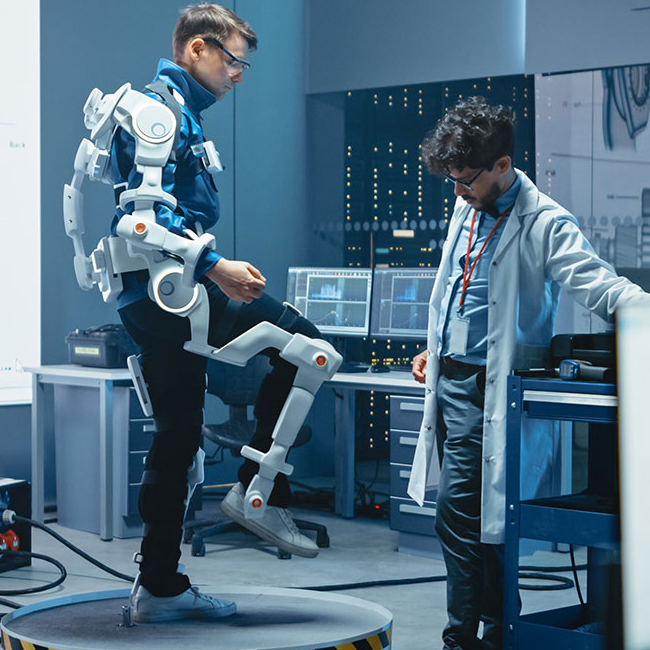
- Robotic Assistance: AI-driven robotic arms and personal assistants can perform tasks requiring fine motor skills or reaching, such as fetching items, opening doors, or providing personal care assistance, thereby augmenting human capabilities.
- Predictive Text and Input Optimization: For those who use alternative input methods, AI can predict words and phrases, reducing the effort required for typing and communication, making augmentative and alternative communication (AAC) devices more efficient.
AI for Cognitive and Learning Disabilities
AI's capacity for personalization and pattern recognition makes it uniquely suited to support individuals with cognitive and learning disabilities, fostering improved learning outcomes and daily functioning:
- Personalized Learning Platforms: AI can adapt educational content and pace to individual learning styles and needs, providing tailored support for conditions like dyslexia, ADHD, or autism. This ensures a more engaging and effective learning experience.
- Memory Aids and Task Management: AI-powered apps can provide timely reminders, break down complex tasks into manageable steps, and offer cognitive support for individuals with memory impairments or executive function challenges.
- Emotional AI and Social Skills Training: Some experimental AI tools are being developed to help individuals on the autism spectrum interpret social cues and practice social interactions in a safe, controlled environment.
AI for Speech Impairments
For individuals with speech impairments, AI is transforming how they communicate, providing new avenues for expression:
- Advanced Text-to-Speech (TTS): AI-driven TTS engines offer highly natural and customizable voices, allowing users to communicate effectively, even with severe speech impediments.
- Voice Banking and Voice Cloning: AI enables individuals to "bank" their voice before it deteriorates due to progressive conditions, or even create a synthesized voice that sounds like them, maintaining a crucial part of their identity.
- Speech Recognition for Atypical Speech: While challenging, AI is being trained to understand and transcribe atypical speech patterns, making voice control and communication accessible to a wider range of users.
Key AI Technologies Driving Accessibility Innovation
The breakthroughs in AI accessibility solutions are powered by several foundational artificial intelligence technologies:
- Natural Language Processing (NLP): This enables computers to understand, interpret, and generate human language. NLP is crucial for speech-to-text, text-to-speech, translation services, and intelligent chatbots that provide support.
- Computer Vision: By allowing machines to "see" and interpret visual information, computer vision is vital for object recognition, navigation aids, sign language interpretation, and reading text from images.
- Machine Learning (ML): As the core of AI, ML algorithms learn from data to identify patterns and make predictions or decisions. This is fundamental for personalizing experiences, improving accuracy over time (e.g., in speech recognition), and adapting to individual user needs.
- Predictive Analytics: Leveraging ML, predictive analytics anticipates user needs or actions, such as suggesting words in text input or predicting a user's next move in a smart environment, thereby streamlining interactions.
- Robotics: AI-powered robotics are moving beyond industrial applications into assistive roles, offering physical support, performing tasks, and providing companionship.
Designing for Inclusivity: Ethical AI and Universal Design Principles
While the potential of AI for improving accessibility for people with disabilities is immense, its development must be guided by strong ethical principles and a commitment to universal design. Inclusive AI means more than just building technology; it means building it right, with the user at the center:
- User-Centric Design and Co-creation: The most effective AI accessibility tools are developed in close collaboration with people with disabilities themselves. Their insights, feedback, and lived experiences are invaluable in creating solutions that truly meet needs and avoid unintended biases. This ensures that the technology is genuinely helpful and not merely a theoretical solution.
- Mitigating Algorithmic Bias: AI systems learn from data, and if that data is biased or lacks representation from diverse disability groups, the AI can perpetuate or even amplify existing inequalities. Developers must actively work to source inclusive datasets and rigorously test for bias to ensure fair and equitable performance for all users.
- Privacy and Data Security: Many AI accessibility solutions rely on personal data, including biometric information or communication patterns. Robust privacy safeguards and transparent data policies are crucial to build trust and protect sensitive user information.
- Affordability and Availability: Cutting-edge AI can be expensive. Efforts must be made to ensure that these transformative technologies are affordable and widely available, preventing a new form of digital divide where only a privileged few can benefit.
- Interoperability and Standardization: For AI accessibility tools to be truly effective, they need to integrate seamlessly with existing devices, platforms, and infrastructure. Promoting industry standards can help ensure compatibility and a cohesive user experience.
Actionable Tips for Developers and Organizations
To truly harness the power of AI for improving accessibility, developers, businesses, and policymakers must adopt a proactive and ethical approach:
- Involve Users with Disabilities from Day One: Implement a "nothing about us without us" philosophy. Conduct user research, focus groups, and beta testing with diverse individuals with disabilities. Their lived experience is the most valuable input for designing truly effective solutions.
- Prioritize Ethical AI Development: Establish internal guidelines for ethical AI, focusing on fairness, accountability, and transparency. Regularly audit AI models for bias and ensure data privacy is paramount. Consider forming an ethical AI review board.
- Invest in Research and Development: Dedicate resources to exploring novel AI applications for underserved disability groups and challenging accessibility problems. Foster academic and industry partnerships to accelerate innovation in assistive technology.
- Educate and Train Stakeholders: Provide training for engineers, designers, and product managers on accessible design principles and the specific needs of people with disabilities. Promote a culture of empathy and inclusion within your organization.
- Advocate for Policy and Standards: Support policies that promote digital accessibility, fund research, and incentivize the development of inclusive AI. Contribute to the creation of universal design standards for AI-powered products and services.
Frequently Asked Questions
What is artificial intelligence for improving accessibility for people with disabilities?
Artificial intelligence for improving accessibility for people with disabilities refers to the application of AI technologies like machine learning, natural language processing, and computer vision to create tools and systems that remove barriers and enhance the independence and participation of individuals with diverse disabilities. This includes innovations such as real-time captioning, object recognition for the visually impaired, voice-controlled smart homes, and personalized learning platforms, all designed to make the digital and physical world more navigable and inclusive. It's about leveraging smart accessibility to empower individuals.
How does AI specifically help people with visual impairments?
AI significantly aids people with visual impairments through advanced computer vision capabilities. This technology enables devices to "see" and interpret their surroundings, providing real-time descriptions of objects, people, and environments. Examples include apps that read text aloud from images, smart glasses that describe scenes, and navigation systems that guide users around obstacles. These tools enhance independence, mobility, and access to information, making daily life more manageable and safer for individuals with sensory impairments.
What are the ethical considerations when developing AI for disability support?
Developing AI for disability support involves critical ethical considerations to ensure the technology is beneficial and equitable. Key concerns include avoiding algorithmic bias, which can lead to unequal performance for different user groups if training data is unrepresentative. Data privacy and security are paramount, as these systems often handle sensitive personal information. Furthermore, ensuring affordability and widespread access is crucial to prevent a new digital divide, and involving people with disabilities in the design process is essential to create truly user-centric and effective inclusive AI solutions.
Can AI truly personalize support for individuals with cognitive disabilities?
Yes, AI has a remarkable capacity to personalize support for individuals with cognitive and learning disabilities. Through machine learning algorithms, AI systems can adapt educational content, task management tools, and communication aids to an individual's unique learning style, pace, and cognitive strengths. This enables tailored interventions, provides just-in-time support for memory or executive function challenges, and creates more engaging and effective learning environments, leading to improved outcomes and greater independence. The goal is to offer truly bespoke personalized support.

0 Komentar