
Augmented Reality Product Visualization: Revolutionizing Online Shopping Experiences
In the fiercely competitive landscape of modern e-commerce, standing out requires more than just competitive pricing and fast shipping. Businesses are constantly seeking innovative ways to bridge the gap between the digital storefront and the tangible product. Enter augmented reality product visualization – a game-changing technology that is fundamentally transforming how consumers interact with products online. This isn't just a fleeting trend; it's a strategic imperative for any online retailer aiming to deliver an immersive shopping experience, boost customer confidence, and significantly reduce product returns. By overlaying digital information onto the real world, AR allows shoppers to virtually "try on" or "place" products in their own environment, creating a level of engagement previously unimaginable in online retail.
The Paradigm Shift: Why AR Product Visualization Matters for Online Shopping
The traditional online shopping model, reliant on static images and descriptive text, often falls short in conveying the true essence of a product. Consumers grapple with uncertainties about size, fit, color, and how an item will look in their space. This inherent lack of tangibility is a primary driver of cart abandonment and, more importantly, high return rates – a significant cost burden for businesses. Augmented reality product visualization directly addresses these pain points, ushering in a new era of interactive and informed purchasing decisions.
Bridging the Tangibility Gap with Realistic Previews
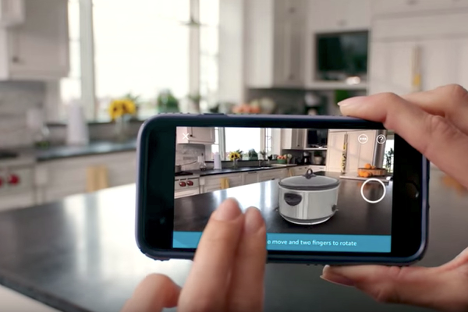
- Eliminating Guesswork: AR allows customers to see a product in 3D, from every angle, and even interact with it as if it were physically present. For furniture, they can place a virtual sofa in their living room to check its fit and aesthetic. For apparel, virtual try-on experiences enable them to see how clothes look on their own bodies.
- Enhanced Understanding: Beyond simple viewing, some AR applications allow users to customize products in real-time, changing colors, materials, or configurations. This level of interaction provides a far deeper understanding of the product than any static image gallery ever could.
- Building Confidence: When a customer can visualize a product accurately in their personal space, their confidence in the purchase decision skyrockbles. This direct engagement fosters a stronger connection with the item, reducing pre-purchase anxiety.
Enhancing Customer Confidence and Engagement
Beyond practical utility, AR product visualization significantly enhances the overall customer journey. It transforms a passive browsing experience into an active, engaging, and even entertaining one. This heightened engagement translates directly into increased time spent on site, deeper exploration of product features, and a stronger emotional connection with the brand. It's about creating a memorable experience that differentiates your online store from competitors who still rely on conventional methods. Businesses embracing this e-commerce innovation are positioning themselves as forward-thinking and customer-centric.
Core Technologies Behind Augmented Reality Product Visualization
Implementing effective AR product visualization requires a blend of sophisticated technologies working in harmony. Understanding these components is crucial for any business considering this digital transformation.
3D Modeling and Asset Creation
- High-Fidelity 3D Product Models: The foundation of any AR experience is the quality of the 3D product models. These digital replicas must be meticulously crafted, accurately representing the product's dimensions, textures, colors, and intricate details. Poorly rendered models can detract from the experience and erode trust.
- Optimization for AR: 3D models must be optimized for performance on various devices, balancing visual fidelity with file size to ensure quick loading times and smooth interactions. This often involves techniques like polygon reduction, texture baking, and efficient material application.
AR SDKs and Platforms
At the heart of AR functionality are Software Development Kits (SDKs) and platforms that enable the recognition of real-world environments and the overlay of digital content. Key players include:
- Apple's ARKit: Designed for iOS devices, offering robust tracking and rendering capabilities.
- Google's ARCore: For Android devices, providing similar functionalities across a wide range of smartphones.
- WebAR: A rapidly growing technology that allows AR experiences to be accessed directly through a web browser, eliminating the need for a dedicated app. This significantly lowers the barrier to entry for users and is becoming the preferred method for many online retailers.
Integration with E-commerce Platforms
For seamless implementation, AR solutions must integrate smoothly with existing e-commerce platforms (e.g., Shopify, Magento, WooCommerce). This typically involves APIs (Application Programming Interfaces) or specialized plugins that allow the AR functionality to be embedded directly into product pages. The goal is to make the AR experience an intuitive part of the existing shopping flow, not a separate, cumbersome step.
Unlocking the Benefits: A Deep Dive into AR for E-commerce
The strategic advantages of adopting augmented reality product visualization extend far beyond novelty. They translate into tangible business metrics that directly impact profitability and market position.
Drastically Reducing Product Returns
One of the most compelling benefits of AR for online shopping is its proven ability to lower return rates. Misunderstandings about size, color, or how an item fits into a space are primary reasons for returns. When customers can virtually "place" a piece of furniture in their living room or "try on" a pair of glasses, they make more informed decisions, leading to fewer post-purchase disappointments. Data from early adopters often shows significant reductions, sometimes upwards of 25-30% in categories like furniture and apparel. This directly impacts operational costs, inventory management, and customer satisfaction. To truly capitalize on this, businesses should explore strategies for reducing e-commerce returns and integrate AR as a core component.
Skyrocketing Conversion Rates and Sales
The interactive nature of AR product visualization captivates shoppers, turning passive browsers into active participants. This heightened engagement often correlates with higher conversion rates. When customers can visualize themselves using or owning a product, the perceived value increases dramatically. This leads to more additions to cart and completed purchases. For instance, an interactive product display that allows a customer to change the finish of a kitchen appliance in their own kitchen can significantly accelerate the decision-making process.
Elevating Customer Satisfaction and Brand Loyalty
Providing an innovative and helpful shopping tool like AR creates a memorable and positive brand experience. Customers appreciate businesses that invest in solutions that simplify their purchasing decisions and reduce uncertainty. This leads to higher customer satisfaction, positive word-of-mouth referrals, and ultimately, increased brand loyalty. In an age where customer experience is king, AR offers a powerful differentiator, fostering a sense of trust and innovation around your brand. It's a key component of a successful digital transformation strategy.
Gaining a Competitive Edge
While AR adoption is growing, it's still not universally implemented across all online retail sectors. Early adopters gain a significant competitive advantage by offering a superior shopping experience that their rivals cannot match. This allows them to attract and retain more customers, often commanding higher market share. As the technology becomes more prevalent, those who have already established a strong AR presence will be well-positioned to lead the market.
Practical Implementation Strategies for Online Retailers
Embarking on the journey of integrating AR product visualization requires careful planning and strategic execution. Here are actionable tips for online retailers.
Choosing the Right AR Solution
- Assess Your Needs: Determine which products will benefit most from AR. Furniture, home decor, apparel, jewelry, and electronics are often prime candidates.
- WebAR vs. App-Based AR: For most e-commerce applications, WebAR offers the lowest friction for users as it requires no app download. App-based AR might be suitable for brands with existing strong app ecosystems or highly complex AR experiences.
- Vendor Selection: Research AR solution providers. Look for those with experience in your industry, a robust portfolio, and a clear understanding of your specific business goals. Consider their capabilities for 3D product models creation and optimization.
- Scalability: Choose a solution that can scale with your business as your product catalog grows or as you expand into new markets.
Creating High-Quality 3D Product Assets
The success of your AR experience hinges on the quality of your 3D models. Invest in professional 3D scanning or modeling services to ensure accuracy and visual appeal. Poorly rendered or inaccurate models will do more harm than good. Ensure that models are optimized for various devices and network conditions to guarantee a smooth user experience. This includes optimizing polygon count, texture resolution, and material complexity.
Seamless User Experience Design
Even the most advanced AR technology will fail if the user experience is clunky. Ensure that accessing the AR feature is intuitive and prominently displayed on product pages (e.g., a clear "View in AR" button). Provide clear instructions for use, especially for first-time users. Minimize loading times and ensure the AR experience is responsive across different screen sizes and orientations. Focus on making the interaction feel natural and effortless for the customer. This attention to user experience (UX) is paramount.
Marketing Your AR Experience
Once implemented, actively promote your AR feature! Highlight it in your marketing campaigns, social media posts, email newsletters, and on your website's homepage. Educate customers on how to use it and showcase the benefits. Use compelling visuals and videos that demonstrate the AR functionality in action. This helps drive adoption and ensures your investment yields maximum returns.
Overcoming Challenges in AR Product Visualization
While the benefits are clear, implementing AR also presents certain challenges that businesses must be prepared to address.
Data Size and Loading Times
High-quality 3D models can be large, leading to longer loading times, especially on slower internet connections or older devices. This can frustrate users and lead to abandonment. Solutions include aggressive 3D model optimization, using efficient compression techniques, and implementing progressive loading strategies where lower-resolution models are displayed first. WebAR solutions are continuously improving in this area, often leveraging cloud-based rendering to minimize client-side processing.
Device Compatibility and Performance
While modern smartphones are increasingly AR-capable, a segment of the user base might still have older devices or specific operating systems that don't fully support AR. WebAR significantly mitigates this by making experiences accessible via a browser, but performance can still vary. Businesses must consider their target audience's device landscape and optimize accordingly, or provide fallback options for non-AR-compatible devices.
Cost of Implementation and Maintenance
Developing high-quality 3D product models and integrating robust AR solutions can require a significant upfront investment. Ongoing maintenance, including updating models for new products and ensuring compatibility with evolving AR technologies, also incurs costs. However, these costs must be weighed against the substantial ROI from reduced returns, increased conversions, and enhanced brand loyalty. Viewing AR as a long-term strategic investment rather than a one-off expense is key.
The Future Landscape: Beyond Basic Visualization
The current state of augmented reality product visualization is just the beginning. The technology is rapidly evolving, promising even more sophisticated and integrated shopping experiences.
Personalized AR Experiences and Product Configurators
Imagine AR experiences that are tailored to individual customer preferences, leveraging AI and past purchase data. Future AR applications will likely integrate advanced product configurators that allow users to design highly customized items in AR, seeing their unique creation come to life in their environment before purchase. This level of personalization will further deepen customer connection and drive higher-value sales.
Virtual Showrooms and Collaborative Shopping
The concept of virtual showrooms is gaining traction, where customers can explore an entire collection of products in a simulated, interactive 3D environment. This could evolve into collaborative shopping experiences, where friends or family members can virtually "shop together" in an AR space, even if they are physically in different locations. This blends the convenience of online shopping with the social aspect of in-store experiences, powered by advanced spatial computing.
Integration with Metaverse Concepts
Looking further ahead, augmented reality product visualization will undoubtedly play a crucial role in the nascent metaverse. As digital and physical worlds increasingly intertwine, consumers will expect to purchase real-world items that can also exist as digital assets in their metaverse avatars or virtual homes. AR will be the primary bridge, allowing seamless interaction with these hybrid products. This represents the ultimate frontier of e-commerce innovation.
Frequently Asked Questions
What is augmented reality product visualization?
Augmented reality product visualization is a technology that superimposes digital 3D models of products onto the real-world environment viewed through a smartphone, tablet, or AR headset. It allows online shoppers to virtually "place" or "try on" items, such as furniture, apparel, or electronics, in their own space before making a purchase. This provides a more realistic and interactive preview of the product, enhancing the immersive shopping experience and bridging the gap between online browsing and physical interaction.
How does AR reduce product returns for online businesses?
AR reduces product returns by providing customers with a much clearer and more accurate understanding of a product's size, fit, appearance, and how it will look in their intended environment. By allowing customers to virtually place a sofa in their living room or see how a dress fits them through virtual try-on, it minimizes misconceptions and ensures that the product meets their expectations upon arrival. This leads to fewer instances of returns due to size issues, color discrepancies, or aesthetic mismatches, directly impacting a business's bottom line and improving customer satisfaction.
Is AR product visualization suitable for all types of products?
While augmented reality product visualization offers significant benefits, its suitability varies by product type. It is most impactful for products where visual context, size, and fit are critical purchasing factors. This includes furniture, home decor, apparel, footwear, jewelry, cosmetics, and electronics. Products that are highly customizable, like cars or complex machinery, can also benefit greatly from product configurators within an AR environment. For very simple or low-value items, the investment in 3D product models and AR integration might not yield sufficient ROI, but for many categories, it's a powerful tool.
What are the key benefits of implementing AR in e-commerce?
Implementing AR in e-commerce offers a multitude of benefits, including a significant reduction in product returns, which saves businesses considerable operational costs. It leads to higher conversion rates and increased sales by boosting customer confidence and engagement through interactive product displays. AR also enhances customer satisfaction and fosters stronger brand loyalty by providing an innovative and helpful shopping experience. Furthermore, it offers a distinct competitive advantage, positioning a brand as a leader in digital transformation and customer-centric innovation within the online retail space.
What technical considerations should I keep in mind when adopting AR for my online store?
When adopting AR for your online store, key technical considerations include the quality and optimization of your 3D product models, ensuring they are highly detailed yet performant across various devices. You'll need to choose between WebAR (browser-based) or app-based AR, with WebAR often preferred for its lower friction. Integration with your existing e-commerce platform is crucial, often requiring APIs or plugins. You must also account for potential data size and loading times, optimizing models for quick display. Finally, consider device compatibility across your target audience to ensure a broad reach and a consistent user experience (UX).

0 Komentar