
Complete Guide
Dive into the fascinating world of augmented reality technology for museum experiences, where digital innovation meets cultural heritage to redefine how visitors interact with exhibits. This comprehensive guide explores how AR is transforming traditional museum visits into dynamic, personalized, and deeply engaging adventures. Discover the strategic advantages of integrating AR, from enhancing visitor engagement and enriching educational outcomes to ensuring the long-term preservation of invaluable historical narratives. As professional SEO experts, we understand the critical importance of authoritative, in-depth content that not only answers user intent but also establishes thought leadership in a rapidly evolving digital landscape. Prepare to explore the actionable insights, practical applications, and future potential of augmented reality within the hallowed halls of cultural institutions.
The Transformative Power of Augmented Reality in Museums
Augmented Reality (AR) is no longer a futuristic concept; it's a present-day reality rapidly redefining how museums connect with their audiences. By superimposing digital information onto the real world, AR creates rich, interactive layers that breathe new life into static displays. This integration moves beyond passive observation, fostering an active participation that captivates visitors across all demographics. For museums aiming for digital transformation and increased relevance in the 21st century, AR offers an unparalleled suite of tools to elevate the visitor journey and deepen the appreciation for art, history, and science.
Enhancing Visitor Engagement and Immersion
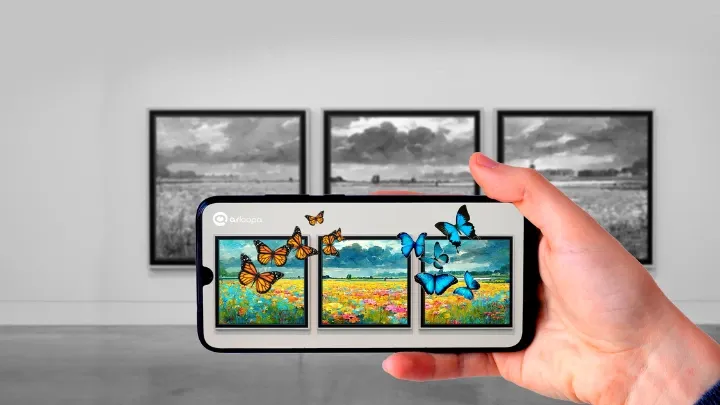
One of the most compelling benefits of augmented reality in museum settings is its profound ability to boost visitor engagement. Traditional exhibits, while valuable, can sometimes feel distant or abstract to contemporary audiences. AR bridges this gap by making history palpable and art interactive. Imagine pointing your smartphone or a museum-provided device at an ancient artifact and instantly seeing a 3D reconstruction of its original form, animations depicting its use, or hearing the voices of historical figures associated with it. This creates truly immersive experiences that resonate deeply, turning a simple walk-through into a journey of discovery. Personalized tours, guided by AR overlays, can adapt to individual interests, ensuring every visitor finds something uniquely compelling.
- Interactive Displays: AR allows for dynamic interaction with exhibits, offering virtual buttons, 3D models, and animations that respond to visitor input.
- Personalized Journeys: Tailor content delivery based on visitor preferences, age, or previous interactions, creating a unique path through the museum.
- Gamification Elements: Incorporate scavenger hunts, quizzes, or challenges that encourage exploration and learning in a fun, competitive way.
Bridging the Past with Digital Storytelling
Museums are inherently about storytelling, and AR amplifies this core function exponentially. It allows curators to go beyond text panels and audio guides, weaving rich, multi-layered narratives directly into the physical space. Through digital storytelling, AR can reconstruct lost environments, illustrate complex historical events, or show the evolution of an artwork. This capability is particularly vital for cultural heritage preservation, enabling institutions to digitally restore damaged artifacts or present the full context of fragmented historical sites. For example, visitors could stand amidst the ruins of a Roman villa and see a virtual reconstruction of its bustling daily life, complete with sounds and characters.
The power of AR lies in its ability to add context and narrative depth without physically altering valuable artifacts. This non-invasive approach ensures the integrity of the collection while simultaneously enriching its interpretation. It transforms static objects into vibrant portals to the past, making history feel alive and immediate.
Revolutionizing Education and Accessibility
Beyond engagement, augmented reality serves as a powerful suite of educational tools within the museum context. Complex scientific principles, intricate historical timelines, or the nuances of artistic techniques can be visualized and explained in an intuitive, interactive manner. This visual and experiential learning approach can significantly improve comprehension and retention, particularly for younger audiences or those with diverse learning styles.
Furthermore, AR offers groundbreaking accessibility solutions. For visitors with visual impairments, AR can provide audio descriptions triggered by proximity to exhibits. For those with mobility challenges, virtual tours powered by AR can offer comprehensive access to areas that are physically difficult to reach. Multilingual support through AR apps can instantly translate exhibit information, making museums more welcoming and inclusive for international visitors. This commitment to inclusivity ensures that the rich knowledge held within museum walls is available to everyone, fostering a truly universal experience.
Key Applications of Augmented Reality in Museum Experiences
The versatility of augmented reality technology allows for a wide range of creative applications within museums, each designed to enhance specific aspects of the visitor journey and curatorial presentation. From bringing ancient civilizations back to life to simplifying navigation, AR offers practical solutions for various museum needs.
Overlaying Historical Context on Artifacts
Perhaps the most direct application of AR is its ability to overlay dynamic digital information onto physical artifacts. Imagine viewing a fragment of pottery and, through your device, seeing a complete 3D rendering of the vessel it once was, along with details about its origin, purpose, and the civilization that created it. This extends to ancient manuscripts where AR can instantly translate text, or historical garments where AR can show how they were worn and by whom. This capability transforms passive viewing into an active learning experience, providing layers of context that static labels simply cannot convey. It's a prime example of how AR can elevate traditional interactive displays.
Interactive Maps and Wayfinding
Navigating large museum complexes can be daunting. AR-powered indoor navigation systems can transform this challenge into a seamless experience. Visitors can use their smartphones to see a real-time overlay of their location on a museum map, with highlighted routes to specific exhibits, restrooms, or cafes. This not only reduces frustration but also enhances the overall visitor experience, allowing more time to be spent engaging with exhibits rather than searching for them. These systems can also highlight points of interest as visitors approach them, offering relevant information or suggesting nearby related exhibits, promoting deeper exploration.
Gamification and Interactive Challenges
To make learning more engaging, especially for families and younger visitors, museums are increasingly incorporating gamification elements using AR. This could involve an AR scavenger hunt where visitors follow virtual clues to find artifacts, or interactive quizzes that test their knowledge of an exhibition. For instance, an AR app might challenge visitors to identify specific architectural features on a historical building model, or to piece together a virtual puzzle of a broken vase. These challenges encourage active participation, critical thinking, and collaborative learning, turning a museum visit into an exciting adventure. Such interactive exhibits are key to attracting and retaining younger audiences.
Virtual Restoration and Reconstruction
For artifacts that are incomplete, damaged, or entirely lost, AR offers a powerful solution for virtual restoration and reconstruction. Museums can use AR to project 3D models of what a ruin once looked like in its prime, or to fill in missing pieces of a sculpture, providing a complete visual context that would otherwise be impossible. This application is particularly valuable for archaeological sites or historical buildings where only foundations remain. Visitors can stand on the site and, through an AR device, see a vibrant, full-scale recreation of the original structure, complete with animated figures and historical sounds. This capability significantly contributes to curatorial innovation and helps visitors visualize the grandeur of the past.
Strategic Implementation: Bringing AR to Your Museum
Implementing augmented reality technology for museum experiences requires careful planning and a strategic approach. It's not just about adopting new tech; it's about integrating it seamlessly into the museum's mission, operations, and visitor journey. A well-executed AR strategy can yield significant returns in visitor satisfaction and educational impact.
Planning and Content Development
The success of any AR initiative hinges on robust planning and compelling content. Before diving into technology, museums must define their goals: what specific problems will AR solve? What stories will it tell?
- Define Clear Objectives: Determine what you want to achieve. Is it increased engagement, better accessibility, enhanced education, or revenue generation?
- Content is King: High-quality, historically accurate, and engaging digital content is paramount. This includes 3D models, animations, audio narratives, and interactive elements. Collaborate with historians, artists, and educators to ensure authenticity and relevance.
- Target Audience Consideration: Design AR experiences with your primary audience in mind. Children, adults, and experts will have different needs and expectations.
- Storyboarding and Prototyping: Plan the user flow and experience meticulously. Create prototypes to test concepts and gather early feedback.
Remember, AR should enhance, not distract from, the physical exhibits. The digital overlay must complement the real-world artifacts.
Technology Selection and Platform Integration
Choosing the right AR technology and ensuring seamless integration is crucial. The options range from simple mobile apps to sophisticated headset-based systems, each with its own advantages and costs.
- Mobile AR Apps: The most accessible option, leveraging visitors' own smartphones or museum-provided tablets. This is cost-effective and familiar to most users. Look for robust SDKs (Software Development Kits) like ARKit (iOS) or ARCore (Android).
- AR Headsets: Devices like Microsoft HoloLens or Magic Leap offer truly hands-free spatial computing experiences, but are significantly more expensive and less scalable for mass visitor use. They are ideal for specific, high-impact exhibits or research.
- Projection Mapping AR: Projects digital imagery onto physical objects or spaces, transforming them without requiring individual devices. Great for large-scale, shared experiences.
- Platform Integration: Ensure the AR solution can integrate with existing museum systems, such as ticketing, CRM, or content management systems, for a cohesive digital ecosystem.
Consider connectivity (Wi-Fi, 5G), battery life of devices, and ease of deployment and updates. A robust technical infrastructure is fundamental for a smooth AR experience.
User Experience (UX) Design Best Practices
Even the most advanced technology will fail if the user experience is poor. Intuitive design is key to maximizing the impact of AR in museums.
- Simplicity and Intuition: AR applications should be easy to use, even for first-time users. Clear on-screen instructions and minimal steps are essential.
- Performance and Responsiveness: Lagging AR experiences are frustrating. Ensure smooth tracking, quick loading times, and stable performance across various devices.
- Clear Calls to Action: Guide users on how to interact with the AR content. What should they point their device at? What gestures should they use?
- Contextual Relevance: The AR content must be directly relevant to the physical exhibit it augments. Avoid generic or disconnected digital overlays.
- Feedback Mechanisms: Provide visual or auditory feedback when interactions occur, confirming to the user that their action was registered.
Prioritizing UX ensures that AR enhances the visit rather than becoming a source of confusion or frustration. User testing at various stages of development is highly recommended.
Overcoming Challenges and Ensuring Success
While the potential of augmented reality technology for museum experiences is immense, institutions must be prepared to navigate various challenges. Proactive planning and a realistic understanding of these hurdles are essential for a successful and sustainable AR program.
Technical Hurdles and Maintenance
Implementing AR involves significant technical considerations. Reliable Wi-Fi connectivity throughout the museum is paramount, as AR experiences often rely on streaming data. Hardware maintenance, including charging devices, cleaning screens, and replacing faulty units, can be an ongoing operational cost. Software updates, bug fixes, and compatibility issues with new operating systems also require dedicated IT resources. Museums must budget not only for initial setup but also for long-term maintenance and technical support to ensure the AR experience remains seamless and functional. Ignoring these aspects can lead to frustrated visitors and a negative perception of the technology.
Content Quality and Relevance
A common pitfall in AR implementation is the focus on technology over content. An AR experience, no matter how technically brilliant, will fall flat if the digital content is low quality, inaccurate, or irrelevant. Museums must invest in professional content creation, whether it's 3D modeling, historical research for narratives, or high-fidelity audio recordings. The content must align with the museum's educational mission and curatorial standards. Avoiding gimmickry and ensuring that AR genuinely enhances understanding, rather than just providing a fleeting novelty, is crucial for sustained visitor engagement.
Funding and Sustainability Models
The initial investment in AR technology, content development, and infrastructure can be substantial. Museums need to explore various funding models, including grants from cultural or technology foundations, corporate sponsorships, and potentially even premium experiences that generate revenue. Developing a sustainable model for ongoing maintenance, content updates, and future expansions is vital. This might involve partnerships with tech companies, universities, or even leveraging AR experiences to drive membership or donations. Integrating AR into the museum's overall digital transformation strategy can help justify the investment by demonstrating long-term value and impact.
The Future of Augmented Reality in Cultural Institutions
The evolution of augmented reality technology for museum experiences is just beginning. As hardware becomes more sophisticated, affordable, and less obtrusive, and as software capabilities advance, the possibilities for cultural institutions will expand exponentially. The future promises even more personalized, intuitive, and seamlessly integrated experiences.
Hyper-Personalization and AI Integration
Future AR museum experiences will likely be driven by artificial intelligence (AI). Imagine an AR guide that learns your interests as you move through the museum, suggesting exhibits you might like, or providing deeper insights into topics you've previously engaged with. AI could power dynamic narratives that adapt in real-time based on visitor interaction, creating truly unique and personalized tours. This fusion of AR and AI will move beyond pre-programmed content to truly adaptive and responsive educational journeys, making every museum visit a bespoke adventure tailored to the individual's curiosity.
Interoperability and Digital Ecosystems
As museums increasingly embrace digital tools, there will be a growing need for interoperability between different technologies and platforms. Future AR solutions might seamlessly integrate with other museum digital assets, such as online collections databases, virtual tours, or even external educational resources. This creates a holistic digital ecosystem where physical and virtual experiences merge, extending the museum's reach beyond its physical walls. Visitors could plan their visit using an AR app at home, continue the experience on-site, and then revisit specific exhibits virtually long after they've left. This comprehensive approach will further solidify the museum's role as a lifelong learning institution and a hub for digital storytelling.
Frequently Asked Questions About Augmented Reality in Museum Experiences
What is the primary benefit of augmented reality for museum visitors?
The primary benefit of augmented reality for museum visitors is its ability to transform passive observation into active, immersive experiences. AR enriches understanding by overlaying digital information, 3D models, and interactive elements directly onto physical exhibits, making complex historical contexts or scientific concepts more accessible and engaging. It breathes life into artifacts, enabling visitors to visualize their original form, function, and historical significance in a dynamic, captivating way that static displays cannot achieve.
How can small museums implement AR on a limited budget?
Small museums with limited budgets can implement AR by focusing on accessible technologies and strategic content. Start with mobile AR apps that leverage visitors' own smartphones, eliminating the need for expensive dedicated hardware. Utilize free or low-cost AR development platforms (e.g., Google ARCore, Apple ARKit) and consider open-source tools. Prioritize a few high-impact exhibits rather than attempting to augment the entire collection. Collaborate with local universities or tech schools for pro-bono development work, or seek grants specifically for digital transformation in cultural institutions. The key is to start small, deliver high-quality content for select pieces, and scale up as resources allow.
What are the key considerations for creating compelling AR content?
Creating compelling AR content requires a focus on relevance, accuracy, and user experience. Key considerations include: ensuring historical and scientific accuracy through rigorous research; designing visually appealing and high-fidelity 3D models or animations; crafting concise and engaging narratives; optimizing content for smooth performance on target devices; and providing clear, intuitive instructions for interaction. The content should enhance, not distract from, the physical artifact, adding layers of meaning and context. It should also be regularly updated to maintain freshness and accuracy, reflecting ongoing curatorial innovation.
Is augmented reality only for tech-savvy visitors?
No, augmented reality in museum experiences is designed to be accessible to a wide audience, not just tech-savvy individuals. While early AR might have had a steeper learning curve, modern AR apps are increasingly user-friendly, often requiring just pointing a device. Museums can provide simple tutorials, clear on-screen prompts, and readily available staff support to guide visitors. Furthermore, AR can be a powerful tool for accessibility solutions, offering features like multilingual support, audio descriptions, and visual aids that benefit visitors with diverse needs and backgrounds, making museums more inclusive for everyone.
How does AR contribute to cultural heritage preservation?
Augmented reality contributes significantly to cultural heritage preservation by allowing museums to virtually restore, reconstruct, and interpret artifacts and sites without causing any physical impact. It enables the digital preservation of fragile items, allowing them to be viewed and studied in detail without handling. AR can also bring lost or damaged historical structures back to life for educational purposes, providing a visual record that might otherwise be impossible. By creating engaging digital interpretations, AR helps foster a deeper appreciation for cultural heritage among new generations, encouraging its continued study and protection.

0 Komentar