
Bitcoin vs. Ethereum: Unpacking the Core Differences in the Crypto Landscape
In the rapidly evolving world of digital assets, Bitcoin and Ethereum stand as two colossal pillars, often perceived by newcomers as interchangeable cryptocurrencies. However, this couldn't be further from the truth. While both operate on revolutionary blockchain technology and have profoundly reshaped the financial landscape, their fundamental purposes, technological architectures, and long-term visions diverge significantly. Understanding what is the difference between Bitcoin and Ethereum is not merely an academic exercise; it's crucial for anyone looking to navigate the complex yet exhilarating realm of decentralized finance, Web3, and the broader cryptocurrency market. This comprehensive guide will dissect their unique attributes, helping you grasp why these two blockchain giants, despite their shared foundational principles, serve distinct roles in the burgeoning digital economy.
The Genesis and Core Philosophy: Beyond Just Digital Money
To truly grasp the distinction, we must first delve into their origins and the problems they were designed to solve. While both represent groundbreaking applications of distributed ledger technology, their initial intentions set them on fundamentally different paths.
Bitcoin: The Digital Gold and Peer-to-Peer Electronic Cash
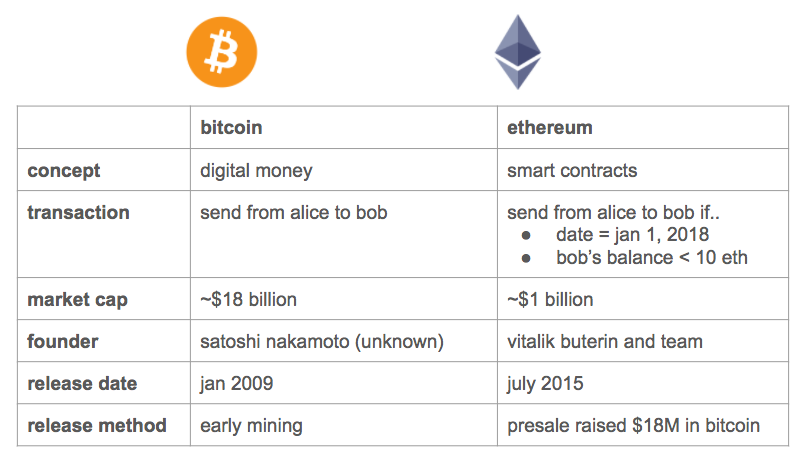
Bitcoin, launched in 2009 by the pseudonymous Satoshi Nakamoto, emerged from the ashes of the 2008 financial crisis as a response to the perceived failures of centralized financial institutions. Its whitepaper, "Bitcoin: A Peer-to-Peer Electronic Cash System," clearly articulated its singular focus: to create a censorship-resistant, decentralized form of money. Bitcoin was envisioned as a direct alternative to fiat currency, enabling secure and transparent transactions without the need for intermediaries like banks.
- Primary Goal: To be a robust, scarce, and unconfiscatable store of value – often dubbed "digital gold."
- Functionality: Primarily designed for value transfer and as a medium of exchange. Its scripting language is intentionally limited to ensure security and predictability for financial transactions.
- Scarcity: A hard cap of 21 million BTC ensures its deflationary nature, central to its appeal as an inflation hedge.
The network's simplicity and singular focus have contributed to its unparalleled security and resilience. When you think of Bitcoin, think of a digital equivalent to gold or a highly efficient, global payment rail for large value transfers. For more on its foundational principles, you can explore Bitcoin's whitepaper.
Ethereum: The World Computer and Smart Contract Platform
Ethereum, conceptualized by Vitalik Buterin in 2013 and launched in 2015, took a far more ambitious leap. While it also features a native cryptocurrency (Ether, or ETH), Ethereum was not primarily designed to be just digital money. Instead, it was conceived as a decentralized platform for building and executing smart contracts and decentralized applications (dApps). Imagine a global, open-source computer that anyone can program, and whose applications run exactly as programmed without any possibility of downtime, censorship, fraud, or third-party interference.
- Primary Goal: To be a programmable blockchain, a foundational layer for a new internet (Web3) and a vast ecosystem of decentralized services.
- Functionality: Enables the creation of complex, self-executing agreements (smart contracts) and a wide array of dApps, ranging from decentralized exchanges (DEXs) to NFT marketplaces and gaming platforms.
- Flexibility: The Ethereum Virtual Machine (EVM) allows developers to build sophisticated applications using programming languages like Solidity.
Ethereum's vision extended far beyond simple transactions, aiming to decentralize virtually any application or service currently reliant on centralized servers. It's the foundational layer for much of the innovation we see in decentralized finance (DeFi) and the broader Web3 space.
Core Technological Divergence: Architecture and Consensus
The philosophical differences manifest directly in their underlying technological architectures, particularly concerning their consensus mechanisms and how they handle network operations.
Consensus Mechanism: Proof-of-Work vs. Proof-of-Stake
Both Bitcoin and Ethereum (in its earlier iterations) utilized a Proof-of-Work (PoW) consensus mechanism. However, Ethereum has undergone a monumental shift.
- Bitcoin's Proof-of-Work (PoW): Bitcoin relies exclusively on PoW, where "miners" compete to solve complex computational puzzles. The first miner to find the solution gets to add the next block of transactions to the blockchain and is rewarded with newly minted BTC and transaction fees. This process, while energy-intensive, provides unparalleled network security and resistance to attacks. The sheer amount of computational power protecting the Bitcoin network makes it incredibly robust.
- Ethereum's Transition to Proof-of-Stake (PoS): Ethereum famously transitioned from PoW to PoS with "The Merge" in September 2022. In PoS, instead of miners, "validators" are chosen to create new blocks based on the amount of ETH they have "staked" (locked up) as collateral. This mechanism is significantly more energy-efficient, reduces hardware requirements for participation, and aims to improve scalability solutions. Validators are rewarded for honest participation and penalized for malicious behavior.
This divergence in consensus mechanisms is perhaps one of the most significant technical differences. Bitcoin remains committed to its battle-tested PoW, prioritizing security and decentralization above all else, while Ethereum embraces PoS for its environmental benefits, lower barriers to entry for validators, and potential for future scalability improvements.
Transaction Speed, Scalability, and Transaction Fees
The design choices also impact how quickly transactions are processed and the overall capacity of the networks.
- Bitcoin:
- Transactions per Second (TPS): Roughly 7 TPS.
- Block Time: Approximately 10 minutes.
- Scalability: Designed for security and decentralization, not high transaction throughput. Scalability solutions like the Lightning Network operate off-chain to handle micropayments.
- Fees: Can fluctuate significantly based on network congestion, especially during periods of high demand.
- Ethereum:
- Transactions per Second (TPS): Currently around 15-30 TPS on the mainnet.
- Block Time: Approximately 12-15 seconds.
- Scalability: Ethereum's roadmap (Ethereum 2.0 or "Serenity") includes sharding and Layer 2 scaling solutions (e.g., Optimistic Rollups, ZK-Rollups) to dramatically increase throughput and reduce fees, aiming for thousands or even tens of thousands of TPS.
- Fees: Historically known for high "gas fees" due to network congestion, especially during peak dApp usage. The move to PoS and future scaling solutions aim to mitigate this.
Ethereum's architecture is inherently more complex due to its programmability, which can lead to higher gas fees when the network is busy. However, its ongoing development aims to address these challenges head-on, making it more viable for widespread dApp adoption. Understanding these dynamics is crucial for developers and users interacting with decentralized applications.
Tokenomics and Supply: Scarcity vs. Utility
The economic models governing BTC and ETH, often referred to as tokenomics, are another area of stark contrast.
Bitcoin's Fixed Supply: The Scarcity Principle
Bitcoin has a fixed supply cap of 21 million coins. This hard limit is central to its value proposition as a scarce asset, akin to precious metals. Approximately every four years, the block reward for miners is halved in an event known as "the halving," which reduces the rate at which new BTC enters circulation. This predictable, disinflationary supply schedule contributes to its appeal as a hedge against traditional currency inflation and its status as "digital gold."
Ethereum's Dynamic Supply: Balancing Utility and Value
Unlike Bitcoin, Ethereum does not have a fixed maximum supply. The supply of ETH is more dynamic, influenced by several factors:
- Issuance: New ETH is issued to validators as rewards for securing the network.
- Burning Mechanism: A significant change introduced by EIP-1559 in August 2021 is a fee-burning mechanism. A portion of every transaction fee on the Ethereum network is "burned" (permanently removed from circulation). This can, at times, make ETH deflationary, especially during periods of high network activity, counteracting the issuance of new ETH.
Ethereum's supply model prioritizes supporting the network's utility and security over strict scarcity. The idea is that as the network becomes more widely used for dApps, DeFi, and NFTs, the demand for ETH (to pay for gas and stake) will increase, balancing out its dynamic supply. This makes ETH more of a "productive asset" or "digital commodity" that powers a vast ecosystem, rather than solely a store of value.
Ecosystems and Use Cases: Beyond Payments
The differing architectures and philosophies have led to the development of vastly different ecosystems and primary use cases for each blockchain.
Bitcoin's Ecosystem: Payments, Store of Value, and Layer 2 Solutions
Bitcoin's ecosystem is primarily centered around its core function as a peer-to-peer electronic cash system and a store of value. It's used for:
- Value Transfer: Sending large sums of money across borders quickly and securely.
- Inflation Hedge: A long-term investment strategy to preserve wealth against fiat currency devaluation.
- Digital Payments: While not ideal for everyday micro-transactions on the mainnet due to fees and speed, solutions like the Lightning Network enable faster, cheaper Bitcoin payments.
- Institutional Adoption: Increasingly adopted by corporations and institutional investors as part of their treasury management or investment portfolios.
While less "programmable" than Ethereum, Bitcoin's simplicity is its strength, ensuring its stability and security as the bedrock of the cryptocurrency market cap.
Ethereum's Expansive Ecosystem: The Engine of Web3
Ethereum's ecosystem is a vibrant, diverse, and rapidly expanding universe of applications. Its programmability allows for an incredible range of use cases:
- Decentralized Finance (DeFi): The backbone of DeFi, enabling lending, borrowing, trading, and insurance protocols without intermediaries. Think of platforms like Uniswap, Aave, and Compound built on Ethereum.
- Non-Fungible Tokens (NFTs): The vast majority of NFTs are minted and traded on the Ethereum blockchain (e.g., OpenSea, CryptoPunks, Bored Ape Yacht Club).
- Decentralized Autonomous Organizations (DAOs): Ethereum facilitates the creation and operation of DAOs, which are organizations governed by code and community members rather than a central authority.
- Web3 Infrastructure: Powering the next generation of the internet, including decentralized identity, storage, and computing.
- Gaming: Many blockchain-based games and metaverses are built on Ethereum or its Layer 2 solutions.
Ethereum's role as a general-purpose blockchain platform makes it the go-to choice for developers looking to build innovative, decentralized applications. Its reach extends far beyond simple monetary transactions, aiming to redefine how we interact with digital services and ownership.
Investment Perspectives: A Tale of Two Assets
For investors, understanding the fundamental differences between Bitcoin and Ethereum is crucial for formulating a sound investment strategy. Both are digital assets with high volatility, but their risk/reward profiles and long-term outlooks differ.
- Bitcoin (BTC): The Macro Asset and Store of Value
- Investment Thesis: Primarily viewed as a long-term store of value, a hedge against inflation, and a "safe haven" asset in times of economic uncertainty. Its limited supply and established network effect contribute to this narrative.
- Volatility: While volatile, its movements are often seen as a bellwether for the broader crypto market.
- Correlation: Increasingly showing some correlation with traditional macro assets like gold or tech stocks, though still highly independent.
- Ethereum (ETH): The Technology Play and Growth Engine
- Investment Thesis: Viewed as an investment in the future of decentralized technology, Web3, and the growth of the dApp ecosystem. Its value is tied to its utility and the adoption of applications built on its platform.
- Volatility: Can be highly volatile, influenced by developments in the DeFi and NFT sectors, as well as its own protocol upgrades.
- Growth Potential: Many believe ETH has significant growth potential as its ecosystem matures and scalability improves, leading to wider adoption.
While both are leading cryptocurrencies, their investment narratives reflect their distinct purposes. Bitcoin is often seen as the foundational layer of the crypto economy, while Ethereum is the engine driving its innovation and expansion. A diversified crypto portfolio often includes both, recognizing their complementary roles.
Actionable Insights for Crypto Enthusiasts
Navigating the crypto space requires more than just understanding definitions; it demands practical application of knowledge. Here are some actionable tips:
- Define Your Goals: Before investing, ask yourself: Are you looking for a long-term store of value (Bitcoin) or an investment in a burgeoning technological ecosystem (Ethereum)? Your investment horizon and risk tolerance should guide your choices.
- Stay Informed on Development Roadmaps: Bitcoin's development is slower and more conservative, focusing on security. Ethereum's roadmap is aggressive, with continuous upgrades aimed at scalability and efficiency. Staying updated on these developments (e.g., Ethereum's future sharding plans) is crucial for understanding potential impacts on the network and its native token.
- Understand Network Congestion: If you plan to frequently use dApps or send transactions, be aware of transaction fees and network speeds. Ethereum's gas fees can be high during peak times, though Layer 2 solutions offer cheaper alternatives. Bitcoin's fees can also spike.
- Security First: Regardless of which asset you hold, prioritize securing your private keys. Hardware wallets offer the best protection for significant holdings.
- Explore Use Cases: Don't just hold; explore. Engage with DeFi protocols on Ethereum, or try sending a transaction on the Bitcoin Lightning Network. Practical experience deepens understanding.
Frequently Asked Questions
What is the primary difference in their underlying technology?
The primary difference lies in their fundamental design and purpose. Bitcoin is a decentralized digital currency, primarily designed as a secure store of value and peer-to-peer electronic cash system. It uses a relatively simple scripting language for transactions. Ethereum, on the other hand, is a programmable blockchain platform designed to host smart contracts and decentralized applications (dApps). Its native cryptocurrency, Ether (ETH), powers this ecosystem as "gas" for transactions and computations. While Bitcoin focuses on being robust digital money, Ethereum aims to be a "world computer" enabling a vast array of decentralized services and decentralized finance (DeFi) applications.
Is Ethereum better than Bitcoin?
Neither is inherently "better" than the other; they serve different purposes and excel in different areas. Bitcoin's strength lies in its unparalleled security, decentralization, and proven track record as a store of value. Ethereum's strength is its programmability, flexibility, and its role as the foundational layer for most Web3 innovations, including DeFi, NFTs, and DAOs. Your preference depends on whether you value a secure, scarce digital currency or a versatile platform for building decentralized applications and digital economies.
Can I mine Ethereum like Bitcoin?
No, not anymore. Bitcoin continues to use a Proof-of-Work (PoW) consensus mechanism, which involves "mining" using specialized hardware. Ethereum, however, transitioned from PoW to Proof-of-Stake (PoS) with "The Merge" in September 2022. This means Ethereum is now "staked" rather than "mined." Participants called "validators" stake their ETH to secure the network and validate transactions, earning rewards in return, a process that is significantly more energy-efficient than mining.
Which has a higher market capitalization: Bitcoin or Ethereum?
Historically, Bitcoin has maintained the largest cryptocurrency market cap, consistently holding the top position as the most valuable digital asset. Ethereum typically ranks second. Bitcoin's market dominance reflects its status as the original and most recognized cryptocurrency, along with its established narrative as "digital gold." However, Ethereum's market cap has grown significantly as its ecosystem of dApps and DeFi expands, narrowing the gap at times.
What are smart contracts on Ethereum?
Smart contracts are self-executing contracts with the terms of the agreement directly written into lines of code. They run on the Ethereum blockchain, meaning they operate exactly as programmed without any possibility of censorship, downtime, fraud, or third-party interference. These contracts automatically execute actions (like releasing funds) when predefined conditions are met. Smart contracts are the backbone of the entire Ethereum ecosystem, enabling everything from decentralized exchanges to NFT marketplaces and complex financial instruments within decentralized finance.

0 Komentar