
Cybersecurity Risk Assessment Template for Healthcare: Safeguarding Patient Data and Ensuring Compliance
In the digital age, healthcare organizations face an unprecedented barrage of cyber threats, making a robust cybersecurity risk assessment template for healthcare not just beneficial, but absolutely critical. Protecting sensitive patient data security, including Protected Health Information (PHI), is paramount, not only for maintaining patient trust but also for adhering to stringent HIPAA compliance and other regulatory requirements. This comprehensive guide will delve into the intricacies of developing and utilizing an effective risk assessment framework, designed to identify, evaluate, and mitigate potential vulnerabilities within your digital health ecosystem. Prepare to fortify your defenses and ensure the resilience of your healthcare operations against evolving cyber threats.
Why Cybersecurity Risk Assessment is Crucial for Healthcare Organizations
The healthcare sector is a prime target for cybercriminals due to the immense value and sensitivity of the data it handles. A single healthcare data breach can lead to severe financial penalties, reputational damage, and a significant erosion of patient confidence. A well-executed cybersecurity risk assessment serves as the cornerstone of any effective security program. It provides a clear, actionable roadmap to understand your organization's unique threat landscape and identify weaknesses before they can be exploited. Without a systematic assessment, healthcare providers are essentially operating blind, leaving their valuable assets, including electronic health records (EHR) and medical devices, exposed to malicious actors.
Regulatory Compliance: HIPAA and HITECH
The Health Insurance Portability and Accountability Act (HIPAA) and the Health Information Technology for Economic and Clinical Health (HITECH) Act mandate that covered entities and their business associates conduct regular, thorough risk analyses. Failure to comply can result in substantial fines, ranging from thousands to millions of dollars per violation. A proper cybersecurity risk assessment template ensures that your organization systematically addresses the security rule requirements, demonstrating due diligence in safeguarding PHI. This isn't just about avoiding penalties; it's about establishing a culture of strong data protection and accountability within your institution.
Protecting Patient Trust and Reputation
Beyond legal ramifications, the human element is profound. Patients entrust healthcare providers with their most personal information. A breach of this trust, often caused by a preventable security lapse, can severely damage an organization's reputation, leading to decreased patient enrollment and long-term financial repercussions. Proactive risk management framework implementation, guided by a comprehensive template, signals a commitment to patient privacy and builds confidence in your ability to manage sensitive information responsibly.
Understanding the Core Components of a Healthcare Cybersecurity Risk Assessment
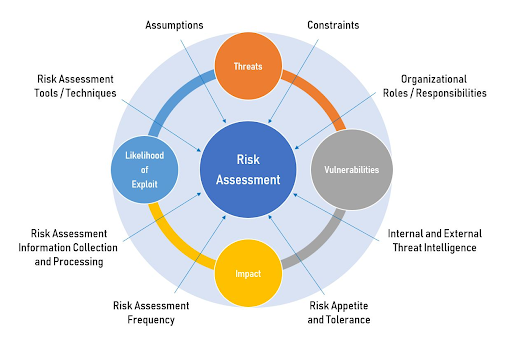
A robust cybersecurity risk assessment template for healthcare breaks down the complex process into manageable, logical steps. Each component is vital for a holistic view of your security posture, identifying not just technical flaws but also operational and human vulnerabilities. The goal is to create a dynamic process that adapts to new threats and technologies, ensuring continuous improvement in your security measures.
Identifying Assets and Vulnerabilities
The first step involves a meticulous inventory of all information assets that store, process, or transmit PHI. This includes:
- Servers and Databases: Locations of EHRs, billing systems, and other critical applications.
- Workstations and Mobile Devices: Laptops, tablets, smartphones used by staff.
- Network Infrastructure: Routers, firewalls, switches, wireless access points.
- Medical Devices: Connected medical equipment (IoMT) like infusion pumps, MRI machines, pacemakers, which often have unique medical device cybersecurity challenges.
- Software Applications: EHR systems, practice management software, telehealth platforms.
- Cloud Services: Any third-party vendors storing or processing healthcare data.
- Human Assets: Employees, contractors, and their access privileges.
Once assets are identified, a thorough vulnerability assessment uncovers weaknesses in these assets. This could be outdated software, misconfigured systems, weak passwords, or lack of proper access controls. Tools like vulnerability scanners and penetration testing can be invaluable here.
Assessing Threats and Likelihood
Threats are potential causes of an unwanted incident that could harm an information system or organization. For healthcare, these include:
- Malware and Ransomware: Attacks designed to disrupt operations or encrypt data for ransom.
- Phishing and Social Engineering: Attempts to trick employees into revealing credentials or installing malicious software.
- Insider Threats: Malicious or negligent actions by current or former employees.
- Denial-of-Service (DoS) Attacks: Overwhelming systems to make them unavailable.
- Physical Theft or Loss: Stolen laptops or unencrypted portable storage devices.
- Natural Disasters: Floods, fires, earthquakes impacting data centers.
For each identified threat, the assessment must determine the likelihood of it occurring. This often involves reviewing historical data, industry trends, and the organization's current defensive measures.
Determining Impact and Risk Level
The impact refers to the consequences if a threat successfully exploits a vulnerability. In healthcare, impact can be:
- Financial: Fines, remediation costs, legal fees, loss of revenue.
- Operational: Downtime, disruption of patient care, inability to access records.
- Reputational: Loss of patient trust, negative publicity.
- Legal/Regulatory: HIPAA violations, lawsuits.
Risk is then calculated as a function of likelihood and impact (Risk = Likelihood x Impact). This allows for the prioritization of risks, focusing resources on the most critical areas. Your cybersecurity risk assessment template should provide a clear matrix or scoring system for this calculation.
Risk Treatment and Mitigation Strategies
Once risks are identified and prioritized, the next step is to develop and implement strategies to treat them. Common risk treatment options include:
- Risk Mitigation: Implementing controls to reduce the likelihood or impact of a risk. Examples include data encryption, multi-factor authentication, network segmentation, regular security awareness training for staff, and robust incident response plan development.
- Risk Acceptance: Acknowledging a risk and deciding to take no action, typically for low-impact, low-likelihood risks.
- Risk Avoidance: Eliminating the activity that gives rise to the risk.
- Risk Transfer: Shifting the risk to a third party, often through cyber insurance or by outsourcing certain IT functions to a trusted vendor.
Key Steps to Implementing Your Cybersecurity Risk Assessment Template
Implementing a cybersecurity risk assessment template for healthcare is a systematic process that requires commitment and cross-functional collaboration. Here’s a step-by-step guide to ensure a thorough and effective assessment:
Step 1: Define Scope and Objectives
Clearly define what the assessment will cover. Will it be organization-wide, or focus on a specific department, system, or type of data? What are the primary goals? (e.g., achieve HIPAA compliance, prepare for an audit, assess new system security). This initial step is crucial for managing the project effectively and ensuring relevant outcomes.
Step 2: Inventory Assets and Data
As discussed, create a comprehensive list of all information assets, including hardware, software, data, and third-party services. Document where PHI is stored, processed, and transmitted. This forms the foundation for identifying potential vulnerabilities. Consider using asset management software to streamline this process, especially for large organizations with diverse digital health infrastructure.
Step 3: Identify Threats and Vulnerabilities
Systematically identify potential threats relevant to your healthcare environment (e.g., ransomware, insider threats, natural disasters). For each asset, identify its vulnerabilities. This may involve reviewing security configurations, conducting penetration tests, and analyzing past security incidents. Your risk assessment template should guide you through this mapping process.
Step 4: Analyze Current Controls
Evaluate the existing security controls in place. Are they effective? Are there gaps? This includes technical controls (firewalls, encryption, antivirus) and administrative controls (policies, procedures, training). Compare your current controls against industry best practices and regulatory requirements.
Step 5: Determine Likelihood and Impact
Assess the probability of each threat exploiting a vulnerability and the potential impact if it does. Use a consistent scoring methodology (e.g., low, medium, high or a numerical scale) across all risks to ensure comparability. This step often benefits from input from various departments, including IT, legal, and clinical operations.
Step 6: Prioritize Risks
Based on the likelihood and impact, prioritize the identified risks. Focus your resources on the high-risk areas first. A good cybersecurity risk assessment template will include a risk matrix to visually represent and prioritize risks, making it easier to communicate findings to stakeholders.
Step 7: Develop Mitigation Plans
For each prioritized risk, formulate specific, actionable mitigation strategies. Assign clear responsibilities, timelines, and necessary resources. This might involve implementing new security technologies, updating policies, providing additional staff training, or enhancing EMR security measures. For instance, if a vulnerability in a legacy system is identified, a mitigation plan might involve a phased upgrade or robust network segmentation to isolate it.
Step 8: Document and Report
Thorough documentation is paramount. Record all findings, risk analyses, mitigation plans, and the rationale behind decisions. This documentation is essential for demonstrating HIPAA compliance, for future audits, and for tracking progress. Present a clear, concise report to senior management and relevant stakeholders, highlighting key risks and recommended actions. This report should include a summary of the organization's overall risk posture and a roadmap for continuous improvement.
Leveraging Technology for Enhanced Risk Management
While a manual cybersecurity risk assessment template for healthcare provides a solid foundation, integrating technology can significantly enhance efficiency and accuracy. Automation tools, security information and event management (SIEM) systems, and governance, risk, and compliance (GRC) platforms can streamline data collection, analysis, and reporting.
Choosing the Right Tools
Consider tools that offer:
- Automated Vulnerability Scanning: Regularly scan your network and applications for known vulnerabilities.
- Threat Intelligence Feeds: Stay updated on emerging cyber threats relevant to the healthcare sector.
- Asset Management Software: Maintain an accurate inventory of all IT and IoMT assets.
- GRC Platforms: Centralize risk management, compliance tracking, and audit preparation.
- Security Awareness Training Platforms: Educate employees on common attack vectors like phishing and social engineering, a crucial aspect of patient privacy.
Integrating with Incident Response
Your risk assessment findings should directly feed into your incident response plan. Knowing your critical assets and their vulnerabilities allows for more targeted and efficient response efforts during a cyber incident. A well-defined plan, regularly tested through drills, ensures that your organization can effectively contain, eradicate, and recover from breaches with minimal disruption to patient care.
Training and Awareness Programs
The human element remains the weakest link in cybersecurity. Regular, comprehensive security awareness training for all staff is not just a compliance requirement but a fundamental security control. Employees must understand their role in protecting PHI, recognizing suspicious emails, and adhering to security policies. This proactive approach significantly reduces the likelihood of successful cyberattacks.
Beyond the Assessment: Continuous Monitoring and Improvement
A cybersecurity risk assessment is not a one-time event; it’s an ongoing process. The threat landscape is constantly evolving, new technologies are adopted, and organizational structures change. Therefore, continuous monitoring and periodic reassessments are vital. Schedule annual comprehensive reviews, and conduct mini-assessments whenever significant changes occur (e.g., new systems, major software updates, changes in cloud providers).
Regular compliance audits, internal and external, provide an independent verification of your security posture. Use the findings from these audits to refine your risk assessment template and improve your overall data protection strategies. The goal is to establish a cyclical process of assessment, mitigation, monitoring, and improvement, ensuring that your healthcare organization remains resilient against the ever-present dangers of the cyber world.
For further resources, consider exploring guidelines from NIST (National Institute of Standards and Technology) or downloading a sample healthcare risk assessment template from a trusted cybersecurity firm.
Frequently Asked Questions
What is a cybersecurity risk assessment template for healthcare?
A cybersecurity risk assessment template for healthcare is a structured document or framework designed to help healthcare organizations systematically identify, analyze, and evaluate potential cyber threats and vulnerabilities that could compromise patient data, IT systems, and medical devices. It provides a methodical approach to understanding an organization's unique risk landscape, ensuring HIPAA compliance, and guiding the implementation of appropriate security controls to protect sensitive Protected Health Information (PHI).
How often should healthcare organizations conduct a cybersecurity risk assessment?
Healthcare organizations should conduct a comprehensive cybersecurity risk assessment at least annually, as mandated by HIPAA. However, it is also crucial to perform mini-assessments or reviews whenever significant changes occur within the organization's environment. This includes implementing new information systems, adopting new technologies (like telehealth platforms or new medical device cybersecurity solutions), undergoing major system upgrades, experiencing a data breach, or changing business operations that could impact patient data security. Continuous monitoring and periodic reviews ensure the assessment remains relevant and effective against evolving cyber threats.
What are the biggest cybersecurity risks specific to the healthcare industry?
The healthcare industry faces several unique and significant cybersecurity risks. These include highly targeted ransomware attacks that can cripple patient care operations, sophisticated phishing and social engineering campaigns aimed at staff to gain access to electronic health records, and insider threats (both malicious and negligent) due to extensive access to sensitive data. Additionally, the proliferation of connected medical devices (IoMT) introduces a complex attack surface, often with inherent vulnerabilities and challenges in patching or segmenting. The high value of PHI on the dark web also makes healthcare a lucrative target for data theft, leading to identity fraud and other crimes, highlighting the critical need for robust data protection measures.
Can a small healthcare practice use a similar risk assessment template as a large hospital?
While the underlying principles of a cybersecurity risk assessment template remain consistent, a small healthcare practice would adapt it to their specific scale and complexity. A large hospital might require a more extensive and detailed template with sections for departmental assessments, complex network diagrams, and specialized medical device cybersecurity considerations. A small practice, however, can use a streamlined version focusing on their core IT assets, cloud services, and patient data flows. The key is to ensure the template is comprehensive enough to cover all relevant HIPAA security rule requirements and address the practice's unique vulnerabilities, regardless of size. Scalability and customization are important considerations.

0 Komentar