
How to Create a Strong Password That Is Easy to Remember: Your Ultimate Guide to Digital Security
In an era dominated by digital interactions, safeguarding your online identity is paramount. The first, and often most critical, line of defense is your password. Yet, the challenge persists: how do you create a password that is both impenetrable to cyber threats and effortlessly recalled by you? This comprehensive guide, crafted by an SEO expert with deep knowledge of search engine optimization and cybersecurity best practices, will demystify the process. We’ll explore actionable strategies and innovative techniques to help you master password security, ensuring your digital life remains protected without the frustration of forgotten credentials. Dive in to elevate your cyber hygiene and fortify your online presence against the ever-evolving landscape of digital threats.
Why Strong, Memorable Passwords Are Non-Negotiable in Today's Digital Landscape
The digital world, for all its convenience, is rife with risks. Every day, countless accounts are compromised due to weak or reused passwords, leading to devastating data breaches, identity theft, and financial loss. Cybercriminals employ sophisticated techniques like brute-force attacks, where they systematically try every possible combination, and dictionary attacks, which use common words and phrases. Even more insidious is credential stuffing, where stolen username/password pairs from one breach are used to gain access to accounts on other services. Your `online safety` hinges on robust authentication. A strong, unique password acts as an unyielding barrier, protecting your sensitive information and preserving your `digital footprint`.
The paradox of password creation lies in balancing complexity with memorability. Traditional advice often pushes for random strings of characters, which are undeniably strong but incredibly difficult to remember without a password manager. Our goal here is to bridge that gap, empowering you with methods that yield formidable security without sacrificing convenience. This isn't just about meeting minimum requirements; it's about building a sustainable `password hygiene` strategy that serves you for years to come.
The Core Principles of a Robust Password
Before diving into specific methods, it's crucial to understand the fundamental attributes that define a truly strong password. These principles form the bedrock of effective `digital security`:
- Length is King: The longer your password, the exponentially harder it is to crack. Aim for a minimum of 12-16 characters, but ideally 20 or more.
- Complexity is Queen: A mix of character types significantly increases resistance to attacks. This includes:
- Uppercase letters (A, B, C...)
- Lowercase letters (a, b, c...)
- Numbers (0, 1, 2...)
- Special characters (!, @, #, $, %, ^, &, )
- Uniqueness is Paramount: Never, ever reuse passwords across different accounts. If one service is compromised, all your accounts using that same password become vulnerable. This is where a `password manager` becomes an invaluable tool.
- Randomness Over Predictability: Avoid using personal information (birthdays, names, pet names), sequential patterns (123456, abcdef), or common dictionary words. The less predictable, the better.
Proven Methods for Crafting Memorable Yet Unbreakable Passwords
Now, let's explore practical, actionable methods that allow you to generate complex passwords that your brain can actually retain.
The Passphrase Method: Your Sentence to Security
This is arguably the most effective and widely recommended approach by cybersecurity experts. Instead of a single word, you create a long, unique phrase that serves as your password. The key is to make it memorable to you, but nonsensical or unique enough that it can't be easily guessed or found in a dictionary.
- How it Works: Think of a sentence that is meaningful or amusing to you, but not easily associated with your public persona. It could be a line from a song, a personal motto, a quirky observation, or even a string of unrelated words.
- Making it Stronger:
- Add Numbers and Symbols: Replace some letters with numbers or symbols that resemble them (e.g., 'e' becomes '3', 'a' becomes '@', 'i' becomes '!', 's' becomes '$').
- Mix Cases: Vary uppercase and lowercase letters strategically.
- Insert Spaces (if allowed): Some systems allow spaces, which dramatically increase complexity. If not, just remove them.
- Length: Aim for at least 4-5 words, making the resulting password 15-25 characters long.
- Example:
Original phrase: "My cat enjoys chasing red laser pointers at night!"
Strong passphrase: "MyC@t3nj0ysCh@s!ngR3dL@s3rP0!nt3rs@N!ght!"
This example demonstrates the power of combining a memorable phrase with strategic character substitutions and case changes. It's long, complex, and highly resistant to `brute-force attacks`.
The Acronym Method: Turning Knowledge into Keys
Similar to the passphrase method, the acronym method leverages a memorable sentence or phrase, but instead of using the whole thing, you extract the first letter of each word. This creates a shorter, yet still highly effective, base for your password.
- How it Works: Choose a sentence or phrase that's easy for you to recall. Take the first letter of each word to form the core of your password.
- Making it Stronger:
- Add Numbers and Symbols: Integrate numbers and symbols at the beginning, end, or within the acronym.
- Vary Case: Mix uppercase and lowercase letters.
- Punctuation: Incorporate punctuation from the original sentence if applicable.
- Example:
Original phrase: "I often enjoy reading books on my porch late at night, especially during summer."
Acronym base: "Ioerbompladneads"
Strong password: "I03rb0Mpl@dn3@ds!"
This method utilizes `mnemonic devices` to help with recall while maintaining a high level of complexity through substitutions and additions.
The Modified Word Method: Creative Twists on Familiar Terms
This method involves taking a word or short phrase you know well and applying a series of consistent, memorable transformations to it. The key is that the transformations are unique enough to prevent dictionary attacks, but logical enough for you to remember.
- How it Works: Pick a base word or two. Apply a set of rules you've decided on.
- Making it Stronger:
- Substitution Rules: For instance, always replace 'a' with '@', 'e' with '3', 'i' with '!', 'o' with '0', 's' with '$'.
- Prefix/Suffix: Add a consistent, unique prefix and/or suffix (e.g., a specific year, your favorite number, a symbol).
- Internal Capitalization: Capitalize a specific letter within the word (e.g., the third letter).
- Example:
Base word: "Galaxy"
Transformation rules:
- Replace 'a' with '@', 'y' with '!'.
- Add "2024" at the end.
- Capitalize the 'L'.
Strong password: "G@L@x!2024"
The Dice-Generated Passphrase Method (Diceware): True Randomness
For those who prioritize true randomness and are comfortable with a slightly more involved setup, the Diceware method is highly recommended. It involves rolling physical dice to generate a sequence of random words from a pre-defined list.
- How it Works: You'll need five or six-sided dice and access to a Diceware word list (easily found online). For each word, you roll the dice five times to get a five-digit number (e.g., 12345). You then look up that number on the list and select the corresponding word. Repeat this process to generate a passphrase of typically five to seven words.
- Why it's Strong: Because the words are truly random and not derived from any personal meaning, they are incredibly difficult for attackers to guess or crack. The length of a multi-word passphrase provides immense entropy.
- Memorability: While the words themselves are random, a sequence of five or six random words is often easier for the human brain to remember than a string of random characters, especially if you associate a visual story or a silly image with the sequence.
Enhancing Your Password Strategy: Beyond the Basics
While creating strong, memorable passwords is foundational, a truly robust `digital security` posture requires additional layers of protection. These advanced strategies ensure comprehensive `online safety`.
The Indispensable Role of a Password Manager
For ultimate `credential management`, a reputable password manager is not just a convenience; it's a necessity. These tools act as encrypted vaults for all your login credentials, allowing you to use incredibly complex and unique passwords for every single online service without needing to memorize them.
- Key Benefits:
- Secure Storage: Encrypts all your passwords behind a single, strong master password.
- Auto-Generation: Creates unique, highly complex passwords with a single click.
- Auto-Fill: Automatically fills in login details, preventing phishing attempts as it only fills on legitimate sites.
- Synchronization: Keeps your passwords synchronized across all your devices.
- Auditing: Many managers can flag weak, reused, or compromised passwords.
- Call to Action: Embrace a password manager as a cornerstone of your `cyber hygiene`. It simplifies the entire process of creating, storing, and using strong passwords, significantly reducing your vulnerability to `data breaches`. Consider exploring options like LastPass, 1Password, or Bitwarden, all of which offer robust features and strong `encryption`.
The Power of Two-Factor Authentication (2FA) / Multi-Factor Authentication (MFA)
Even the strongest password can be compromised. This is where 2FA (or MFA) steps in as a critical second layer of `authentication`. It requires a second piece of evidence, beyond just your password, to verify your identity.
- How it Works: After entering your password, you're prompted for a second factor. This could be:
- Something You Have: A code sent to your phone via SMS, a code from an authenticator app (like Google Authenticator or Authy), or a physical security key (like a YubiKey).
- Something You Are: Biometrics like a fingerprint or facial scan.
- Why it's Crucial: Even if a cybercriminal somehow obtains your strong password, they cannot access your account without that second factor. This significantly mitigates the impact of a `data breach` or successful phishing attempt.
- Actionable Tip: Enable 2FA/MFA on every online service that offers it, especially for email, banking, social media, and any service containing sensitive information.
Regular Password Updates and Monitoring
The old advice of changing your password every 90 days is largely outdated and can actually lead to weaker passwords (as people resort to predictable patterns). Instead, focus on these critical aspects:
- Uniqueness is Key: Ensure every password is unique. If it is, you don't need to change it unless there's a specific reason.
- Change Immediately Upon Compromise: If you suspect an account has been compromised, or if a service you use announces a `data breach`, change your password for that specific account (and any others using the same password, if you made that mistake) immediately.
- Utilize `Password Auditing` Tools: Many password managers offer features that can scan your stored passwords and alert you to weak, duplicated, or potentially compromised credentials. Services like "Have I Been Pwned" allow you to check if your email address has appeared in known data breaches.
Common Password Pitfalls to Avoid
Even with the best intentions, users often fall into common traps that undermine their `password security` efforts. Be vigilant about these pitfalls:
- Password Reuse: As emphasized, this is the cardinal sin of password security. A single breach can compromise your entire `digital footprint`.
- Using Personal Information: Names, birthdays, addresses, pet names, favorite sports teams – these are often the first guesses for attackers, especially those engaging in `social engineering`.
- Simple Dictionary Words or Common Phrases: These are easily cracked by `dictionary attacks`. Even if you add a number or symbol, if the base is a common word, it's vulnerable.
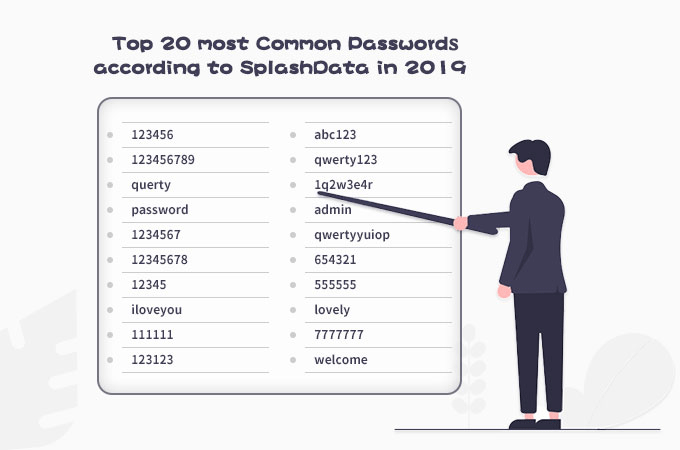
- Sequential or Keyboard Patterns: Passwords like "123456", "qwerty", "asdfgh", or "password" are the absolute weakest and provide virtually no protection.
- Writing Passwords on Physical Notes: While it might seem convenient, sticky notes on your monitor or under your keyboard are an open invitation for unauthorized access. If you must write them down, use an encrypted method or a secure physical location.
- Falling for `Phishing` Attempts: Phishing emails or fake websites are designed to trick you into revealing your credentials. Always verify the legitimacy of a login page before entering your password.
Actionable Tips for Maintaining Superior Password Security
To summarize and reinforce your journey towards robust `online safety`, here are concrete actions you can take today:
- Embrace the Passphrase Method: Start converting your most important account passwords (email, banking, primary social media) into long, memorable passphrases using the techniques discussed.
- Adopt a Password Manager: Research, choose, and commit to using a reputable password manager. This single step will revolutionize your `credential management`.
- Enable 2FA Everywhere Possible: Make it a habit to enable `Two-Factor Authentication` on every service that offers it. Prioritize email and financial accounts first.
- Never Reuse Passwords: This rule is non-negotiable. Use unique passwords for every single login.
- Be Skeptical of Unsolicited Requests: Never share your password via email, text, or phone call, even if the request appears to come from a legitimate source. Always navigate directly to the official website.
- Regularly Monitor for Breaches: Use services like "Have I Been Pwned" to check if your email addresses or phone numbers have been part of known data breaches. This allows you to proactively change passwords.
- Educate Yourself Continuously: The landscape of `cyber threats` is always evolving. Stay informed about new attack vectors and best practices in `cyber hygiene`.
Frequently Asked Questions About Password Security
What makes a password "strong"?
A password is considered "strong" when it is long (ideally 12+ characters), complex (a mix of uppercase and lowercase letters, numbers, and special characters), unique (not reused across multiple accounts), and random (not based on personal information, dictionary words, or predictable patterns). The goal is to create a password with high `entropy` that is computationally difficult for attackers to guess or crack through `brute-force attacks` or `dictionary attacks`.
Is it safe to write down my passwords?
Generally, it is not recommended to write down passwords in plain sight or on easily accessible notes. If you must write them down, ensure they are stored in a highly secure, encrypted location, such as within a dedicated `password manager` or a securely locked physical safe. The best practice is to use a password manager, which encrypts your credentials and allows you to access them securely across devices without needing to physically write them down.
How often should I change my passwords?
The old advice of changing passwords every 90 days is largely outdated. Instead, the focus should be on creating unique, strong passwords for every account and enabling `Two-Factor Authentication` (2FA) wherever possible. You should immediately change a password if you suspect an account has

0 Komentar