
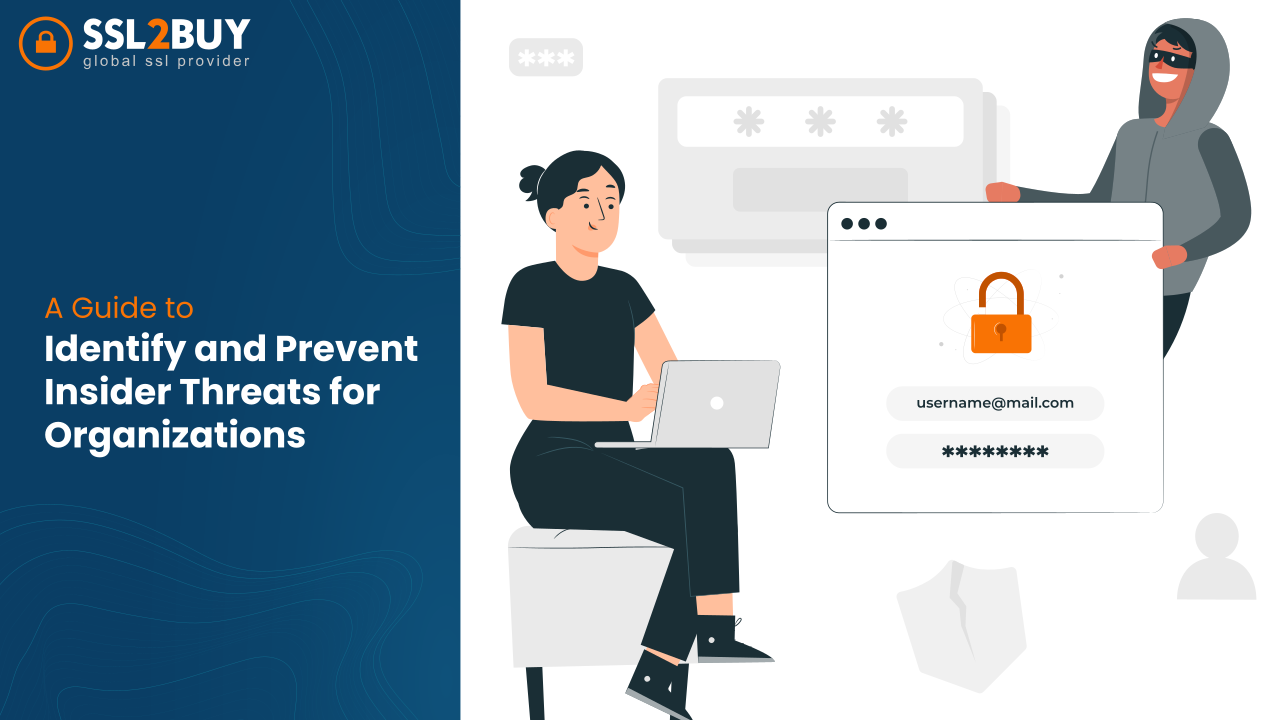
How to Identify and Prevent Insider Threats: A Comprehensive Guide to Protecting Your Organization
In today's interconnected digital landscape, organizations are constantly battling external cyber threats. However, a far more insidious and often overlooked danger lurks within: insider threats. These threats, originating from current or former employees, contractors, or business partners, pose a significant risk to an organization's sensitive data, intellectual property, and overall operational integrity. Understanding how to identify and prevent insider threats is not just a best practice; it's a critical imperative for robust cybersecurity and effective risk management. This comprehensive guide will equip you with the knowledge and actionable strategies necessary to safeguard your assets from internal dangers, offering deep insights into detection, prevention, and response.
Understanding the Landscape of Insider Threats
Insider threats are complex, multifaceted challenges that can manifest in various forms, making their identification particularly challenging. Unlike external attackers, insiders already possess legitimate access to systems and data, often blurring the lines between legitimate activity and malicious intent. A successful defense begins with a clear understanding of the types of insiders and their motivations.
Types of Insider Threats
- Malicious Insiders: These individuals intentionally seek to cause harm or gain unauthorized benefits. Their actions might include stealing sensitive data for personal gain, sabotaging systems out of revenge, or engaging in corporate espionage. The motivation is typically deliberate and harmful.
- Negligent Insiders: Often the most common type, negligent insiders unintentionally create vulnerabilities through carelessness, lack of awareness, or poor judgment. This could involve falling for phishing scams, misconfiguring systems, losing unencrypted devices, or sharing credentials. While their intent isn't malicious, the impact can be just as severe as a deliberate attack, leading to a significant data breach.
- Compromised Insiders: These are individuals whose legitimate credentials or access have been compromised by an external actor, often through social engineering, malware, or credential theft. The insider unknowingly becomes a conduit for external attackers to bypass security controls and exfiltrate data.
Motivations Behind Insider Threats
Understanding the "why" behind an insider's actions can provide crucial context for detection and prevention. While negligence is often unintentional, malicious actions stem from various drivers:
- Financial Gain: Selling sensitive data, trade secrets, or client lists to competitors or on the dark web.
- Revenge or Disgruntlement: Employees who feel wronged, passed over, or unfairly treated may seek to damage the organization's reputation or operations.
- Espionage: Working for a competitor or foreign entity to steal intellectual property theft or proprietary information.
- Ideology: Believing the organization is unethical or that its data should be public.
- Carelessness/Lack of Awareness: A significant factor for negligent insiders, stemming from insufficient security awareness training or a lax attitude towards security protocols.
- Social Engineering: Being tricked by external actors into revealing credentials or granting access.
Key Indicators: How to Identify Potential Insider Threats
Effective identification relies on a combination of behavioral analysis, digital monitoring, and technological solutions. No single indicator is definitive, but a combination of red flags should trigger further investigation.
Behavioral Red Flags
Human behavior can often provide early warning signs. While it's crucial to avoid undue suspicion, certain patterns warrant attention:
- Unusual Work Hours or Access Patterns: An employee consistently accessing sensitive systems outside of normal business hours or from unusual locations.
- Attempts to Bypass Security Controls: Trying to circumvent firewalls, access controls, or install unauthorized software.
- Excessive Data Downloads or Access: An employee accessing or downloading large volumes of data unrelated to their job function, especially before resignation or termination.
- Expressions of Disgruntlement or Resentment: Overtly negative comments about the company, management, or colleagues.
- Unexplained Financial Distress: Sudden changes in financial status or discussions about severe debt, which could be a motivator for illicit activity.
- Violations of Company Policy: Repeated disregard for security policies, even seemingly minor ones.
Digital Footprints and Data Anomalies
Beyond human behavior, the digital trail left by insiders is often the most concrete evidence. Monitoring system logs, network activity, and data access is paramount.
- Unauthorized Access Attempts: Repeated failed login attempts to systems or data not typically accessed by the user.
- Unusual Network Activity: Large data transfers to external servers, unusual traffic patterns, or the use of unauthorized protocols.
- Excessive Printing or USB Device Usage: Printing large volumes of sensitive documents or transferring data to personal storage devices.
- Changes in Access Privileges: Attempts to elevate privileges or gain access to systems beyond their required job functions.
- Circumvention of DLP Solutions: Efforts to bypass or disable Data Loss Prevention (DLP) systems.
Technological Solutions for Identification
Modern security tools are indispensable for detecting sophisticated insider threats. These solutions provide the visibility and analytical capabilities needed to identify anomalies at scale.
- User and Entity Behavior Analytics (UEBA): UEBA solutions establish baseline behaviors for users and systems, then use machine learning to detect deviations that might indicate malicious activity. This is crucial for identifying subtle patterns of data exfiltration or unusual access control attempts.
- Data Loss Prevention (DLP): DLP tools monitor, detect, and block sensitive data from leaving the organization's network through various channels (email, cloud storage, USB drives, etc.). They are frontline defenses against intentional or accidental data leaks.
- Security Information and Event Management (SIEM): SIEM systems aggregate and analyze log data from various security devices and applications across the network. They provide a centralized view of security events, enabling correlation of seemingly disparate incidents to identify larger threats.
- Privileged Access Management (PAM): PAM solutions manage and monitor accounts with elevated privileges, which are often targets for insider misuse or compromise. By controlling and auditing access to critical systems, PAM significantly reduces the risk of privileged access abuse.
- Endpoint Detection and Response (EDR): EDR tools continuously monitor endpoint activity, capturing and analyzing data to detect suspicious behaviors, malware, and insider threats that might bypass traditional antivirus solutions.
Proactive Prevention Strategies: Building a Robust Defense
Identification is only half the battle; prevention is where organizations truly build resilience against insider threats. A multi-layered approach combining cultural, technical, and procedural safeguards is essential.
Establishing a Strong Security Culture
Technology alone cannot solve the insider threat problem. People are often the weakest link, but they can also be the strongest defense if properly educated and empowered.
- Comprehensive Security Awareness Training: Regularly train employees on security policies, common threat vectors (like phishing), the importance of data protection, and their role in preventing insider threats. Emphasize the risks of both malicious and negligent actions.
- Clear Policies and Procedures: Develop and enforce unambiguous policies regarding data handling, acceptable use of IT resources, remote work, and incident reporting. Ensure employees understand the consequences of non-compliance.
- Positive Employee Engagement: Foster a positive work environment. Disgruntled employees are more likely to become malicious insiders. Address grievances, promote open communication, and ensure fair treatment.
- Whistleblower Programs: Establish secure and anonymous channels for employees to report suspicious activities without fear of retaliation.
Implementing Technical Controls
Robust technical controls form the backbone of any effective insider threat prevention program.
- Least Privilege and Role-Based Access Control (RBAC): Grant employees only the minimum level of access required to perform their job functions. Regularly review and update access rights, especially when roles change or employees leave. This minimizes the potential impact of a compromised or malicious account. For deeper insights, explore our guide on Access Control Best Practices.
- Multi-Factor Authentication (MFA): Implement MFA for all critical systems and applications. This adds an essential layer of security, making it significantly harder for compromised credentials to be exploited.
- Network Segmentation: Divide your network into isolated segments based on sensitivity. This limits the lateral movement of an insider threat, containing potential breaches to specific areas.
- Encryption: Encrypt sensitive data at rest and in transit. Even if data is exfiltrated, it will be unreadable without the decryption key.
- Centralized Logging and Monitoring: Implement comprehensive logging across all systems and applications, and ensure logs are regularly reviewed and correlated using SIEM solutions.
- Data Classification: Classify data based on its sensitivity (e.g., public, internal, confidential, highly restricted). This helps in applying appropriate security controls and DLP policies.
Continuous Monitoring and Auditing
Prevention is an ongoing process, not a one-time setup. Continuous vigilance is key.
- Regular Audits and Reviews: Periodically audit user access rights, system configurations, and security logs to identify vulnerabilities and policy violations.
- Behavioral Analytics: Continuously monitor user behavior for anomalies using UEBA tools. This proactive monitoring can detect subtle shifts in activity that signal a potential threat.
- Incident Response Plan: Develop and regularly test a comprehensive incident response plan specifically for insider threats. This plan should detail steps for detection, containment, eradication, recovery, and post-incident analysis.
- Robust Exit Procedures: Implement strict procedures for offboarding employees, including immediate revocation of all access rights, collection of company assets, and forensic imaging of devices if deemed necessary. This prevents disgruntled former employees from becoming a threat.
Developing an Effective Insider Threat Program
A truly effective insider threat strategy requires a dedicated program, not just a collection of tools and policies. It's about integrating various functions into a cohesive defense.
Cross-Functional Collaboration
An insider threat program cannot operate in a silo. It requires seamless collaboration across departments:
- Human Resources (HR): HR plays a crucial role in identifying behavioral red flags, managing employee grievances, and handling disciplinary actions. They should be integrated into security awareness training and exit procedures.
- Legal Department: Ensures that monitoring activities comply with privacy laws (e.g., GDPR, CCPA) and employment regulations. They are also vital in determining legal recourse for malicious insider actions.
- IT and Security Teams: Responsible for implementing and maintaining technical controls, monitoring systems, and leading incident response efforts.
- Management/Leadership: Provides the necessary resources, support, and strategic direction for the insider threat program, emphasizing its importance throughout the organization.
Risk Assessment and Prioritization
Not all data or systems carry the same risk. A targeted approach is more effective:
- Identify Critical Assets: Determine which data, systems, and intellectual property are most valuable and vulnerable to insider threats.
- Assess Vulnerabilities: Evaluate potential weaknesses in current security controls that could be exploited by insiders.
- Prioritize Risks: Focus resources on protecting the most critical assets from the most probable and impactful insider threat scenarios. This might involve creating an Enterprise Risk Management Framework.
Legal and Ethical Considerations
Monitoring employees raises significant privacy and legal concerns. Organizations must navigate these carefully:
- Transparency: Be transparent with employees about monitoring practices where legally permissible. Often, a clear Acceptable Use Policy (AUP) signed by employees can serve this purpose.
- Data Protection Regulations: Ensure all monitoring and data collection activities comply with relevant data protection laws (e.g., GDPR, CCPA, HIPAA).
- Employee Rights: Balance security needs with employee privacy rights. Focus monitoring on company-owned devices and networks, and clearly define what constitutes acceptable use.
Practical Steps for Incident Response and Mitigation
Despite the best prevention efforts, incidents can still occur. A well-defined incident response plan is crucial for minimizing damage.
- Containment and Eradication:
- Immediately isolate the compromised system or user account to prevent further unauthorized access or data exfiltration.
- Revoke all relevant access credentials.
- If malware is involved, eradicate it from affected systems.
- Investigation and Recovery:
- Conduct a thorough digital forensic investigation to understand the scope, method, and impact of the incident.
- Collect and preserve evidence according to legal and forensic best practices.
- Restore affected systems and data from secure backups.
- Notify relevant stakeholders (legal, HR, management, affected parties if required by law).
- Post-Incident Analysis:
- Review the incident to identify root causes and weaknesses in existing controls.
- Update policies, procedures, and security technologies based on lessons learned.
- Provide additional security awareness training if human error was a significant factor.
- Consider legal action if malicious intent and sufficient evidence are present.
Frequently Asked Questions
What is an insider threat in cybersecurity?
An insider threat in cybersecurity refers to a security risk that originates from within an organization, posed by individuals who have authorized access to its systems, data, or physical facilities. This includes current or former employees, contractors, or business partners who misuse their legitimate access, either intentionally (malicious insiders) or unintentionally (negligent insiders), to cause harm, facilitate a data breach, or compromise sensitive information like intellectual property.
How common are insider threats, and what is their impact?
Insider threats are alarmingly common and often more damaging than external attacks due to the insider's inherent access and knowledge of internal systems. Studies consistently show that a significant percentage of data breaches involve an insider component. Their impact can range from massive financial losses due to stolen data or intellectual property, reputational damage, operational disruption, and severe legal and regulatory penalties. The average cost of an insider threat incident can run into millions of dollars, making effective risk management essential.
What is the difference between malicious and negligent insider threats?
The primary difference lies in intent. A malicious insider threat involves an individual deliberately attempting to cause harm, steal data, or sabotage systems for personal gain, revenge, or other harmful motives. In contrast, a negligent insider threat occurs when an individual unintentionally causes a security incident due to carelessness, a lack of awareness, or human error, such as falling for a phishing scam, misconfiguring a system, or losing an unencrypted device. Both types can lead to severe consequences, but their prevention strategies often differ, with training being key for negligence and monitoring for malice.
Can small businesses be affected by insider threats?
Absolutely. Insider threats are not exclusive to large corporations; in fact, small and medium-sized businesses (SMBs) can be particularly vulnerable. SMBs often have fewer dedicated security resources, less stringent access control, and may lack comprehensive employee monitoring systems compared to larger enterprises. This makes them attractive targets for insiders seeking to exploit weaknesses, as their sensitive data (e.g., customer lists, financial records, proprietary information) is just as valuable. Implementing foundational cybersecurity practices and fostering a strong security culture are vital for SMBs.
What role does employee morale play in preventing insider threats?
Employee morale plays a significant, though indirect, role in preventing insider threats, particularly malicious ones. A highly engaged and satisfied workforce is less likely to harbor resentment or seek revenge against the organization. Conversely, employees who feel undervalued, mistreated, or are facing significant personal distress (e.g., financial problems) may be more susceptible to motivations that lead to malicious actions or compromise. Fostering a positive work environment, addressing grievances, and promoting open communication can contribute to reducing the risk of a disaffected insider becoming a threat, complementing technical controls and compliance efforts.

0 Komentar