
Complete Guide
Are you looking to unlock the full potential of artificial intelligence in processing and understanding human language? This comprehensive guide delves deep into how to use transformers for natural language understanding tasks, offering a roadmap for anyone from data scientists to AI enthusiasts. Transformers, a revolutionary architecture in the realm of deep learning, have dramatically reshaped the landscape of Natural Language Processing (NLP), enabling machines to comprehend context, nuance, and meaning with unprecedented accuracy. Discover how these powerful machine learning models can transform your approach to tasks like sentiment analysis, named entity recognition, and question answering, providing the cutting-edge insights you need to build intelligent language systems.
Understanding the Power of Transformers in Natural Language Understanding
The advent of transformers has marked a pivotal moment in the evolution of Natural Language Understanding (NLU). Prior to transformers, traditional NLP models often struggled with capturing long-range dependencies in text and understanding the intricate context of words within a sentence or document. Recurrent Neural Networks (RNNs) and Long Short-Term Memory (LSTM) networks, while effective, faced limitations in processing speed and handling very long sequences due to their sequential nature.
Transformers introduced a paradigm shift with their revolutionary attention mechanism. This mechanism allows the model to weigh the importance of different words in the input sequence when processing each word, enabling it to grasp contextual relationships regardless of their distance. This parallel processing capability drastically speeds up training times and significantly enhances the model's ability to understand complex linguistic structures. The result? Unparalleled performance across a myriad of NLU tasks, making them the cornerstone of modern computational linguistics.
Why Transformers Revolutionized NLP
- Parallel Processing: Unlike sequential models, transformers can process entire input sequences simultaneously, leading to much faster training and inference. This is a game-changer for handling large datasets and complex models.
- Capturing Long-Range Dependencies: The self-attention mechanism allows transformers to directly connect any two words in a sequence, no matter how far apart, effectively solving the "long-term dependency" problem that plagued previous architectures. This is crucial for accurate contextual embeddings.
- Transfer Learning Capabilities: Pre-trained transformer models, such as BERT, GPT, and RoBERTa, have learned vast amounts of language knowledge from massive text corpuses. This knowledge can then be "transferred" and fine-tuned for specific NLU tasks with relatively small datasets, significantly reducing development time and computational resources. This concept of transfer learning is a core advantage.
- State-of-the-Art Performance: Transformers consistently achieve state-of-the-art results across a wide range of NLU benchmarks, pushing the boundaries of what machines can understand and generate.
Core Natural Language Understanding Tasks Enhanced by Transformers
Transformers have proven exceptionally versatile, empowering a wide array of NLU applications. Their ability to generate rich, contextual representations of text makes them ideal for tasks that require deep comprehension of human language. Let's explore some of the most impactful NLU tasks where transformers excel.
Text Classification and Sentiment Analysis
Text classification is a fundamental NLU task that involves assigning predefined categories or labels to text documents. This could range from classifying news articles by topic (sports, politics, technology) to categorizing customer feedback as positive, negative, or neutral. Sentiment analysis is a specific type of text classification focused on determining the emotional tone or sentiment expressed in a piece of text.
Transformers, especially pre-trained models like BERT, are highly effective for these tasks. By fine-tuning a pre-trained model on a labeled dataset of text and their corresponding categories, the transformer learns to identify subtle linguistic cues that indicate category membership or sentiment. For instance, in customer reviews, a transformer can distinguish between "slow service" (negative) and "service was prompt" (positive), even when similar words are used in different contexts. This capability is vital for businesses monitoring brand reputation or understanding customer feedback at scale.
Named Entity Recognition (NER)
Named Entity Recognition (NER) is the process of identifying and classifying named entities in text into predefined categories such as person names, organizations, locations, dates, monetary values, and more. For example, in the sentence "Dr. Smith met with Apple Inc. in London on Tuesday," an NER model would identify "Dr. Smith" as a person, "Apple Inc." as an organization, "London" as a location, and "Tuesday" as a date.
Transformers excel at NER because their attention mechanism allows them to understand the context of each word and how it relates to other words in the sequence. This enables precise identification of entities, even when they are multi-word expressions or have ambiguous meanings without context. NER is crucial for information extraction, building knowledge graphs, and enhancing search capabilities.
Question Answering (QA) Systems
Question Answering (QA) systems aim to provide direct answers to questions posed in natural language. These systems can be extractive, meaning they pull the answer directly from a given text passage (e.g., finding the answer to "Who founded Google?" within an article about Google's history), or generative, where they synthesize a new answer based on their understanding of the context (e.g., conversational AI chatbots).
Transformers have revolutionized QA, particularly with models trained on datasets like SQuAD (Stanford Question Answering Dataset). Their ability to understand the relationship between a question and a given context, pinpointing the most relevant span of text, makes them highly effective. For generative QA, models like GPT-3 have demonstrated astonishing capabilities in producing coherent and contextually relevant answers, pushing the boundaries of conversational AI.
Text Summarization
Text summarization involves creating a concise and coherent summary of a longer document while retaining its most important information. This can be extractive, where key sentences or phrases are pulled directly from the original text, or abstractive, where the model generates new sentences that capture the essence of the original, potentially paraphrasing or rephrasing content.
Transformers are particularly powerful for abstractive summarization. Models like BART and T5 are trained as sequence-to-sequence models, capable of understanding a lengthy input sequence and generating a shorter, coherent output sequence. This capability is invaluable for digesting large volumes of information quickly, such as news articles, research papers, or legal documents.
A Step-by-Step Guide to Using Transformers for NLU
Implementing transformers for your NLU tasks might seem daunting, but with a structured approach, it becomes manageable. The process typically involves data preparation, model selection, fine-tuning, evaluation, and deployment. Here's a practical guide:
Step 1: Data Preparation and Preprocessing
- Data Collection: Gather a relevant dataset for your specific NLU task. For sentiment analysis, this might be customer reviews with associated sentiment labels. For NER, it would be text with entities annotated.
- Text Cleaning: Remove noise such as HTML tags, special characters, URLs, and irrelevant punctuation. Normalize text (e.g., convert to lowercase).
- Tokenization: Transformers require input text to be broken down into "tokens" (words or sub-word units). Use the tokenizer specific to your chosen pre-trained model (e.g., Hugging Face Transformers library tokenizers are standard). This ensures consistency with how the pre-trained model was originally trained.
- Encoding and Padding: Convert tokens into numerical IDs that the model understands. Pad sequences to a uniform length and create attention masks to differentiate real tokens from padding.
- Dataset Splitting: Divide your prepared data into training, validation, and test sets. A common split is 80% training, 10% validation, 10% test.
Step 2: Choosing the Right Pre-trained Transformer Model
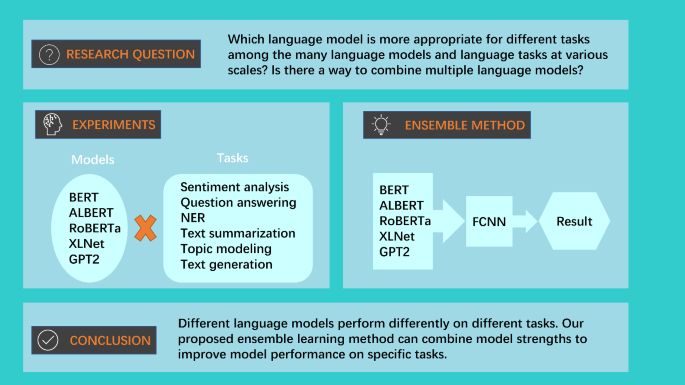
The transformer ecosystem offers a vast array of pre-trained models, each with unique strengths and architectures. Your choice depends on your specific NLU task, available computational resources, and desired performance:
- BERT (Bidirectional Encoder Representations from Transformers): Excellent for general NLU tasks like text classification, NER, and QA. It's a powerful encoder-only model.
- RoBERTa (Robustly Optimized BERT Pretraining Approach): An optimized version of BERT, often performing slightly better.
- XLNet: Combines concepts from BERT and Auto-regressive models, good for tasks requiring long-range dependencies.
- DistilBERT: A smaller, faster version of BERT, suitable when computational efficiency is critical, with minimal performance loss.
- GPT (Generative Pre-trained Transformer) series: While primarily known for text generation, models like GPT-2 can be fine-tuned for some NLU tasks, especially those that can be framed as text-to-text problems.
- BART/T5: Powerful sequence-to-sequence models ideal for tasks like summarization, translation, and generative QA.
For most NLU classification or extraction tasks, BERT or RoBERTa are excellent starting points. For generative tasks, consider BART or T5. The Hugging Face Model Hub is an invaluable resource for discovering and downloading models.
Step 3: Fine-tuning for Specific NLU Tasks
Fine-tuning is the process of taking a pre-trained transformer model and training it further on your specific, smaller dataset. This allows the model to adapt its vast general language knowledge to the nuances of your particular task.
- Load Pre-trained Model: Use libraries like Hugging Face's Transformers (with PyTorch or TensorFlow backend) to load your chosen model and its corresponding tokenizer.
- Define Task-Specific Head: Add a small, task-specific layer (e.g., a linear classifier for text classification) on top of the transformer's output. This layer will learn to map the transformer's powerful representations to your desired output.
- Set Up Optimizer and Loss Function: Choose an optimizer (e.g., AdamW) and a loss function appropriate for your task (e.g., Cross-Entropy Loss for classification).
- Training Loop: Iterate over your training data, feeding batches to the model, calculating the loss, performing backpropagation, and updating the model's weights. During this phase, the entire model (including the pre-trained layers) is typically updated, albeit with a smaller learning rate than during initial pre-training. This is the essence of transfer learning.
- Validation: Periodically evaluate the model on the validation set to monitor performance and prevent overfitting.
Step 4: Model Evaluation and Iteration
Once fine-tuning is complete, it's crucial to evaluate your model's performance on the unseen test set using appropriate metrics for your NLU task:
- Text Classification/Sentiment Analysis: Accuracy, Precision, Recall, F1-score.
- Named Entity Recognition: F1-score (especially micro-F1 for entity-level evaluation).
- Question Answering: Exact Match (EM) and F1-score (for extractive QA).
- Text Summarization: ROUGE scores (Recall-Oriented Understudy for Gisting Evaluation).
If the performance isn't satisfactory, iterate on your approach. This might involve: refining data preprocessing, experimenting with different transformer models, adjusting hyperparameters (e.g., learning rate, batch size, number of epochs), or gathering more labeled data.
Step 5: Deployment and Inference
After achieving satisfactory performance, the final step is to deploy your fine-tuned transformer model for real-world inference. This means making it available to process new, unseen text data.
Deployment strategies vary:
- API Endpoints: Wrap your model in a REST API (e.g., using Flask or FastAPI) to allow applications to send text and receive predictions.
- Batch Processing: For large volumes of offline text, run predictions in batches.
- Edge Devices: For specific applications, compressed or "distilled" models can be deployed on edge devices with limited computational resources.
Consider latency, throughput, and scalability requirements when choosing your deployment strategy. Tools like TensorFlow Extended (TFX) or TorchServe can assist with model serving and management.
Best Practices and Advanced Tips for Transformer Deployment
To maximize the effectiveness and efficiency of your transformer-based NLU solutions, consider these best practices and advanced tips:
- Hyperparameter Tuning: Don't settle for default hyperparameters. Experiment with different learning rates, batch sizes, and optimizer settings. Techniques like grid search, random search, or Bayesian optimization can help find optimal values.
- Leverage Gradient Accumulation: If you have limited GPU memory but want to use larger effective batch sizes, accumulate gradients over several smaller batches before performing a single optimization step.
- Mixed Precision Training: Utilize mixed precision training (e.g., using FP16 instead of FP32) to reduce memory usage and speed up training, especially on modern GPUs.
- Model Distillation/Quantization: For production environments where latency and model size are critical, consider techniques like knowledge distillation (training a smaller "student" model to mimic a larger "teacher" transformer) or quantization (reducing the precision of model weights) to create lighter, faster models.
- Monitor for Bias: Pre-trained models can inherit biases present in their training data. Continuously monitor your model's outputs for unfair or discriminatory predictions, especially in sensitive applications. This is a critical aspect of ethical AI considerations.
- Continual Learning: Language evolves, and so should your model. Implement strategies for periodically retraining or fine-tuning your model with new data to maintain its relevance and accuracy.
- Explore Domain-Specific Models: For highly specialized domains (e.g., legal, medical), consider transformers pre-trained on domain-specific corpora, which often outperform general-purpose models.
- Utilize Transformers for Feature Extraction: Even if you don't fine-tune the entire model, you can use pre-trained transformers simply to extract powerful contextual embeddings (vector representations) for your text, which can then be fed into simpler machine learning models.
For a deeper dive into optimizing fine-tuning, explore resources on fine-tuning transformers for optimal performance.
Frequently Asked Questions
What is the primary advantage of transformers over traditional NLP models?
The primary advantage of transformers lies in their attention mechanism, which allows them to process all parts of an input sequence simultaneously, capturing long-range dependencies and complex contextual relationships with unparalleled efficiency. This contrasts with traditional models like RNNs or LSTMs that process sequences sequentially, often struggling with very long texts and parallelization. Transformers enable faster training, better understanding of nuanced language, and superior performance across diverse Natural Language Understanding tasks.
Can I use transformers without extensive coding knowledge?
While some coding knowledge is beneficial for fine-tuning and advanced deployment, the ecosystem around transformers, particularly the Hugging Face Transformers library, has made them incredibly accessible. High-level APIs and pre-built pipelines allow users to perform common NLU tasks with just a few lines of code. For those with no coding background, platforms offering AutoML or drag-and-drop interfaces are also emerging, abstracting away much of the underlying complexity, though direct control offers more customization.
How do I choose the best transformer model for my NLU task?
Choosing the best transformer model depends on several factors: the specific NLU task (e.g., classification, generation), the size and nature of your dataset, and your available computational resources. For general NLU, models like BERT or RoBERTa are excellent starting points. For generative tasks, look at GPT, BART, or T5. If computational efficiency is key, consider smaller models like DistilBERT. Always check the model's original training data to ensure it aligns with your domain, and consult benchmark results for similar tasks on the Hugging Face Model Hub.
What are the computational requirements for training transformer models?
Training or fine-tuning transformer models, especially larger ones, can be computationally intensive. It typically requires access to powerful GPUs (Graphics Processing Units) or TPUs (Tensor Processing Units) due to the large number of parameters and the matrix multiplications involved in the attention mechanism. Cloud platforms (AWS, GCP, Azure) offer scalable GPU instances. For smaller models or fine-tuning, a consumer-grade GPU might suffice, but for pre-training or large-scale research, high-end data center GPUs are often necessary. Techniques like mixed precision training and gradient accumulation can help manage memory and speed up training on limited hardware.
Are there ethical considerations when deploying NLU models built with transformers?
Absolutely. Deploying NLU models built with transformers comes with significant ethical considerations. Pre-trained models learn from vast amounts of internet text, which can contain biases related to gender, race, religion, and other sensitive attributes. These biases can be perpetuated or even amplified by the model, leading to unfair or discriminatory outcomes in applications like hiring, loan applications, or content moderation. It's crucial to implement strategies for bias detection and mitigation, ensure data diversity, maintain transparency about model limitations, and conduct thorough ethical reviews before and after deployment to ensure responsible AI practices and prevent unintended societal harm.

0 Komentar