
Mastering Your Digital Assets: The Best Crypto Portfolio Rebalancing Strategies
In the highly volatile world of digital assets, simply buying and holding cryptocurrencies often isn't enough to achieve long-term financial success. To truly optimize your returns and manage risk effectively, understanding and implementing the best crypto portfolio rebalancing strategies is paramount. This comprehensive guide will equip you with the expert knowledge and actionable insights needed to navigate market fluctuations, maintain your desired portfolio allocation, and protect your investment goals. Dive in to discover how strategic adjustments can transform your approach to cryptocurrency investing, ensuring your portfolio remains aligned with your objectives.
Understanding Crypto Portfolio Rebalancing: A Core Principle for Digital Assets
At its heart, crypto portfolio rebalancing is the process of adjusting the weightings of assets in your investment portfolio back to their original or target allocations. Imagine you start with a portfolio where Bitcoin (BTC) makes up 50% and Ethereum (ETH) makes up 50%. If Bitcoin's value skyrockets while Ethereum remains stable, Bitcoin might now represent 70% of your portfolio. Rebalancing would involve selling some Bitcoin and buying more Ethereum to bring both back to their 50% target. This disciplined approach is crucial for managing market fluctuations and ensuring your portfolio allocation aligns with your risk tolerance and long-term objectives.
Why Rebalance Your Crypto Portfolio? Beyond Just Taking Profits
While often perceived as a way to "take profits," the benefits of rebalancing extend far beyond. It's a proactive risk management technique that helps maintain your desired risk profile. Without rebalancing, a highly successful asset could dominate your portfolio, exposing you to excessive risk if that asset experiences a significant downturn. Conversely, underperforming assets might dwindle to insignificance, losing their diversification benefits. Key reasons to rebalance include:
- Risk Control: Prevents any single asset from becoming an outsized portion of your portfolio, thereby reducing concentrated risk.
- Profit Locking & Buying Low: Forces you to sell high (trimming overperforming assets) and buy low (adding to underperforming assets), a classic investment maxim.
- Maintaining Diversification: Ensures your diversification strategy remains intact, spreading risk across different digital assets.
- Alignment with Investment Goals: Keeps your portfolio aligned with your initial investment thesis and personal risk appetite.
- Emotional Discipline: Imposes a structured approach, reducing the likelihood of impulsive decisions driven by market hype or fear.
The Best Crypto Portfolio Rebalancing Strategies: A Deep Dive
Choosing the right rebalancing strategy depends on your individual preferences, risk tolerance, and the amount of time you're willing to dedicate. Here are the most effective strategies employed by seasoned investors in the world of blockchain investments:
1. Time-Based Rebalancing (Periodic Rebalancing)
This is perhaps the simplest and most common strategy. With time-based rebalancing, you set a fixed schedule (e.g., monthly, quarterly, semi-annually, or annually) to review and adjust your portfolio. Regardless of market conditions, you rebalance at these predetermined intervals.
- Mechanism: On a set date, you review your portfolio's current asset weights and adjust them back to your target percentages.
- Pros:
- Simplicity: Easy to understand and implement.
- Discipline: Enforces a disciplined approach, removing emotional biases.
- Predictable: You know exactly when you'll be rebalancing.
- Cons:
- Missed Opportunities: You might miss significant market movements between rebalancing periods.
- Over-Rebalancing: In highly volatile markets, frequent rebalancing might lead to excessive transaction fees and potential tax events if intervals are too short.
- Inefficiency: You might rebalance when it's not strictly necessary, incurring costs without significant benefit.
- Practical Tip: For highly volatile crypto markets, quarterly or semi-annual rebalancing might strike a good balance between discipline and cost efficiency.
2. Threshold-Based Rebalancing (Percentage Drift)
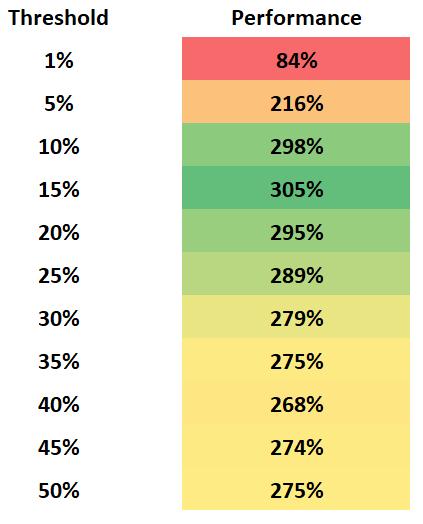
This strategy is more dynamic than time-based rebalancing. Instead of fixed intervals, you rebalance only when an asset's weight deviates by a certain percentage from its target allocation.
- Mechanism: You set a "tolerance band" (e.g., 5% or 10%). If Bitcoin's target is 50% and it drifts to 55% (a 5% deviation) or 45% (a 5% deviation), you trigger a rebalance.
- Pros:
- Market Responsive: Reacts to significant price movements, rebalancing only when necessary.
- Cost-Effective: Reduces unnecessary trades and associated transaction costs compared to frequent time-based rebalancing.
- Optimized Action: Ensures rebalancing only occurs when it makes a material difference to your asset allocation.
- Cons:
- Monitoring Required: Requires more active monitoring of your portfolio's weights.
- Potential Inaction: Small, consistent drifts might never trigger a rebalance, leading to slow portfolio creep.
- Complexity: Slightly more complex to set up and manage, especially with many assets.
- Expert Insight: Many professional investors prefer threshold-based rebalancing as it's more efficient in capturing significant market shifts while minimizing trading activity. A 5-10% threshold is commonly recommended for crypto.
3. Hybrid Rebalancing Strategy
As the name suggests, a hybrid strategy combines elements of both time-based and threshold-based approaches. This often offers the best of both worlds, providing both discipline and responsiveness.
- Mechanism: You set both a time interval (e.g., quarterly) AND a percentage threshold (e.g., 5%). You rebalance if either the time interval is reached OR an asset's deviation exceeds the threshold before the next scheduled rebalance.
- Pros:
- Balanced Approach: Benefits from both systematic discipline and market responsiveness.
- Adaptive: Catches major shifts while still ensuring periodic alignment.
- Robust: A more resilient strategy for managing volatility in digital assets.
- Cons:
- Increased Complexity: Requires tracking two conditions.
- More Frequent Rebalancing: Potentially more trades than pure threshold-based, leading to higher fees.
- Actionable Advice: For many crypto investors, a hybrid strategy (e.g., quarterly review with a 7.5% deviation trigger) offers an optimal balance for long-term passive investing and active risk management.
4. Constant Proportion Portfolio Insurance (CPPI)
This is a more advanced dynamic strategy designed to ensure a minimum portfolio value while still allowing for participation in market upside. While complex, it's worth understanding for serious investors.
- Mechanism: CPPI involves allocating funds between a "risky" asset (like crypto) and a "safe" asset (like stablecoins or cash) based on a formula that aims to protect a predefined "floor" value for the portfolio. As the portfolio value increases, more is allocated to the risky asset; as it decreases, more is allocated to the safe asset.
- Pros:
- Capital Protection: Designed to prevent losses below a certain level.
- Upside Participation: Allows for significant gains during bull markets.
- Automated Logic: Can be automated with sophisticated tools.
- Cons:
- Complexity: Difficult to implement manually and requires advanced understanding.
- Gap Risk: Sudden, severe market crashes (flash crashes) can breach the floor before rebalancing can occur.
- Opportunity Cost: May keep a significant portion in stablecoins during prolonged bull markets.
- Transaction Costs: Can generate frequent trades.
- Consideration: CPPI is typically for large portfolios or institutional investors, often implemented via programmatic trading. For most retail crypto investors, simpler strategies are more practical.
Key Considerations Before Implementing Rebalancing Strategies
Before you jump into rebalancing, several factors specific to the crypto market demand your attention:
Market Volatility and Frequency
Cryptocurrency markets are notoriously volatile. What might be a reasonable rebalancing frequency for traditional stocks (e.g., annually) could be far too slow for crypto. Excessive rebalancing, however, can lead to high transaction fees and potential tax complications. Find a balance that suits your risk tolerance and the specific assets in your portfolio. Highly correlated assets might need less frequent rebalancing than a portfolio with a mix of established coins and speculative altcoins.
Transaction Costs (Gas Fees & Exchange Fees)
Every trade incurs costs. On Ethereum, for example, gas fees can be significant, especially during network congestion. Exchange trading fees, while often small percentages, can add up over time with frequent rebalancing. Factor these costs into your strategy. Opt for exchanges with lower fees or consider rebalancing less frequently if costs are a major concern. Look for platforms that offer reduced fees for higher trading volumes if you're an active trader.
Tax Implications: Navigating Capital Gains
In many jurisdictions, selling cryptocurrencies, even as part of a rebalancing act, can trigger a taxable event. If you sell an asset for a profit, you might incur capital gains tax. Conversely, selling at a loss could allow for tax loss harvesting. Understanding your local tax laws regarding crypto is absolutely crucial. Consult with a tax professional to understand the implications of frequent rebalancing on your tax liability. This is where tax efficiency becomes a vital part of your strategy.
Learn more about crypto tax implications here.
Your Personal Risk Tolerance and Investment Horizon
Your rebalancing strategy should always align with your personal risk tolerance and investment horizon. If you have a low risk tolerance, more frequent rebalancing or a tighter threshold might be appropriate to keep your portfolio very close to its target allocation. If you have a long investment horizon and a higher risk tolerance, you might opt for less frequent rebalancing, allowing your winners to run longer before trimming.
Practical Steps for Effective Crypto Portfolio Rebalancing
- Define Your Target Allocation: Before anything else, decide on the ideal percentage allocation for each cryptocurrency in your portfolio. This is your foundation. Consider factors like market cap, use case, technology, and your conviction in each project.
- Choose Your Strategy: Select a time-based, threshold-based, or hybrid strategy that suits your lifestyle and market outlook.
- Set Up Tracking: Use a portfolio tracker (e.g., CoinMarketCap, CoinGecko portfolio, Blockfolio, or a custom spreadsheet) to monitor your current asset weights.
- Execute the Rebalance:
- Identify Deviations: Pinpoint which assets have drifted significantly from their target percentages.
- Calculate Trades: Determine the exact amounts you need to sell from overperforming assets and buy for underperforming ones to restore your target allocation.
- Execute Trades: Place the necessary buy and sell orders on your chosen exchanges. Be mindful of liquidity, especially for smaller altcoins.
- Document and Review: Keep a record of your rebalancing activities. Periodically review your strategy and target allocations. As the crypto market evolves or your personal circumstances change, your initial targets might need adjustment.
Tools and Platforms for Automated and Assisted Rebalancing
Manual rebalancing can be time-consuming and prone to emotional biases. Fortunately, several tools and platforms can assist or even automate the process:
- Portfolio Trackers with Rebalancing Features: Some advanced portfolio tracking tools provide insights and calculations to help you execute manual rebalancing more efficiently.
- Automated Rebalancing Platforms: A growing number of platforms offer automated rebalancing features. These often connect to your exchange accounts via API and can execute trades automatically based on your predefined strategy (e.g., time-based or threshold-based). Examples include 3Commas, Shrimpy, or some decentralized finance (DeFi) protocols that offer automated vaults.
- Robo-Advisors for Crypto: While less common than in traditional finance, some platforms are emerging that act as robo-advisors for crypto, managing portfolios including rebalancing.
Warning: When using automated tools, always understand their security protocols, how they handle your API keys, and their fee structures. Start with small amounts to test the functionality before committing significant capital.
Common Mistakes to Avoid in Crypto Rebalancing
Even with the best strategies, pitfalls can derail your efforts. Be mindful of these common errors:
- Emotional Trading: Rebalancing requires discipline. Don't abandon your strategy because of fear (e.g., holding onto a losing asset hoping for a rebound) or greed (e.g., letting a winner run indefinitely, ignoring concentration risk). Stick to your predefined rules.
- Ignoring Transaction Costs: Overly frequent rebalancing, especially with high gas fees, can eat into your profits.
- Neglecting Tax Implications: Failing to account for capital gains taxes can lead to unexpected liabilities. Always consider the tax impact of your trades.
- Setting Unrealistic Targets: Your target allocation should be achievable and reflect your true risk tolerance. Don't try to chase every hot new coin.
- Lack of Flexibility: While discipline is key, don't be so rigid that you can't adapt. Major shifts in the market or in the fundamental outlook of an asset might warrant a review of your target allocations, not just the rebalancing process itself.
- Over-Complicating: Start simple. A basic time-based or threshold-based strategy is often more effective than an overly complex one that's hard to maintain. Focus on consistent application rather than intricate models.
By avoiding these common mistakes, you can significantly enhance the effectiveness of your cryptocurrency portfolio adjustments and better position yourself for long-term success in the dynamic world of digital assets.
Frequently Asked Questions
How often should I rebalance my crypto portfolio?
The ideal frequency for rebalancing your crypto portfolio depends largely on its volatility, your risk tolerance, and transaction costs. For highly volatile assets like cryptocurrencies, a common recommendation is to consider rebalancing quarterly or semi-annually (time-based). Alternatively, using a threshold-based strategy where you rebalance when an asset deviates by 5-10% from its target allocation can be more efficient, as it only triggers action when necessary. A hybrid approach, combining both, often offers the best balance of discipline and responsiveness.
What are the tax implications of rebalancing a crypto portfolio?
Rebalancing a crypto portfolio typically involves selling some assets and buying others, which can trigger taxable events. In many jurisdictions, selling cryptocurrency for a profit (even to buy another crypto) is considered a capital gains event and is subject to tax. Conversely, selling at a loss can sometimes be used for tax loss harvesting to offset other gains. It's crucial to understand the specific tax laws in your country or region regarding cryptocurrency transactions. Keeping meticulous records of all trades, their cost basis, and sale prices is essential for accurate tax reporting. Consulting with a tax professional specialized in cryptocurrencies is highly recommended to ensure tax efficiency.
Is automated crypto rebalancing safe?
Automated crypto rebalancing can be safe and highly efficient, provided you use reputable platforms and understand the associated risks. The primary safety concerns revolve around granting API access to third-party services. Ensure the platform uses secure, read-only API keys (if possible) or restricts withdrawal permissions. Research the platform's security history, user reviews, and regulatory compliance. While automation reduces emotional trading and saves time, it also means you're entrusting your trading decisions to a piece of software. Always start with a small portion of your portfolio to test the system and understand its nuances before committing significant capital. Prioritize platforms with strong encryption, two-factor authentication (2FA), and a transparent operational model for managing your digital assets.
What is the main benefit of rebalancing a crypto portfolio?
The main benefit of rebalancing a crypto portfolio is effective risk management and the maintenance of your desired portfolio allocation. By regularly adjusting your holdings back to target percentages, you prevent any single asset from becoming an outsized portion of your portfolio due to its price appreciation. This reduces concentrated risk and ensures your overall portfolio risk profile remains aligned with your initial investment goals. It also inherently forces a "buy low, sell high" discipline, trimming overperforming assets and adding to underperforming ones, which can enhance long-term returns while mitigating downside risk in a volatile market.

0 Komentar