
Revolutionizing Industry: Choosing the Right IoT Platforms for Developing Industrial IoT Applications
The industrial landscape is undergoing a profound transformation, driven by the convergence of operational technology (OT) and information technology (IT). At the heart of this revolution lies the Industrial Internet of Things (IIoT), a powerful paradigm that connects machines, sensors, and operational systems to collect and analyze vast amounts of real-time data. To harness this immense potential and develop robust, scalable industrial IoT applications, businesses critically need a well-chosen IoT platform. This comprehensive guide delves into the essence of these platforms, exploring their core functionalities, crucial considerations for selection, and how they empower industries to achieve unprecedented efficiency, safety, and innovation. Discover how the right IIoT platform can be the cornerstone of your digital transformation strategy, enabling everything from predictive maintenance to optimized supply chains and truly smart factories.
The Imperative of Industrial IoT Platforms in the Digital Era
In today's fiercely competitive global market, industries face immense pressure to optimize operations, reduce downtime, and enhance productivity. Traditional industrial control systems, while reliable, often operate in silos, making holistic data analysis and cross-functional automation challenging. This is where IoT platforms for developing industrial IoT applications step in as indispensable tools. They bridge the gap between diverse industrial assets and the digital realm, providing a unified infrastructure for data collection, processing, and application development.
Without a dedicated platform, developing IIoT solutions can be an arduous and fragmented process. Companies might find themselves grappling with complex connectivity protocols, disparate data formats, and significant cybersecurity vulnerabilities. An IIoT platform simplifies this complexity, offering a standardized, secure, and scalable environment. It accelerates time-to-market for new applications, reduces development costs, and ensures that the data collected from machines and processes is not just stored, but intelligently leveraged for actionable insights. The ultimate goal is to move beyond mere connectivity to true IT/OT convergence, enabling proactive decision-making and continuous operational improvement.
Core Components of a Robust IIoT Platform
A truly effective industrial IoT platform is far more than just a data pipeline; it's a comprehensive ecosystem designed to manage the entire lifecycle of IIoT solutions. Understanding its fundamental components is crucial for successful implementation:
Device Connectivity and Management
- Seamless Sensor Integration: The platform must support a wide array of industrial sensors, actuators, and devices, offering flexible integration methods. This includes support for common industrial protocols like OPC UA, Modbus, Profinet, and standard IoT protocols such as MQTT and CoAP.
- Remote Device Management: Capabilities for secure over-the-air (OTA) updates, remote diagnostics, configuration management, and provisioning of devices are vital. This ensures operational continuity and reduces the need for on-site interventions.
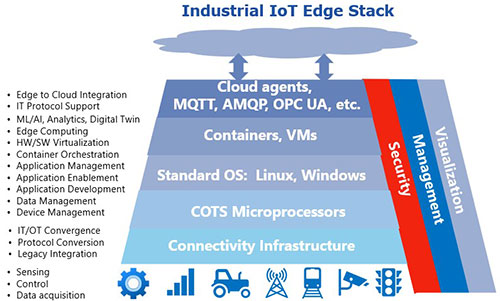
- Edge Computing Capabilities: Modern IIoT platforms integrate edge computing, allowing data processing and analytics to occur closer to the data source (e.g., on factory floors). This reduces latency, conserves bandwidth, and enables real-time decision-making even without constant cloud connectivity.
Data Ingestion and Processing
- High-Volume Data Ingestion: Industrial environments generate colossal amounts of real-time data. The platform must be capable of ingesting, storing, and managing this data efficiently and reliably, often handling millions of data points per second.
- Data Normalization and Transformation: Raw data from disparate sources often needs to be cleaned, normalized, and transformed into a usable format. The platform should offer robust tools for this crucial step, preparing data for analysis.
- Stream Analytics: The ability to perform data analytics on data streams as they arrive is critical for immediate anomaly detection, quality control, and triggering automated responses.
Application Enablement and Development
- APIs and SDKs: Open and well-documented Application Programming Interfaces (APIs) and Software Development Kits (SDKs) are essential for developers to build custom industrial IoT applications, integrate with existing enterprise systems, and extend platform functionalities.
- Low-Code/No-Code Tools: Many platforms now offer visual development environments that enable engineers and domain experts, not just professional developers, to create dashboards, workflows, and simple applications rapidly, accelerating innovation.
- Dashboarding and Visualization: Intuitive tools for creating customized dashboards, graphs, and reports are key to making complex industrial data understandable and actionable for operators and management.
- Digital Twin Creation: Advanced platforms support the creation of a digital twin – a virtual replica of a physical asset, process, or system. This allows for simulation, performance monitoring, and predictive modeling, significantly enhancing asset performance management.
Security and Compliance
- End-to-End Cybersecurity: Given the sensitive nature of industrial operations, robust cybersecurity measures are paramount. This includes secure device onboarding, data encryption (in transit and at rest), access control (RBAC), anomaly detection, and continuous threat monitoring.
- Regulatory Compliance: Adherence to industry-specific regulations and data privacy standards (e.g., GDPR, industry-specific certifications) is non-negotiable for industrial deployments.
Integration Capabilities (IT/OT Convergence)
- Seamless IT/OT Integration: A critical differentiator for industrial platforms is their ability to integrate not just with IT systems (ERP, MES, CRM) but also with operational technology like SCADA systems, PLCs, and historians. This enables true IT/OT convergence, breaking down traditional silos.
- Interoperability with Legacy Systems: Many industrial facilities rely on long-standing legacy systems. A strong IIoT platform must offer mechanisms to connect with and extract data from these older systems without requiring a complete overhaul.
Key Considerations When Choosing an IIoT Platform
Selecting the optimal IoT platform for developing industrial IoT applications is a strategic decision that impacts long-term operational efficiency and competitive advantage. Here are critical factors to evaluate:
Scalability and Performance
Your chosen platform must be capable of growing with your needs. Consider its ability to handle an increasing number of connected devices, manage exponentially growing data volumes, and maintain high performance under heavy loads. Future-proofing your investment requires a platform built for massive scalability, whether you're starting with a single pilot project or planning enterprise-wide deployment across multiple sites.
Deployment Options
IIoT platforms offer various deployment models, each with its advantages:
- Cloud-based Platforms: Offer flexibility, rapid deployment, and reduced infrastructure overhead. Ideal for distributed operations and those leveraging extensive data analytics.
- On-premise Platforms: Provide maximum control over data, enhanced security for sensitive operations, and reduced reliance on internet connectivity. Often preferred in highly regulated industries or environments with unreliable network access.
- Hybrid Models: Combine the benefits of both, leveraging edge computing for real-time local processing and cloud for broader data analytics and long-term storage. This is increasingly becoming the preferred model for complex industrial use cases.
Industry-Specific Features
While general-purpose IoT platforms exist, those tailored specifically for industrial use cases often come with built-in features relevant to sectors like manufacturing, energy, logistics, or oil & gas. Look for capabilities like:
- Predictive Maintenance Modules: Algorithms and tools designed to predict equipment failures before they occur, reducing unplanned downtime and maintenance costs.
- Asset Tracking and Management: Features for monitoring the location, status, and utilization of industrial assets.
- Quality Control and Anomaly Detection: Tools to identify deviations from normal operating parameters, preventing defects and ensuring product quality.
- Energy Management: Dashboards and analytics for optimizing energy consumption across industrial facilities.
Vendor Lock-in and Open Standards
Evaluate the platform's openness and adherence to open standards. A proprietary platform might simplify initial setup but could lead to vendor lock-in, limiting future flexibility and increasing costs. Platforms that support open APIs and standard protocols offer greater interoperability and allow you to integrate with a broader ecosystem of tools and services.
Cost-Effectiveness and Total Cost of Ownership (TCO)
Beyond initial licensing fees, consider the total cost of ownership, which includes deployment, integration, maintenance, support, and ongoing operational costs. Some platforms offer flexible pricing models (e.g., per device, per data volume), while others have fixed subscriptions. A clear understanding of the pricing structure and potential hidden costs is vital for long-term budget planning.
Actionable Tips for Successful IIoT Platform Adoption
Implementing an industrial IoT platform is a significant undertaking that requires careful planning and execution. Here are some actionable tips to ensure success:
- Start Small, Scale Big: Begin with a pilot project focused on a specific, high-impact problem (e.g., a single piece of critical equipment for predictive maintenance). This allows you to learn, refine your approach, and demonstrate value before expanding.
- Prioritize Data Strategy: Before connecting devices, define what data you need, why you need it, and how it will be used. A clear data strategy ensures that you collect relevant information and avoid data overload.
- Focus on Cybersecurity from Day One: Integrate cybersecurity into every stage of your IIoT project. This includes network segmentation, strong authentication, encryption, and regular security audits. Neglecting this can lead to catastrophic operational disruptions. Consider exploring our guide on IIoT cybersecurity best practices.
- Foster IT/OT Collaboration: Successful IIoT deployments require close collaboration between IT and OT teams. IT brings expertise in data management, networking, and security, while OT provides invaluable domain knowledge of industrial processes and equipment.
- Choose a Platform with Strong Ecosystem Support: Look for platforms that have a vibrant developer community, extensive documentation, readily available training, and strong vendor support. This ensures you have resources to troubleshoot issues and continuously improve your applications.
- Define Clear KPIs and ROI: Establish measurable Key Performance Indicators (KPIs) for your IIoT initiatives upfront. This allows you to track progress, demonstrate Return on Investment (ROI), and secure continued executive buy-in.
Future Trends in IIoT Platforms
The landscape of IoT platforms for developing industrial IoT applications is continuously evolving. Several key trends are shaping their future:
- AI/ML Integration: The deeper integration of Artificial Intelligence and Machine Learning capabilities directly within platforms will enable more sophisticated data analytics, automated anomaly detection, prescriptive maintenance, and autonomous operations. Platforms will move beyond just collecting data to truly understanding and predicting industrial events.
- Greater Emphasis on Edge Computing: As the demand for real-time decision-making and low-latency applications grows, edge computing will become even more central. Platforms will offer more robust edge-to-cloud architectures, allowing for intelligent processing at the source while leveraging cloud for broader insights.
- Enhanced Digital Twin Capabilities: Expect more advanced and dynamic digital twin models that can simulate complex industrial processes, predict outcomes with higher accuracy, and even enable remote control of physical assets through their virtual counterparts.
- Blockchain for Industrial Applications: While still emerging, blockchain technology holds promise for enhancing transparency, traceability, and security in industrial supply chains and asset management, and some IIoT platforms may begin to incorporate these capabilities.
- Low-Code/No-Code Dominance: The trend towards simplified development will continue, empowering a wider range of users to create and deploy industrial applications without extensive coding knowledge, further accelerating innovation within organizations.
Frequently Asked Questions
What is an IIoT platform and why is it essential for industrial operations?
An Industrial IoT (IIoT) platform is a software framework that connects, manages, and analyzes data from industrial equipment, sensors, and operational systems. It provides the necessary infrastructure for developing and deploying industrial IoT applications. It's essential because it enables real-time monitoring, data-driven decision-making, automation, and optimization of industrial processes, leading to increased efficiency, reduced downtime through predictive maintenance, and enhanced safety.
How do IIoT platforms facilitate predictive maintenance?
IIoT platforms facilitate predictive maintenance by collecting continuous streams of real-time data from sensors on machinery (e.g., vibration, temperature, pressure). This data is then ingested, processed, and analyzed using built-in analytics and AI/ML algorithms. The platform can identify patterns indicative of impending failures, generate alerts, and even schedule maintenance automatically, preventing costly unplanned outages and optimizing asset lifespan.
What are the main challenges in implementing an IIoT platform?
Implementing an IIoT platform often involves several challenges, including integrating with diverse legacy systems and proprietary connectivity protocols, ensuring robust cybersecurity across OT and IT networks, managing vast volumes of industrial data, fostering collaboration between IT and operational technology (OT) teams, and demonstrating a clear Return on Investment (ROI) to stakeholders. Overcoming these requires careful planning, a phased approach, and strong cross-functional alignment.
Can IIoT platforms integrate with existing legacy systems?
Yes, a key strength of modern IoT platforms for developing industrial IoT applications is their ability to integrate with existing legacy systems like SCADA systems, PLCs, MES, and ERP. They achieve this through various connectors, APIs, and protocol converters (e.g., OPC UA gateways) that normalize data from older equipment, enabling seamless data flow and interoperability across the entire industrial ecosystem without requiring a complete overhaul.
What role does edge computing play in modern IIoT platforms?
Edge computing plays a crucial role in modern IIoT platforms by enabling data processing, analysis, and decision-making to occur closer to the source of data, typically on the factory floor or at remote sites. This reduces network latency, conserves bandwidth, enhances data privacy by processing sensitive information locally, and allows for real-time automation and control actions even when cloud connectivity is intermittent. It's especially vital for applications requiring immediate responses, such as real-time quality control or safety shutdowns.

0 Komentar