
Complete Guide
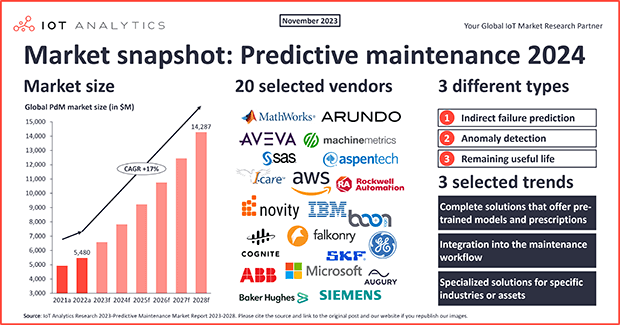
The manufacturing sector is undergoing a profound transformation, driven by the convergence of the Industrial Internet of Things (IIoT) and advanced analytical capabilities. At the heart of this revolution lies the strategic application of IoT in manufacturing predictive maintenance algorithms, a paradigm shift from reactive or even preventive approaches to a truly proactive strategy. This comprehensive guide will delve into how manufacturers are harnessing vast streams of sensor data from their machinery to anticipate potential equipment failure, optimize maintenance schedules, and achieve unprecedented levels of operational efficiency. Discover the intricate interplay of IIoT devices, sophisticated data processing, and cutting-edge machine learning and deep learning models that are reshaping the future of industrial reliability and profitability.
The Evolution of Maintenance: From Reactive to Predictive Power
For decades, manufacturing plants operated under maintenance regimes that were either reactive—fixing equipment only after it broke down—or time-based preventive—servicing machinery at predetermined intervals. While preventive maintenance offered an improvement by reducing unexpected downtime, it often led to unnecessary maintenance on healthy equipment or, conversely, missed potential issues that arose between scheduled checks. The advent of industrial IoT has fundamentally altered this landscape, paving the way for predictive maintenance, a strategy where maintenance actions are performed only when objective evidence indicates an impending issue.
The Foundational Role of IoT Sensors and Data Collection
The bedrock of any effective predictive maintenance strategy is robust data. This is where IoT truly shines. Thousands of sensors, strategically placed on critical assets throughout a manufacturing facility, continuously collect real-time data. These sensors monitor a myriad of parameters, including but not limited to:
- Vibration: Indicating imbalances, misalignments, or bearing wear.
- Temperature: Signaling overheating, friction, or electrical issues.
- Pressure: Essential for hydraulic systems, pneumatic lines, and fluid dynamics.
- Current/Voltage: Monitoring electrical load and motor health.
- Acoustic Emissions: Detecting subtle sounds indicative of internal faults.
- Oil Analysis: Tracking contamination, viscosity changes, and wear particles.
- Flow Rates: Crucial for fluid transfer and process control.
This torrent of sensor data is transmitted wirelessly or via wired networks to a central data platform, often residing in the cloud or on edge devices. The sheer volume and velocity of this data necessitate advanced processing capabilities before it can be fed into predictive algorithms. It's not just about collecting data; it's about collecting the right data and ensuring its integrity for accurate analysis.
Unveiling the Power: Predictive Maintenance Algorithms in Detail
The true intelligence of IoT-driven predictive maintenance lies in the algorithms. These sophisticated mathematical models analyze the collected data to identify patterns, anomalies, and trends that signify an impending equipment failure or performance degradation. The choice of algorithm often depends on the type of data, the complexity of the asset, and the desired outcome.
Common Algorithm Types Powering Predictive Maintenance
- Machine Learning (ML) Algorithms: These are the workhorses of modern predictive maintenance. ML algorithms learn from historical data to build models that can predict future outcomes.
- Supervised Learning: Used when historical data includes known failure events. Algorithms like Support Vector Machines (SVMs), Random Forests, and Gradient Boosting Machines (GBMs) can classify equipment status (e.g., "healthy," "warning," "critical") or predict remaining useful life (RUL).
- Unsupervised Learning: Ideal for anomaly detection where historical failure data is scarce. Algorithms such as K-Means Clustering or Isolation Forests identify deviations from normal operating patterns, flagging potential issues that human operators might miss.
- Time Series Analysis: Techniques like ARIMA (AutoRegressive Integrated Moving Average) or Prophet are excellent for analyzing trends in sensor data over time, forecasting future values, and identifying deviations from expected patterns.
- Deep Learning (DL) Algorithms: A subset of machine learning, deep learning models, particularly neural networks, excel at processing vast amounts of raw, unstructured data and automatically learning complex features.
- Recurrent Neural Networks (RNNs) & LSTMs (Long Short-Term Memory): Particularly effective for time-series data, they can capture temporal dependencies and long-term patterns in sensor readings, making them powerful for predicting evolving equipment conditions.
- Convolutional Neural Networks (CNNs): While often associated with image processing, CNNs can be adapted for time-series data by treating sensor readings as one-dimensional "images," identifying local patterns indicative of faults.
- Statistical Models: While ML and DL are dominant, traditional statistical methods still hold value, especially for simpler systems or as a baseline.
- Regression Analysis: Used to model the relationship between sensor readings and equipment degradation.
- Control Charts: Visual tools for monitoring process stability and detecting out-of-control conditions.
- Survival Analysis: Estimates the probability of a component surviving a certain period, often used for predicting component lifespan.
Data Pre-processing and Feature Engineering for Algorithms
Raw sensor data is rarely in a format directly usable by algorithms. A crucial step is data pre-processing, which involves cleaning, transforming, and normalizing the data to ensure accuracy and consistency. This might include handling missing values, removing noise, and correcting for sensor drift. Equally vital is feature engineering—the process of creating new, more informative features from the raw data that help the algorithms better understand the underlying patterns. For instance, instead of just raw vibration data, features like "peak vibration amplitude," "frequency spectrum energy in specific bands," or "root mean square (RMS) of acceleration" can be derived. These engineered features provide richer context, enabling algorithms to make more precise predictions about equipment failure.
Practical Implementation: Deploying IoT Predictive Maintenance in Manufacturing
Implementing an IoT predictive maintenance system is a strategic undertaking that requires careful planning and execution. It's not merely about installing sensors; it's about integrating technology, processes, and people.
Key Steps for Deploying IoT Predictive Maintenance
- Identify Critical Assets: Begin by identifying the most critical machinery whose failure would cause significant downtime, safety risks, or production losses. Focus on these high-value assets first.
- Sensor Selection & Installation: Choose appropriate IIoT sensors based on the asset type, parameters to be monitored, and environmental conditions. Ensure correct installation for accurate data capture.
- Data Connectivity & Infrastructure: Establish reliable data transmission pathways (Wi-Fi, LoRaWAN, 5G, etc.) and a robust data infrastructure (edge computing, cloud platform) to handle the volume and velocity of sensor data.
- Data Integration & Management: Integrate sensor data with existing enterprise systems like ERP, MES, and CMMS. Implement a data lake or data warehouse for efficient storage and retrieval.
- Algorithm Development & Training: Select or develop appropriate predictive maintenance algorithms. Train these models using historical data, and continuously refine them as more operational data becomes available.
- Alerting & Visualization: Develop dashboards and alerting mechanisms that provide real-time insights into asset health. Alerts should be actionable, reaching maintenance teams promptly when an anomaly is detected.
- Maintenance Workflow Integration: Seamlessly integrate predictive insights into existing maintenance workflows. When an alert is triggered, it should initiate a work order in the CMMS, allowing maintenance teams to intervene proactively.
- Continuous Improvement: Regularly review the performance of the predictive maintenance system. Analyze successful interventions and missed predictions to fine-tune algorithms and improve data collection strategies. This iterative process ensures the system remains effective and evolves with operational needs.
Key Challenges and Mitigation Strategies
While the benefits are clear, implementing IoT in manufacturing predictive maintenance algorithms comes with its share of challenges. Data quality can be an issue, with noisy or incomplete sensor readings leading to inaccurate predictions. Cybersecurity concerns are paramount, as IIoT deployments expand the attack surface. Furthermore, the initial investment in sensors, infrastructure, and software can be substantial. To mitigate these, manufacturers should prioritize data governance, invest in robust cybersecurity protocols, and start with pilot projects on a few critical assets to demonstrate ROI before scaling. Employee training and change management are also vital to ensure adoption and maximize the benefits of these new systems.
Measuring ROI and Success Metrics
Justifying the investment in predictive maintenance requires clear metrics. Key performance indicators (KPIs) include a significant reduction in unscheduled downtime, increased asset uptime, lower maintenance costs (by avoiding catastrophic failures and optimizing spare parts inventory), extended asset lifespan, and improved safety. For example, a global automotive manufacturer reduced unscheduled downtime by 20% and maintenance costs by 15% within a year of implementing a comprehensive IoT predictive maintenance system, showcasing the tangible benefits of a data-driven approach to asset performance management.
The Transformative Benefits for Manufacturers
Beyond simply preventing breakdowns, the strategic deployment of IoT in manufacturing predictive maintenance algorithms delivers a cascade of benefits that profoundly impact a company's bottom line and competitive standing.
- Maximized Uptime and Throughput: By anticipating failures, manufacturers can schedule maintenance during planned downtime or low-production periods, drastically reducing unscheduled interruptions and ensuring continuous production flow. This directly translates to higher output and improved capacity utilization.
- Reduced Maintenance Costs: Shifting from reactive "firefighting" to proactive, condition-based maintenance eliminates costly emergency repairs, minimizes collateral damage to interconnected components, and optimizes spare parts inventory management. Parts are ordered only when needed, reducing carrying costs and waste.
- Extended Asset Lifespan: Addressing issues before they escalate into major failures helps preserve the health of machinery, extending the operational life of expensive assets and delaying capital expenditures for replacements.
- Enhanced Safety: Malfunctioning equipment poses significant safety risks to personnel. Predictive maintenance helps identify and rectify potential hazards before they lead to accidents, fostering a safer working environment.
- Improved Operational Efficiency: With reliable equipment and optimized maintenance schedules, overall operational efficiency improves. Resources (technicians, tools) can be deployed more effectively, reducing idle time and increasing productivity across the plant. This contributes to the vision of a truly smart factory.
- Data-Driven Decision Making: The wealth of real-time monitoring data and algorithmic insights empowers maintenance managers and operations leaders with objective information to make informed decisions about asset health, production planning, and capital investment. This moves beyond intuition to precise, data-backed strategies.
Frequently Asked Questions
What exactly are IoT in manufacturing predictive maintenance algorithms?
IoT in manufacturing predictive maintenance algorithms are sophisticated mathematical models and computational procedures that analyze data collected from Internet of Things (IoT) sensors on manufacturing equipment. Their primary function is to predict when equipment might fail or degrade in performance, allowing maintenance teams to intervene proactively. These algorithms leverage techniques from machine learning, deep learning, and statistical analysis to identify subtle patterns and anomalies in sensor data (e.g., vibration, temperature, current) that indicate impending issues, moving maintenance from reactive to truly predictive strategies.
How do IoT sensors contribute to predictive maintenance?
IoT sensors are the foundational data collectors for predictive maintenance. They are strategically placed on machinery to continuously monitor critical operational parameters in real-time. For example, vibration sensors detect subtle changes in machine balance, temperature sensors identify overheating components, and current sensors monitor electrical load fluctuations. This constant stream of sensor data is then transmitted to analytical platforms where predictive maintenance algorithms process it to detect deviations from normal operating conditions, signaling potential equipment failure before it occurs. Without this rich, continuous data, advanced predictive analytics would not be possible.
What types of data are crucial for these algorithms to work effectively?
For predictive maintenance algorithms to work effectively, a variety of data types are crucial. This includes real-time monitoring data from IoT sensors (e.g., vibration, temperature, pressure, current, acoustic emissions), historical maintenance records (e.g., past failures, repair logs, maintenance schedules), asset specifications (e.g., model, age, operating limits), environmental conditions (e.g., humidity, ambient temperature), and operational data (e.g., production rates, machine load). The integration and analysis of these diverse datasets allow algorithms to build comprehensive models of asset health and predict future performance with higher accuracy, leading to improved operational efficiency.
What is the difference between predictive and prescriptive maintenance?
Predictive maintenance focuses on predicting when a fault or failure might occur, enabling proactive intervention. It answers the question, "When will this asset fail?" For example, an algorithm might predict that a motor bearing will fail in three weeks. Prescriptive maintenance takes this a step further by not only predicting the failure but also recommending the optimal course of action to prevent or mitigate it, often considering factors like cost, resources, and production schedules. It answers, "What should we do about it, and why?" This might involve recommending a specific repair, ordering a particular part, or suggesting a change in operating parameters, moving towards fully automated decision-making for asset performance management.
How can manufacturers ensure a successful implementation of IoT predictive maintenance?
To ensure a successful implementation of IoT in manufacturing predictive maintenance algorithms, manufacturers should focus on several key areas. Firstly, start with a pilot project on critical assets to demonstrate tangible ROI and build internal expertise. Secondly, prioritize high-quality sensor data collection and robust data governance to feed accurate information to the algorithms. Thirdly, invest in the right talent, combining IT/OT expertise with data science skills. Fourthly, foster collaboration between operations, IT, and maintenance teams. Finally, ensure seamless integration of the predictive insights into existing Computerized Maintenance Management Systems (CMMS) or Enterprise Asset Management (EAM) platforms for actionable work order generation, thereby maximizing equipment uptime and overall factory productivity.

0 Komentar