
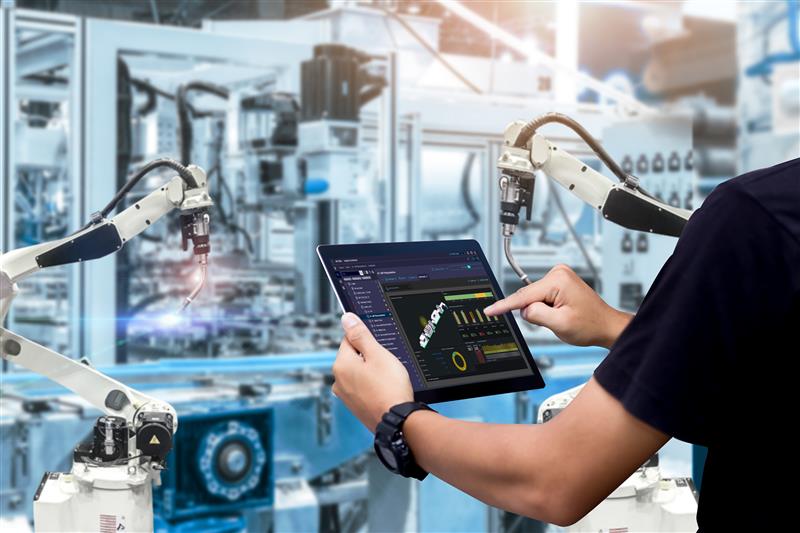
The Future of AI-Enhanced Robotic Automation: Revolutionizing Manufacturing & Supply Chain by 2025
The manufacturing landscape and global supply chains are on the cusp of an unprecedented transformation, driven by the rapid evolution of AI-enhanced robotic automation. By 2025, we anticipate a profound shift from traditional, rigid automation to intelligent, adaptive systems capable of learning, optimizing, and operating with minimal human intervention. This seismic change promises not only unparalleled efficiencies in manufacturing processes but also a radical overhaul of supply chain optimization, fostering a new era of agility, predictability, and resilience. This comprehensive guide delves into the core aspects of this future, providing a roadmap for businesses navigating the convergence of artificial intelligence and advanced robotics.
The Dawn of Intelligent Automation in Manufacturing
Manufacturing, traditionally a realm of repetitive tasks and fixed automation, is rapidly embracing a new paradigm: intelligent automation. This evolution is fundamentally changing how goods are produced, moving beyond simple task execution to complex problem-solving and dynamic adaptation. The integration of artificial intelligence empowers robotic systems to perceive, reason, and act in ways previously unimaginable, pushing the boundaries of what's possible on the factory floor.
AI's Role in Next-Gen Robotic Processes
Artificial intelligence is the brain behind the brawn of modern robotics. Far from being mere programmable machines, AI-enhanced robots can now learn from experience, adapt to changing conditions, and even make autonomous decisions. This capability is pivotal for handling variations in materials, tasks, and environments, leading to unprecedented levels of flexibility and efficiency in production. The synergy between AI and robotics enables:
- Predictive Maintenance: AI algorithms analyze data from robotic systems and machinery to anticipate failures before they occur, scheduling maintenance proactively and dramatically reducing downtime. This proactive approach ensures continuous operation and extends equipment lifespan.
- Quality Control Automation: Advanced vision systems powered by AI can detect microscopic defects, identify anomalies, and perform intricate inspections at speeds and accuracies far beyond human capabilities. This leads to superior product quality and reduced waste.
- Flexible Production Lines: AI allows robots to quickly reconfigure for different product variations or entirely new product lines, making mass customization a reality. This agility is crucial for responding to volatile market demands.
- Optimized Resource Utilization: AI analyzes production data to optimize energy consumption, material usage, and workflow, leading to significant cost savings and a reduced environmental footprint.
The transition to AI-driven robotic processes means manufacturing facilities are becoming more responsive, efficient, and capable of producing higher quality goods at a faster pace.
Smart Factories and Cyber-Physical Systems
The ultimate manifestation of AI-enhanced robotic automation in manufacturing is the emergence of smart factories. These are highly digitized and connected production environments where machines, sensors, and IT systems communicate seamlessly. At the heart of smart factories are cyber-physical systems, which integrate computational and physical components, allowing for real-time monitoring, control, and optimization of the entire production process.
A key enabler within smart factories is the concept of digital twins. A digital twin is a virtual replica of a physical asset, process, or system. In manufacturing, it can be a digital twin of a robot, a production line, or even an entire factory. By continuously feeding real-time data from sensors and operational systems into these digital models, manufacturers can simulate scenarios, predict performance, test changes, and identify bottlenecks without disrupting physical operations. This capability significantly enhances decision-making, reduces prototyping costs, and accelerates innovation. The combination of AI, robotics, and digital twins creates an intelligent, self-optimizing manufacturing ecosystem.
Revolutionizing Supply Chain Optimization with AI and Robotics
Beyond the factory floor, the impact of AI-enhanced robotic automation extends profoundly into the supply chain. Traditional supply chains often suffer from inefficiencies, lack of transparency, and vulnerability to disruptions. AI and robotics are poised to transform these challenges into opportunities for unprecedented optimization, creating resilient and highly responsive supply networks.
Autonomous Logistics and Warehouse Automation
Warehouses and distribution centers are becoming major hubs for robotic innovation. The deployment of autonomous logistics solutions is dramatically improving the speed, accuracy, and efficiency of inventory management, order fulfillment, and transportation. Key advancements include:
- Automated Guided Vehicles (AGVs) and Autonomous Mobile Robots (AMRs): These intelligent robots navigate warehouses independently, transporting goods, picking orders, and optimizing storage layouts. They reduce reliance on manual labor for strenuous tasks and operate 24/7.
- Automated Storage and Retrieval Systems (AS/RS): AI-driven AS/RS optimize storage density and retrieval speed, ensuring that items are stored and accessed with maximum efficiency.
- Drones for Inventory Management: Drones equipped with AI vision systems can rapidly scan warehouse inventory, identify discrepancies, and provide real-time stock levels, significantly reducing the time and effort traditionally required for inventory counts.
- Last-Mile Delivery Robotics: While still nascent, autonomous delivery robots and drones are being piloted for efficient, eco-friendly last-mile delivery, especially in urban environments, addressing the growing demands of e-commerce.
These automated systems work in concert, orchestrated by AI, to create a highly efficient and self-managing logistics network that minimizes errors and accelerates throughput.
Predictive Analytics for Demand and Inventory Management
One of the most significant contributions of AI to supply chain optimization is its ability to power advanced demand forecasting. Traditional forecasting methods often rely on historical data and can be inaccurate in volatile markets. AI, leveraging machine learning algorithms, can analyze vast datasets, including weather patterns, social media trends, economic indicators, and geopolitical events, to predict consumer demand with much greater accuracy. This leads to:
- Optimized Inventory Levels: Accurate demand forecasts enable businesses to maintain optimal inventory levels, reducing carrying costs, minimizing stockouts, and preventing overstocking.
- Proactive Risk Mitigation: AI can identify potential disruptions in the supply chain – from natural disasters to geopolitical instability – and suggest alternative routes or suppliers, enhancing supply chain resilience.
- Dynamic Pricing Strategies: By understanding real-time demand and supply fluctuations, AI can help implement dynamic pricing, maximizing revenue and optimizing inventory turns.
The ability to predict and adapt is transforming supply chains from reactive to proactive, ensuring goods are where they need to be, when they need to be there, with minimal waste.
Key Technological Enablers and Their Impact
The accelerated adoption of AI-enhanced robotic automation is underpinned by several critical technological advancements that are maturing rapidly.
Machine Learning and Deep Learning Algorithms
These are the foundational technologies for intelligent automation. Machine learning algorithms allow systems to learn from data without being explicitly programmed, enabling robots to improve their performance over time. Deep learning, a subset of machine learning, uses neural networks to process complex data like images and speech, making advanced capabilities such as sophisticated object recognition for quality control and complex path planning for autonomous vehicles possible. These algorithms are continuously being refined, leading to more robust and versatile AI capabilities in robotics.
Edge Computing and 5G Connectivity
For AI-driven robotic systems to operate effectively in real-time, they require immediate access to processing power and seamless communication. Edge computing brings data processing closer to the source (e.g., directly on the factory floor or within a robot), reducing latency and enabling faster decision-making. This is crucial for applications like autonomous navigation or real-time defect detection where milliseconds matter. Complementing edge computing is the rollout of 5G connectivity. Its high bandwidth and ultra-low latency provide the reliable and fast communication backbone necessary for a multitude of connected devices in smart factories and logistics networks. This combination empowers truly autonomous systems to operate efficiently and safely.
Human-Robot Collaboration (Cobots)
The future of automation is not solely about replacing human labor but augmenting it. Human-robot collaboration, facilitated by collaborative robots (cobots), is a growing trend. Cobots are designed to work safely alongside humans, sharing workspaces and assisting with tasks that are repetitive, ergonomically challenging, or require precision. This partnership leverages the strengths of both humans (adaptability, problem-solving, creativity) and robots (strength, precision, endurance), leading to increased productivity, improved safety, and enhanced job satisfaction. The ethical implications and safety protocols for such collaboration are continuously being developed, ensuring a harmonious working environment.
Navigating Challenges and Ethical Considerations
While the benefits of AI-enhanced robotic automation are immense, their widespread adoption also presents significant challenges and ethical considerations that must be addressed for a successful transition.
Cybersecurity and Data Privacy
As manufacturing processes and supply chains become increasingly digitized and interconnected, the attack surface for cyber threats expands dramatically. Protecting sensitive operational data, intellectual property, and ensuring the integrity of autonomous systems is paramount. Robust cybersecurity frameworks, including encryption, intrusion detection systems, and secure network architectures, are critical to prevent malicious attacks that could cripple operations or compromise data privacy. Organizations must prioritize cybersecurity as a core component of their automation strategy.
Workforce Transformation and Upskilling
The rise of AI and robotics will undoubtedly transform the nature of work. While some routine tasks may be automated, new roles will emerge in areas such as robot programming, AI system management, data analysis, and human-robot collaboration. The challenge lies in managing this workforce transformation effectively. Businesses must invest heavily in upskilling and reskilling their existing workforce, providing training in new technologies and fostering adaptability. This proactive approach can mitigate concerns about job displacement and ensure a smooth transition to the future of work.
Ethical AI and Responsible Automation
As AI systems become more autonomous and make decisions, ethical considerations come to the forefront. Questions surrounding algorithmic bias, accountability for AI-driven errors, and the broader societal impact of automation need careful consideration. Developing and deploying ethical AI frameworks that prioritize fairness, transparency, and accountability is crucial. This includes establishing clear guidelines for data collection, algorithm design, and human oversight to ensure that automation serves humanity positively and responsibly.
Actionable Strategies for Adoption and Future-Proofing
For businesses looking to harness the power of AI-enhanced robotic automation by 2025, a strategic and phased approach is essential. Here are actionable tips and practical advice for successful implementation:
- Start Small with Pilot Programs: Don't attempt a complete overhaul overnight. Identify specific pain points or processes within manufacturing or the supply chain that could significantly benefit from automation (e.g., a repetitive assembly task, a bottleneck in warehousing). Implement a pilot program with a clear scope, measurable KPIs, and a dedicated team. Learn from this initial deployment before scaling up.
- Invest in Robust Data Infrastructure: AI thrives on data. Ensure your organization has the necessary infrastructure to collect, store, process, and analyze vast amounts of real-time data from sensors, machines, and operational systems. This includes cloud capabilities, edge computing, and data integration platforms. Clean, accessible, and well-structured data is the foundation for effective AI.
- Prioritize Workforce Development and Training: Proactively assess the skills gap within your organization. Develop comprehensive training programs to upskill employees in areas like robot operation, AI model monitoring, data analytics, and collaborative robotics. Foster a culture of continuous learning and embrace human-robot collaboration as a synergy, not a replacement. Consider partnerships with educational institutions or technology providers for specialized training.
- Foster Cross-Functional Collaboration: Successful automation initiatives require collaboration across different departments – IT, operations, engineering, supply chain, and HR. Break down silos to ensure a holistic approach to planning, implementation, and problem-solving. A unified vision is critical for integrating complex systems.
- Embrace a Holistic Digital Transformation Strategy: View AI-enhanced robotic automation not as isolated projects but as an integral part of a broader digital transformation journey. This involves reimagining business processes, organizational structures, and technological ecosystems. A comprehensive strategy will ensure that automation efforts align with overall business objectives and deliver sustainable value. Explore how your operations can benefit from a holistic digital transformation.
- Focus on ROI and Scalability: While the long-term benefits are clear, justify initial investments by identifying clear ROI. Focus on solutions that offer demonstrable improvements in efficiency, cost reduction, or quality. Choose modular and scalable automation solutions that can grow with your business needs and adapt to future technological advancements.
Frequently Asked Questions
What is AI-enhanced robotic automation?
AI-enhanced robotic automation refers to the integration of artificial intelligence capabilities into robotic systems, enabling them to perform tasks with greater intelligence, adaptability, and autonomy. Unlike traditional robots that follow pre-programmed instructions, AI-enhanced robots can learn from data, make decisions, adapt to changing environments, and optimize their performance over time. This includes capabilities like advanced vision, machine learning for predictive maintenance, and real-time decision-making for complex manufacturing processes and logistics.
How will AI and robotics impact manufacturing jobs by 2025?
By 2025, AI and robotics are expected to significantly transform manufacturing jobs rather than simply eliminate them. While repetitive and dangerous tasks will increasingly be automated, new roles will emerge in areas such as robot programming, AI system monitoring and maintenance, data analysis, and human-robot collaboration. The focus will shift towards higher-value activities requiring human creativity, problem-solving, and critical thinking. Businesses will need to invest in upskilling and reskilling their workforce to prepare for these evolving roles, ensuring a productive partnership between humans and intelligent machines.
What are the primary benefits of integrating AI robotics in supply chains?
Integrating AI robotics in supply chains offers numerous benefits, including enhanced efficiency, accuracy, and resilience. Key advantages include autonomous logistics for faster and more accurate warehouse operations, precise demand forecasting powered by AI to optimize inventory and reduce waste, proactive risk mitigation to improve supply chain resilience, and significant cost reductions through optimized resource utilization. This integration leads to a more agile, transparent, and responsive supply chain capable of adapting to market fluctuations and unforeseen disruptions.
How can businesses prepare for the future of AI-driven automation?
Businesses can prepare for the future of AI-driven automation by adopting a strategic, phased approach. This includes starting with targeted pilot programs to demonstrate value, investing in robust data infrastructure for AI analytics, prioritizing continuous workforce development and training in new technologies, fostering cross-functional collaboration across departments, and embracing a holistic digital transformation strategy. Focusing on scalability, cybersecurity, and ethical considerations from the outset is also crucial for long-term success.
What are digital twins in the context of smart manufacturing?
In the context of smart manufacturing, a digital twin is a virtual, real-time replica of a physical asset, process, or system, such as a machine, a production line, or an entire factory. This virtual model is continuously updated with real-time data from sensors and operational systems in the physical world. Digital twins allow manufacturers to simulate various scenarios, predict performance, test changes, and identify potential issues or optimizations in a virtual environment before implementing them physically. This capability significantly improves decision-making, reduces development costs, and enhances operational efficiency and safety.

0 Komentar