
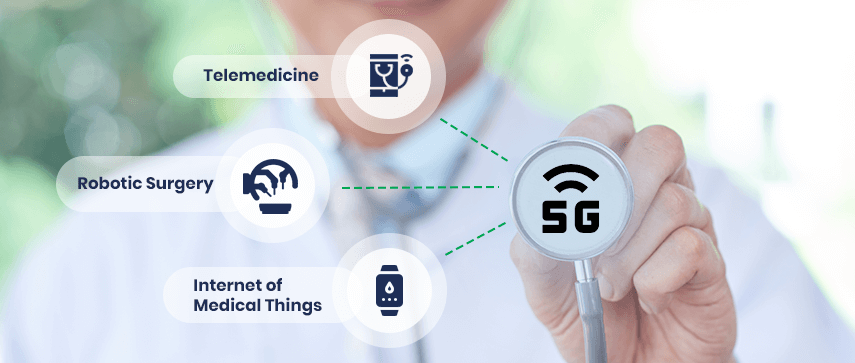
The Revolutionary 5G Impact on Remote Surgery and Telehealth: A New Era in Healthcare Delivery
Discover how 5G is revolutionizing healthcare, enabling unprecedented advancements in remote surgery and telehealth. Explore the critical role of low latency and high bandwidth in transforming patient care, enhancing accessibility, and paving the way for truly virtual healthcare solutions. This comprehensive guide delves into the impact of 5G on medical operations, from robotic surgery to real-time patient monitoring, shaping the future of medicine and offering a glimpse into a world where geographical boundaries no longer dictate access to specialized medical expertise.
The Foundational Pillars: How 5G Transforms Healthcare
The fifth generation of wireless technology, 5G, isn't merely an incremental upgrade; it represents a paradigm shift with profound implications for sectors like healthcare. Its core capabilities address long-standing limitations in connectivity, paving the way for innovations previously confined to science fiction. Understanding these foundational pillars is key to grasping the transformative potential of 5G in healthcare, particularly for remote medical procedures and expansive telehealth networks.
Ultra-Low Latency: The Unseen Lifeline
- Minimizing Delay: Latency, the time delay between a command and its execution, is perhaps the most critical factor for applications demanding instantaneous response. In traditional networks, even milliseconds of delay can be detrimental. 5G promises ultra-low latency, potentially as low as 1 millisecond (ms), which is virtually imperceptible to humans.
- Real-Time Control: For remote surgery, this translates directly into the ability for a surgeon to control a robotic arm thousands of miles away with the same precision and responsiveness as if they were in the operating room. This near-instantaneous feedback loop is essential for delicate operations, ensuring that the surgeon's movements are translated without lag, crucial for patient safety.
- Enhanced Responsiveness: Beyond surgery, low latency also benefits remote diagnostics and critical care monitoring, allowing for immediate data transmission and rapid intervention in emergencies.
Massive Bandwidth: Enabling Rich Data Streams
The sheer volume of data that 5G can transmit is staggering. With peak speeds potentially reaching 10 gigabits per second (Gbps), 5G offers significantly higher bandwidth than previous generations. This capability is vital for modern medical applications.
- High-Resolution Medical Imaging: Transferring large medical files like MRI scans, CT scans, and high-definition video feeds of surgical procedures requires immense bandwidth. 5G enables the rapid and reliable transmission of these large datasets, facilitating quicker diagnoses and collaborative consultations among specialists located anywhere in the world.
- Immersive Telehealth Experiences: For virtual healthcare delivery, high bandwidth supports high-fidelity video consultations, allowing clinicians to observe subtle patient cues, skin conditions, or wound healing with clarity, enhancing the effectiveness of remote examinations.
- Digital Twin Integration: The creation and real-time updating of patient "digital twins" – virtual replicas of a patient's physiological state – will rely heavily on 5G's capacity to handle continuous streams of sensor data from wearables and monitoring devices.
Enhanced Reliability and Security
Healthcare data is among the most sensitive information, demanding the highest levels of security and reliability. 5G networks are designed with advanced security protocols and offer increased reliability compared to their predecessors.
- Network Slicing: 5G's network slicing capability allows for dedicated, isolated virtual networks tailored to specific applications. This means a slice can be provisioned with guaranteed bandwidth and extremely low latency specifically for medical applications, ensuring critical operations are not impacted by other network traffic.
- Data Integrity and Privacy: Robust encryption standards and authentication mechanisms are integral to 5G, providing a more secure environment for transmitting sensitive patient data, critical for maintaining compliance with regulations like HIPAA.
- Uninterrupted Connectivity: The increased reliability ensures that connections for remote medical operations or emergency telehealth consultations remain stable, minimizing the risk of disconnections during critical moments.
5G's Revolutionary Impact on Remote Surgery (Telesurgery)
The concept of a surgeon performing an operation on a patient located miles away was once confined to science fiction. With 5G, telesurgery advancements are not just theoretical; they are becoming a tangible reality, promising to democratize access to specialized surgical care globally.
Precision and Control: Haptic Feedback and Robotic Systems
At the heart of advanced remote surgery lies the synergy between 5G's low latency and sophisticated robotic systems equipped with haptic feedback. Haptic feedback allows the surgeon to "feel" the tissues being manipulated by the robot, providing crucial tactile sensations that mimic direct contact.
- Surgeon's Extension: Robotic surgical systems, often enhanced with artificial intelligence, can perform delicate maneuvers with superhuman precision. 5G ensures that the surgeon's commands are transmitted instantly to the robot, and the haptic feedback from the robot returns to the surgeon's console without any noticeable delay. This precise control is vital for complex procedures like neurosurgery or microsurgery.
- Minimally Invasive Procedures: Many robotic surgeries are minimally invasive, leading to faster patient recovery times and reduced complications. 5G-enabled remote control extends these benefits to patients who may not have local access to a specialized robotic surgeon.
- Training and Simulation: 5G's capabilities also extend to training. Surgical residents can practice complex procedures on robotic simulators, receiving real-time feedback, even if the instructor is in a different location.
Real-Time Visualization: AR and VR Integration
Immersive technologies like augmented reality (AR) and virtual reality (VR) are set to transform the surgical landscape, and 5G is the essential enabler for their widespread adoption in this context.
- Enhanced Surgical Overlay: AR can overlay critical patient data, 3D anatomical models, or even pre-operative scans directly onto the surgeon's view during an operation. This provides an enhanced understanding of the surgical field. 5G ensures that these complex AR overlays are rendered and updated in real-time without lag, crucial for accuracy.
- Immersive Tele-Mentoring: VR can create fully immersive environments for surgical training or remote mentoring. An experienced surgeon could guide a less experienced colleague through a procedure virtually, seeing exactly what the local surgeon sees and providing real-time instructions. The high bandwidth of 5G is necessary to stream these detailed, multi-dimensional virtual environments seamlessly.
- Remote Expert Consultation: During a critical surgery, a local team can leverage 5G to connect with an expert surgeon located anywhere in the world. The expert can observe the procedure in high-definition, offer real-time advice, and even annotate the live video feed using AR tools, guiding the local team through challenging steps.
Overcoming Geographic Barriers
One of the most significant promises of 5G in surgery is its ability to bridge vast distances. This has profound implications for healthcare accessibility.
- Specialized Care for Remote Areas: Patients in rural or underserved areas often lack access to highly specialized surgeons. 5G-enabled telesurgery means a patient in a remote village could potentially undergo a complex operation performed by a top surgeon located in a major city, without the need for arduous and costly travel.
- Disaster Response and Military Applications: In disaster zones or military conflict areas, where medical infrastructure is limited, 5G could enable life-saving remote interventions, providing critical care when physical access is dangerous or impossible.
- Global Collaboration: It fosters unprecedented levels of collaboration among surgical teams worldwide, allowing for the sharing of expertise and best practices across borders, ultimately elevating the global standard of care.
Redefining Telehealth with 5G Capabilities
Telehealth has seen rapid adoption, particularly in recent years. However, its full potential has been constrained by network limitations. 5G removes these bottlenecks, ushering in a new era of sophisticated and truly immersive virtual healthcare.
Advanced Remote Diagnostics and Patient Monitoring
The ability to collect, transmit, and analyze vast amounts of patient data in real-time is a cornerstone of proactive and personalized healthcare. 5G significantly enhances this capability.
- Continuous, High-Fidelity Monitoring: Wearable sensors and IoT medical devices can continuously monitor vital signs, glucose levels, heart activity, and more. 5G's high bandwidth ensures that this stream of data is transmitted reliably and without interruption to healthcare providers, enabling immediate alerts for critical changes. This is crucial for managing chronic conditions and preventing hospital readmissions.
- Remote Ultrasounds and Examinations: With low latency, a technician in a remote clinic could perform an ultrasound, guided in real-time by a specialist located miles away, who can view the high-resolution images instantly and provide precise instructions. Similarly, remote stethoscopes or otoscopes can transmit high-quality audio and video, enabling comprehensive virtual examinations.
- AI-Powered Diagnostics: The rapid transfer of large datasets through 5G fuels AI algorithms, allowing for faster and more accurate analysis of medical images or physiological data, assisting in early disease detection and diagnosis.
Virtual Consultations and Immersive Patient Experiences
Beyond basic video calls, 5G enables richer, more engaging, and effective virtual interactions between patients and providers.
- High-Definition Video and Audio: Crystal-clear video and audio quality enhance the virtual consultation experience, allowing clinicians to better observe patient demeanor, speech patterns, and visual symptoms, leading to more accurate assessments.
- Immersive Therapy and Rehabilitation: Patients undergoing physical therapy or mental health counseling can utilize VR environments for guided exercises or exposure therapy, with 5G ensuring a smooth, lag-free experience that is critical for effectiveness.
- Remote Patient Education: Educational materials can be delivered through interactive AR/VR experiences, helping patients understand complex medical conditions, treatment plans, or surgical procedures in a more engaging and memorable way.
Empowering Rural and Underserved Communities
One of the most profound societal impacts of 5G in telehealth is its potential to drastically improve healthcare accessibility for populations that have historically been underserved.
- Bridging the Urban-Rural Divide: Many rural areas suffer from a shortage of specialists and limited medical facilities. 5G-enabled telehealth can connect these communities directly to urban medical centers, providing access to specialists like cardiologists, neurologists, or psychiatrists without the need for patients to travel long distances.
- Reducing Healthcare Disparities: By making quality healthcare more accessible and affordable through virtual channels, 5G can help reduce health disparities, ensuring that everyone, regardless of their location, has equitable access to medical expertise.
- Emergency Response in Remote Locations: In emergencies, paramedics in remote locations can use 5G to transmit real-time patient data and high-definition video to hospital emergency rooms, allowing for early assessment and guidance from specialists before the patient even arrives.
Practical Applications and Emerging Trends
The integration of 5G into healthcare is not just about enhancing existing technologies; it's about enabling entirely new paradigms of care. Several emerging trends highlight the innovative ways 5G is being leveraged.
Digital Twins and Predictive Healthcare
The concept of a "digital twin" – a virtual replica of a physical entity – is gaining traction in healthcare. A patient's digital twin would be a dynamic, continuously updated virtual model of their physiology, genetics, and lifestyle.
- Proactive Health Management: By feeding real-time data from wearables, medical devices, and electronic health records into a patient's digital twin, healthcare providers can create highly personalized health profiles. 5G ensures the constant, high-volume data flow necessary to keep these twins updated.
- Predictive Analytics: These digital twins can then be used to run simulations, predict the progression of diseases, optimize treatment plans, and even anticipate potential health crises before they occur. This moves healthcare from a reactive to a proactive model.
- Personalized Medicine: The insights gained from digital twins, facilitated by 5G, will drive truly personalized medicine, where treatments are tailored precisely to an individual's unique biological makeup and health trajectory.
Edge Computing for Localized Processing
While 5G provides the pipe, edge computing brings processing power closer to the data source, enhancing efficiency and reducing latency even further.
- Faster Data Processing: For critical healthcare applications, sending all data to a centralized cloud for processing introduces a slight delay. Edge computing allows some data processing to occur on local servers or even directly on medical devices, leading to near-instantaneous analysis and decision-making.
- Enhanced Privacy: Processing sensitive patient data at the edge can also improve privacy, as less raw data needs to be transmitted over wide networks.
- AI at the Point of Care: This combination enables AI algorithms to run locally on medical devices, providing real-time diagnostic assistance or treatment recommendations directly to clinicians in remote settings.
Training and Education Through Immersive Technologies
The benefits of 5G extend beyond direct patient care to the education and training of healthcare professionals.
- Immersive Surgical Training: Medical students and residents can participate in highly realistic VR surgical simulations, with 5G ensuring the complex graphics and interactive elements run smoothly and responsively. This allows for repeated practice of intricate procedures in a safe, controlled environment.
- Remote Collaborative Learning: Experts from different institutions can collaborate in virtual classrooms or simulation environments, sharing knowledge and skills across geographical boundaries.
- Patient Education Tools: Patients can use AR/VR applications, powered by 5G, to visualize their conditions, understand proposed surgeries, or learn how to manage chronic diseases, leading to better patient engagement and adherence to treatment plans.
Challenges and Considerations for 5G Healthcare Deployment
While the promise of 5G in healthcare is immense, its widespread adoption faces several hurdles that need to be addressed thoughtfully and strategically.
Infrastructure Investment and Coverage Gaps
Deploying a robust 5G network requires substantial investment in new infrastructure, including small cells and fiber optic backbones. This is a massive undertaking.
- Uneven Rollout: 5G rollout is often concentrated in urban centers, leaving rural and remote areas, which stand to benefit most from enhanced telehealth and remote surgery, with limited or no coverage. Bridging this digital divide is crucial for equitable access to advanced healthcare.
- Indoor Penetration: 5G signals, especially millimeter-wave (mmWave) frequencies, can struggle with indoor penetration, which is a significant challenge for hospitals and clinics with thick walls and complex layouts. Dedicated indoor 5G solutions will be necessary.
- Cost of Devices: 5G-enabled medical devices and equipment are likely to be more expensive initially, posing a financial barrier for some healthcare providers.
Regulatory Frameworks and Data Privacy
The rapid technological advancements brought by 5G often outpace existing regulatory frameworks, creating a complex landscape for healthcare providers.
- Data Security and Compliance: Transmitting vast amounts of sensitive patient data over 5G networks necessitates stringent security measures to comply with regulations like HIPAA (Health Insurance Portability and Accountability Act) in the US or GDPR (General Data Protection Regulation) in Europe. Ensuring end-to-end encryption and robust cybersecurity protocols is paramount.
- Licensing and Liability: Questions of medical licensing across state or national borders become more complex with remote surgery. Furthermore, determining liability in the event of a complication during a 5G-enabled remote procedure requires clear legal frameworks.
- Device Certification: New 5G-enabled medical devices will require rigorous testing and certification by regulatory bodies to ensure their safety and efficacy in a wireless, low-latency environment.
Interoperability and Standardization
For 5G to truly unlock its potential in healthcare, seamless communication between diverse systems and devices is essential.
- Fragmented Ecosystem: The healthcare industry often struggles with interoperability, with various systems and devices from different manufacturers unable to communicate effectively. 5G needs to be integrated into a standardized ecosystem to ensure data flows smoothly from patient to device to cloud to clinician.
- Standardized Protocols: Developing and adopting common communication protocols for 5G-enabled medical IoT devices and platforms is critical to avoid vendor lock-in and ensure scalability.
- Legacy System Integration: Many healthcare facilities still rely on legacy IT systems. Integrating these with new 5G infrastructure and applications will be a significant technical challenge.
Actionable Steps for Healthcare Providers and Innovators
To fully harness the transformative power of 5G, healthcare organizations must adopt a forward-thinking and proactive approach.
Embracing Pilot Programs and Partnerships
The best way to understand and leverage 5G's capabilities is through hands-on experience and collaborative efforts.
- Start Small, Learn Fast: Healthcare institutions should initiate small-scale pilot programs focused on specific use cases, such as remote patient monitoring for a particular chronic condition or a limited telesurgery trial.
- Collaborate with Telecoms and Tech Companies: Partnering with 5G providers and technology innovators can provide access to expertise, infrastructure, and cutting-edge solutions, accelerating the adoption curve. Explore opportunities to join consortiums or research initiatives focused on 5G in healthcare.
- Engage Clinicians Early: Involve doctors, nurses, and other healthcare professionals from the outset to ensure that new 5G solutions are designed to meet their practical needs and workflows, fostering adoption.
Investing in 5G-Ready Medical Devices
As 5G networks become more prevalent, the market for compatible medical devices will expand rapidly. Strategic investment is key.
- Future-Proofing Infrastructure: When purchasing new medical equipment, prioritize devices that are 5G-compatible or can be easily upgraded. This includes everything from diagnostic tools to patient wearables and robotic surgical systems.
- Exploring IoT Medical Devices: Actively research and integrate Internet of Medical Things (IoMT) devices that leverage 5G for enhanced data collection and real-time connectivity, moving towards a more connected and proactive care model.
- Developing In-House Expertise: Invest in training IT staff and biomedical engineers to understand 5G networks, cybersecurity for wireless medical devices, and the integration of new technologies into existing hospital systems.
Prioritizing Cybersecurity Measures
With increased connectivity comes increased vulnerability. Robust cybersecurity is non-negotiable for 5G-enabled healthcare.
- Implement End-to-End Encryption: Ensure all data transmitted over 5G networks is encrypted from the point of origin to its destination, protecting sensitive patient information.
- Regular Security Audits: Conduct frequent security audits and penetration testing on 5G infrastructure and connected medical devices to identify and address vulnerabilities proactively.
- Employee Training: Educate all healthcare staff on cybersecurity best practices, including recognizing phishing attempts, secure password management, and data handling protocols, as human error remains a significant vulnerability.
- Incident Response Plan: Develop and regularly test a comprehensive incident response plan for data breaches or network outages, ensuring a rapid and effective response to minimize disruption and damage.
Frequently Asked Questions
What makes 5G crucial for remote surgery?
5G is crucial for remote surgery primarily due to its ultra-low

0 Komentar