
Unlocking 5G Potential: The Power of the RAN Intelligent Controller (RIC) Explained
In the rapidly evolving landscape of 5G telecommunications, achieving truly dynamic, efficient, and intelligent networks is paramount. The RAN Intelligent Controller (RIC) stands at the forefront of this transformation, acting as the brain of the Radio Access Network (RAN) and revolutionizing how mobile networks are managed and optimized. This comprehensive guide delves deep into the RIC, explaining its critical role, architectural components, and the profound impact it has on unleashing the full capabilities of next-generation 5G networks. Discover how the RIC empowers operators to drive unprecedented levels of network automation, enhance performance, and deliver innovative services with unparalleled agility.
What Exactly is the RAN Intelligent Controller (RIC)?
The RAN Intelligent Controller (RIC) is a foundational element of the Open RAN (O-RAN) architecture, designed to introduce intelligence, automation, and programmability into the Radio Access Network. Traditionally, RANs have been characterized by closed, proprietary systems, making innovation and multi-vendor interoperability challenging. The RIC fundamentally changes this paradigm by disaggregating hardware and software, creating an open platform where third-party applications can manage and optimize RAN functions.
At its core, the RIC serves as an application platform that enables dynamic control and optimization of RAN elements. It collects real-time and near-real-time data from the network, processes it using advanced analytics and artificial intelligence (AI) or machine learning (ML) algorithms, and then executes policies or provides recommendations to optimize various aspects of network operation. This includes everything from traffic steering and resource allocation to interference management and energy efficiency. The ultimate goal is to enhance the overall 5G network performance, reduce operational costs, and enable new revenue-generating services.
The Dual Nature of RIC: Near-Real-Time vs. Non-Real-Time
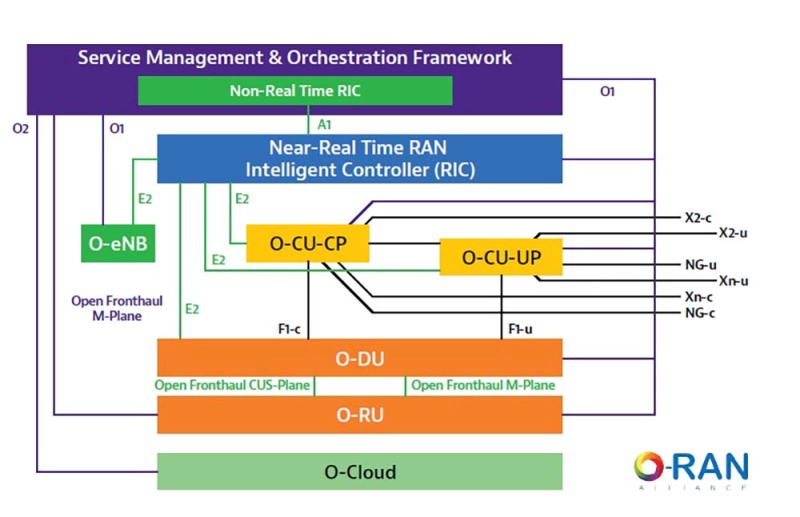
The O-RAN Alliance specifies two distinct types of RICs, each addressing different time sensitivities and operational scopes within the radio access network:
- Near-Real-Time RIC (Near-RT RIC): This component operates with control loops typically ranging from 10 milliseconds to 1 second. It resides closer to the RAN elements, often at the edge of the network, enabling rapid decision-making and immediate action. The Near-RT RIC hosts applications known as xApps (pronounced "ex-apps"). These xApps are designed for specific, fine-grained control and optimization tasks, such as:
- Traffic Steering: Dynamically directing user traffic to the most appropriate cell or frequency based on load, user experience, or service requirements.
- Mobility Management: Optimizing handovers between cells to ensure seamless connectivity and reduce dropped calls.
- Interference Management: Mitigating signal interference to improve signal quality and capacity.
- Load Balancing: Distributing user load across different network resources to prevent congestion.
- RAN Slice Assurance: Ensuring that specific network slices meet their promised Service Level Agreements (SLAs) by dynamically adjusting resources.
The Near-RT RIC interfaces with the O-RAN Distributed Unit (O-DU) and Centralized Unit (O-CU) via the E2 interface, allowing it to collect granular data and send control commands.
- Non-Real-Time RIC (Non-RT RIC): This component operates with control loops typically measured in seconds, minutes, or even hours. It resides in the service management and orchestration (SMO) layer, providing a broader, more strategic view of the network. The Non-RT RIC hosts applications called rApps (pronounced "are-apps"). These rApps focus on longer-term optimization, policy management, and training of AI/ML models. Key functions of the Non-RT RIC include:
- Policy Management: Defining and enforcing network-wide policies for resource allocation, service delivery, and security.
- AI/ML Model Training: Utilizing historical and aggregated network data to train sophisticated AI/ML models that can predict network behavior, identify anomalies, and optimize long-term network performance. These trained models can then be deployed as xApps on the Near-RT RIC.
- Service Orchestration: Managing the lifecycle of network services, including network slicing, and ensuring end-to-end service delivery.
- Resource Optimization: Strategic planning and allocation of network resources across the entire domain.
- Energy Efficiency Optimization: Implementing policies to reduce power consumption across the RAN, based on long-term traffic patterns and network usage.
The Non-RT RIC interfaces with the Near-RT RIC via the A1 interface, providing policy guidance and enrichment information, and with other O-RAN functions and external systems via the O1 interface for management and orchestration.
Why is RIC a Game-Changer for 5G Networks?
The introduction of the RAN Intelligent Controller is not just an incremental improvement; it represents a fundamental shift in how mobile networks are designed, deployed, and managed. Its impact on 5G networks is transformative, offering several compelling advantages:
- Enhanced Network Performance: By enabling dynamic, real-time optimization, the RIC can significantly improve key performance indicators (KPIs) such as throughput, latency, and connection reliability. This is crucial for supporting demanding 5G use cases like augmented reality (AR), virtual reality (VR), and industrial IoT.
- Unprecedented Operational Efficiency: Automation driven by RIC reduces the need for manual intervention, leading to lower operational expenditures (OpEx). Tasks like network tuning, fault detection, and resource allocation can be automated, freeing up human resources for more strategic initiatives. This directly contributes to reduced TCO (Total Cost of Ownership).
- Accelerated Service Innovation: The open and programmable nature of the RIC allows operators to rapidly develop and deploy new services and features through xApps and rApps. This agility enables quicker time-to-market for specialized 5G services, such as enhanced mobile broadband (eMBB), ultra-reliable low-latency communication (URLLC), and massive machine-type communication (mMTC).
- Vendor Diversification and Open Ecosystem: As a core component of Open RAN, the RIC promotes a multi-vendor ecosystem. Operators are no longer locked into proprietary solutions from a single vendor, fostering competition, driving down costs, and encouraging innovation across the supply chain. This is a significant step towards a more open and flexible telecommunications infrastructure.
- Optimized Resource Utilization: Through intelligent algorithms and predictive analytics, the RIC ensures that network resources are utilized optimally. This prevents underutilization in some areas while avoiding congestion in others, maximizing the return on network infrastructure investments.
- Advanced AI/ML Capabilities: The RIC platform provides the ideal environment for integrating and leveraging artificial intelligence and machine learning. AI/ML models can analyze vast amounts of network data to predict future traffic patterns, identify potential issues before they impact services, and dynamically adapt network configurations for optimal performance and energy efficiency.
Driving Innovation with Programmable RAN and AI/ML
The concept of a programmable RAN is central to RIC's value proposition. Unlike traditional, static RAN deployments, a programmable RAN, empowered by the RIC, can dynamically adapt its behavior based on real-time conditions, service requirements, and business objectives. This dynamic adaptability is largely fueled by the sophisticated integration of AI/ML in RAN.
Consider these examples:
- Dynamic Spectrum Sharing (DSS) Optimization: An xApp on the Near-RT RIC could use real-time traffic data and user location information to dynamically adjust the allocation of spectrum between 4G and 5G, ensuring optimal performance for both technologies without manual intervention.
- Energy Saving: An rApp on the Non-RT RIC could analyze long-term traffic patterns and predict periods of low demand. It could then instruct xApps or directly control RAN elements to reduce power consumption during these periods (e.g., by putting certain radio units into sleep mode or reducing transmission power), leading to significant energy savings and contributing to sustainability goals.
- Automated Problem Resolution: AI/ML models trained by an rApp can identify anomalies in network performance (e.g., sudden drops in throughput or increases in latency) and automatically trigger corrective actions through xApps, minimizing service disruption and improving customer experience.
- Personalized QoS (Quality of Service): For enterprise customers requiring stringent SLAs, RIC can ensure that their specific 5G use cases receive prioritized resources and guaranteed performance, even under heavy network load, by dynamically adjusting network parameters.
The O-RAN Alliance and RIC's Central Role
The RAN Intelligent Controller is not a standalone concept but an integral part of the larger vision championed by the O-RAN Alliance. The O-RAN Alliance is a global community of mobile network operators, vendors, and research institutions working to reshape the RAN industry by driving openness and intelligence. Its core objective is to create open, intelligent, virtualized, and fully interoperable mobile networks.
The O-RAN architecture defines several open interfaces, including the A1, E2, and O1 interfaces, which are crucial for the RIC's operation. These interfaces enable the RIC to communicate seamlessly with various RAN components (O-DU, O-CU, O-RU) and external management systems, fostering a truly multi-vendor environment. The O-RAN Alliance's emphasis on standardized interfaces and modular components ensures that different vendors' hardware and software can work together harmoniously, breaking down the traditional vendor lock-in that has characterized the telecommunications industry for decades.
Without the O-RAN Alliance's efforts to define these open interfaces and the overall architecture, the RIC would struggle to achieve its full potential. It is the framework of O-RAN that provides the necessary interoperability and flexibility for the RIC to act as a truly intelligent orchestrator across diverse RAN deployments. This collaborative approach accelerates innovation and allows operators to build future-proof networks.
Practical Implementation: Integrating RIC into Your 5G Infrastructure
Deploying a RAN Intelligent Controller involves strategic planning and a phased approach. While the benefits are substantial, successful integration requires careful consideration of several factors:
- Ecosystem Development: Operators need to cultivate an ecosystem of xApp and rApp developers. This might involve in-house development, partnerships with specialized software vendors, or leveraging open-source communities. The richness and diversity of applications available will directly impact the value derived from the RIC.
- Data Collection and Analytics Infrastructure: The RIC thrives on data. Ensuring robust data collection mechanisms from all RAN elements and a powerful analytics platform to process this data is crucial. This includes real-time streaming data for Near-RT RIC and aggregated historical data for Non-RT RIC.
- Security Considerations: As the RIC becomes the "brain" of the RAN, its security is paramount. Implementing robust authentication, authorization, and encryption measures for all interfaces and applications is non-negotiable to protect against cyber threats.
- Integration with Existing Systems: The RIC needs to integrate seamlessly with existing Operational Support Systems (OSS) and Business Support Systems (BSS). This ensures that the intelligence derived from the RIC translates into actionable insights for broader network management and service delivery.
- Phased Deployment: It's advisable to start with specific, high-impact use cases (e.g., energy saving, traffic steering) and gradually expand the scope of RIC deployment. This allows operators to gain experience, refine processes, and demonstrate tangible value before a full-scale rollout.
- Talent Development: The shift to an intelligent, software-defined RAN requires new skill sets. Operators need to invest in training their workforce in areas like AI/ML, software development, cloud-native principles, and network automation.
Actionable Strategies for Maximizing RIC's Value
To truly harness the power of the RAN Intelligent Controller and realize its full potential, operators should adopt several key strategies:
- Prioritize Use Cases with Clear ROI: Begin by identifying specific challenges or opportunities where RIC can deliver immediate and measurable value. Examples include optimizing cell-edge performance, reducing energy consumption during off-peak hours, or improving the customer experience for critical enterprise services.
- Embrace a Data-Driven Approach: Continuously collect, analyze, and act upon network data. The more high-quality data fed into the RIC's AI/ML models, the more intelligent and effective its optimizations will become. Implement robust data governance policies.
- Foster an Innovation Culture: Encourage experimentation with new xApps and rApps. The open nature of RIC allows for rapid prototyping and deployment of new functionalities. Consider setting up internal hackathons or innovation labs dedicated to RIC application development.
- Leverage the O-RAN Ecosystem: Actively participate in the O-RAN Alliance and engage with the broader ecosystem of vendors and developers. This collaboration can provide access to pre-built xApps/rApps, shared best practices, and collective problem-solving.
- Invest in Automation Orchestration: Ensure that the RIC is integrated within a broader network automation framework. This includes orchestrating interactions between the RIC and other network domains (e.g., transport, core) to achieve end-to-end automation and service assurance.
- Focus on Security from Day One: As the central control point for the RAN, the RIC is a high-value target. Implement a comprehensive security strategy that includes continuous monitoring, threat detection, and rapid response capabilities.
Frequently Asked Questions
What is the primary purpose of the 5G RAN Intelligent Controller (RIC)?
The primary purpose of the 5G RAN Intelligent Controller (RIC) is to introduce intelligence, automation, and programmability into the Radio Access Network (RAN). It acts as an open platform for third-party applications (xApps and rApps) to dynamically control and optimize RAN functions, leading to enhanced network performance, improved operational efficiency, and accelerated service innovation for 5G networks.
How do xApps and rApps contribute to RIC's functionality?
xApps and rApps are the intelligent applications that run on the RIC platform. xApps operate on the Near-Real-Time RIC, providing sub-second control and optimization for immediate RAN functions like traffic steering and interference management. rApps operate on the Non-Real-Time RIC, focusing on longer-term optimization, policy management, and training of AI/ML models for strategic network improvements and service orchestration.
What are the key benefits of deploying a RIC in a 5G network?
Deploying a RIC in a 5G network offers several key benefits, including significantly enhanced network performance (e.g., higher throughput, lower latency), greater operational efficiency through automation, reduced Total Cost of Ownership (TCO), accelerated innovation for new services, and increased vendor diversification due to the open O-RAN architecture. It enables dynamic resource allocation and AI/ML-driven optimization.
Is RIC only relevant for Open RAN deployments?
While the RAN Intelligent Controller (RIC) is a cornerstone of the O-RAN (Open RAN) architecture and is primarily developed within that framework, the underlying principles of intelligence and programmability can be applied to traditional RAN deployments as well. However, RIC's full potential for multi-vendor interoperability and extensibility is best realized within an Open RAN environment due to its standardized open interfaces.
What are some real-world applications of RIC in 5G?
Real-world applications of RIC in 5G are diverse and impactful. They include dynamic traffic steering to optimize user experience, intelligent energy saving by powering down unused radio units, automated interference mitigation for improved signal quality, predictive maintenance to prevent network outages, and ensuring stringent Service Level Agreements (SLAs) for critical enterprise 5G network slices. RIC also enables advanced mobility management and load balancing for optimal network resource utilization.

0 Komentar