
Unlocking the Future: A Global Deep Dive into 5G Spectrum Allocation by Country
The advent of 5G technology promises to revolutionize connectivity, enabling everything from lightning-fast mobile broadband to advanced IoT applications and smart cities. At the heart of this transformation lies 5G spectrum allocation – the crucial process by which governments worldwide assign specific radio frequencies to mobile network operators. This strategic distribution of airwaves dictates the speed, coverage, and capacity of 5G networks, fundamentally shaping each nation's digital future. Understanding how different countries approach their 5G frequency bands is paramount for anyone keen on the global telecommunications landscape and the intricate dance between technology, policy, and economic growth.
Understanding the Crucial Role of 5G Spectrum
Radio spectrum, often referred to as the "airwaves," is a finite natural resource. It’s the invisible highway through which all wireless communications travel, from your smartphone calls to satellite broadcasts. For 5G, this spectrum is particularly vital because the technology demands vastly more bandwidth and lower latency than its predecessors. Without adequate and properly allocated spectrum, the full potential of 5G remains untapped. National regulatory authorities (NRAs) are tasked with managing this valuable resource, balancing competing demands from various industries and ensuring efficient use.
The Three Pillars of 5G Spectrum: Low, Mid, and High Bands
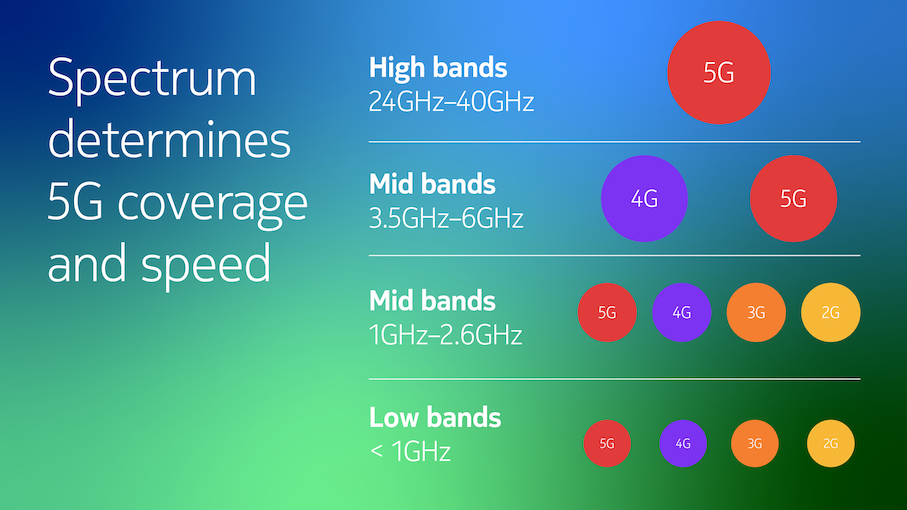
- Low-Band Spectrum (<1 GHz): This spectrum, typically in the 600-900 MHz range, is excellent for wide-area coverage, penetrating buildings and reaching rural areas effectively. It forms the foundational layer of 5G networks, ensuring broad accessibility. While offering great reach, its capacity is relatively limited.
- Mid-Band Spectrum (1-6 GHz): Often called the "sweet spot" for 5G, this includes frequencies like the 3.4-4.2 GHz range (often referred to as C-band spectrum) and 2.5 GHz. Mid-band offers a superb balance of coverage and capacity, enabling faster speeds than low-band and better reach than high-band. It's considered crucial for delivering a true 5G experience.
- High-Band Spectrum (24-47 GHz+): This is where millimeter wave (mmWave) frequencies reside. With massive amounts of available bandwidth, mmWave can deliver extremely high speeds and ultra-low latency, making it ideal for dense urban areas, enterprise campuses, and specific applications like fixed wireless access. However, its signals have very short range and are easily blocked by obstacles, requiring dense deployments of small cells.
Global Approaches to 5G Spectrum Allocation
There is no one-size-fits-all approach to telecommunications regulation and spectrum allocation. Each country, influenced by its existing infrastructure, political landscape, economic goals, and incumbent spectrum users, devises its own strategy. However, common themes and methods emerge across the globe.
Common Spectrum Allocation Methods
- Spectrum Auctions: This is the most prevalent method globally. Regulatory bodies set rules, and mobile network operators (MNOs) bid on blocks of spectrum. Auctions are seen as transparent and efficient, maximizing revenue for governments while ensuring spectrum goes to those who value it most. The competitive nature can, however, lead to high costs for operators.
- "Beauty Contests" (Comparative Selection): In this method, applicants submit detailed proposals outlining their network deployment plans, service offerings, and commitments to coverage or innovation. The regulator then evaluates these proposals based on predetermined criteria, not just price. This can encourage specific public interest outcomes but might be less transparent.
- Administrative Assignments: Less common for primary 5G bands, this involves direct allocation to specific entities, often for public safety or government use. It lacks the market efficiency of auctions but can ensure critical services have access to necessary frequencies.
Many countries employ a hybrid approach, using auctions for prime commercial bands while reserving or administratively assigning other frequencies for specific purposes. The goal is always to facilitate robust network deployment strategies that benefit citizens and drive economic growth.
Country-Specific 5G Spectrum Allocation Strategies
Let's examine how various nations have approached their 5G spectrum allocation, highlighting their unique challenges and successes.
United States: A Focus on Mid-Band and mmWave
The U.S. initially led with mmWave spectrum auctions, leveraging vast swaths of high-band frequencies to deliver unprecedented speeds in dense urban areas. However, recognizing the need for broader coverage, the focus quickly shifted to mid-band. The C-band auction (3.7-3.98 GHz) was a landmark event, raising tens of billions of dollars and providing crucial mid-band capacity for major carriers. Subsequent auctions have continued to make more mid-band and some low-band frequencies available. The FCC (Federal Communications Commission) plays a central role in these processes. The challenge for the U.S. remains balancing rapid deployment with addressing potential interference issues and ensuring equitable access across its vast geography.
- Key Bands: 24/28/37/39/47 GHz (mmWave), 3.7-3.98 GHz (C-band), 2.5 GHz (Sprint acquisition), 600 MHz (low-band).
- Approach: Aggressive auctioning to foster competitive private sector investment.
- Impact: Rapid urban mmWave deployment, significant mid-band buildout underway, aiming for widespread coverage.
European Union: Harmonization and National Diversity
The EU strives for spectrum harmonization across its member states to facilitate cross-border services and economies of scale for equipment manufacturers. The European Commission recommends common bands, such as 700 MHz (low-band for coverage), 3.4-3.8 GHz (mid-band for capacity), and 26 GHz (high-band for mmWave). However, actual allocation processes and timelines are managed by individual national regulatory authorities (e.g., Ofcom in the UK, Arcep in France, BNetzA in Germany). This results in varied auction rules, pricing, and deployment obligations, leading to different paces of 5G rollout across the continent. Some countries have opted for multi-band auctions, while others have phased releases.
- Key Bands: 700 MHz, 3.4-3.8 GHz, 26 GHz.
- Approach: EU-level recommendations, national-level auctions/assignments.
- Impact: Progressing 5G rollout with varying speeds and strategies per country; emphasis on ensuring competition and rural coverage.
China: Government-Led Allocation and Rapid Deployment
China adopted a unique, government-led approach, directly assigning 5G spectrum to its major state-owned telecom operators (China Mobile, China Telecom, China Unicom, China Broadcasting Network). This centralized strategy allowed for incredibly rapid 5G network deployment, with millions of base stations rolled out in just a few years. The focus has been on extensive mid-band coverage, laying the groundwork for industrial 5G applications and smart city initiatives. While efficient, this model lacks the competitive bidding of auctions.
- Key Bands: 2.6 GHz, 3.5 GHz, 4.9 GHz (mid-band); 24-28 GHz (mmWave).
- Approach: Administrative assignment to state-owned enterprises.
- Impact: World's largest and fastest 5G network rollout, driving industrial digitalization.
South Korea & Japan: Early Movers with High-Band Ambitions
Both South Korea and Japan were early pioneers in 5G, launching commercial services ahead of many other nations. South Korea, in particular, focused on allocating significant blocks of mid-band (3.5 GHz) and high-band (28 GHz mmWave) spectrum, pushing for innovative consumer and enterprise services from the outset. Japan also allocated mid-band (3.7 GHz, 4.5 GHz) and mmWave (28 GHz) spectrum, with a strong emphasis on leveraging 5G for national events and industrial transformation.
- Key Bands: South Korea: 3.5 GHz, 28 GHz; Japan: 3.7 GHz, 4.5 GHz, 28 GHz.
- Approach: Early and comprehensive spectrum release, fostering innovation.
- Impact: High subscriber penetration, advanced 5G services, and a testbed for new applications.
India: Balancing Affordability and Coverage
India, with its massive population and diverse geography, recently concluded its largest-ever spectrum auction, including key 5G bands like 3.3-3.67 GHz (mid-band) and 26 GHz (mmWave). The focus is on providing affordable 5G services and ensuring widespread coverage, including bridging the digital divide between urban and rural areas. The auction design considered the financial health of operators while aiming to maximize government revenue.
- Key Bands: 700 MHz, 3.3-3.67 GHz, 26 GHz.
- Approach: Large-scale auctions focused on revenue generation and broad coverage.
- Impact: Rapid 5G rollout in urban centers, with a long-term goal of pan-India coverage.
The Impact of Spectrum Allocation on 5G Deployment
The method and outcome of 5G spectrum allocation directly influence several critical aspects of a nation's 5G journey.
Network Performance and Capacity
Adequate and contiguous blocks of mid-band spectrum are vital for delivering the promised speeds and capacity of 5G. Countries that secure substantial amounts of this spectrum can offer superior mobile broadband connectivity. Conversely, fragmented or insufficient mid-band holdings can lead to a less impressive 5G experience. Millimeter wave (mmWave) spectrum, while high capacity, requires extremely dense small cell deployments, impacting the cost and complexity of network buildouts.
Economic Implications and Operator Strategies
High spectrum auction prices can burden operators with significant debt, potentially impacting their ability to invest in network infrastructure. This can lead to slower deployment or higher service costs for consumers. Conversely, reasonable pricing can encourage aggressive buildouts and competitive service offerings. Operators must carefully strategize their bids and network plans based on their spectrum holdings, aiming for optimal radio frequency planning.
Bridging the Digital Divide
Low-band spectrum is crucial for extending 5G reach to rural and underserved areas, helping to bridge the digital divide. Regulatory frameworks that mandate coverage obligations or incentivize rural deployment can ensure that the benefits of 5G are not confined to urban centers. This often involves a delicate balance between commercial viability for operators and public interest goals.
Innovation and New Services
The availability of sufficient and diverse spectrum bands fosters innovation. For example, large blocks of mmWave spectrum can enable new enterprise applications like private 5G networks for factories or high-density public venues. Mid-band spectrum supports enhanced mobile broadband and emerging applications like augmented reality (AR) and virtual reality (VR), while low-band ensures a pervasive connectivity layer for IoT devices. The strategic release of licensed spectrum and consideration of unlicensed spectrum use cases can accelerate technological advancements.
Challenges and Future Trends in 5G Spectrum Management
Despite significant progress, the journey of 5G spectrum allocation is ongoing and faces several challenges, with new trends emerging.
Spectrum Scarcity and Re-farming
The demand for wireless data continues to skyrocket, leading to ever-increasing pressure on available spectrum. Many existing bands are already occupied by legacy technologies (e.g., 2G/3G) or other services (e.g., satellite, defense). Spectrum re-farming – clearing these bands for 5G use – is a complex, costly, and time-consuming process involving coordination with incumbent users. This is a major hurdle for many nations seeking more mid-band frequencies.
Cross-Border Interference
Radio signals do not respect national borders. Spectrum allocation in border regions requires careful international coordination to prevent interference between networks in neighboring countries. This is particularly relevant in densely populated areas like Europe, where spectrum harmonization efforts are critical.
Demand for More Spectrum and 6G Planning
As 5G evolves and discussions around 6G begin, the demand for even more spectrum will intensify. Regulators are already looking towards higher frequencies (e.g., beyond 40 GHz for 5G-Advanced and 6G) and exploring new ways to share spectrum more efficiently. This includes considering new approaches to dynamic spectrum sharing, where frequencies can be used by multiple technologies or users based on real-time demand.
The Evolving Role of Regulatory Bodies
National regulatory authorities face the ongoing challenge of adapting their frameworks to rapidly evolving technology. They must consider not only commercial mobile broadband but also the needs of private networks, industrial IoT, and public safety. Their decisions on spectrum licensing terms, coverage obligations, and pricing will continue to shape the competitive landscape and technological progress within their nations. Building robust telecommunications infrastructure requires forward-thinking regulatory strategy.
Frequently Asked Questions About 5G Spectrum Allocation
What is the difference between licensed and unlicensed 5G spectrum?
Licensed spectrum is exclusive to a specific mobile network operator (MNO) within a defined geographic area, typically acquired through auctions or administrative assignments. This exclusivity provides reliability and quality of service for commercial cellular networks. Unlicensed spectrum, on the other hand, is freely available for use by anyone, subject to certain technical rules to prevent interference. Examples include Wi-Fi bands (2.4 GHz, 5 GHz). While offering flexibility and lower entry barriers, unlicensed spectrum can be prone to congestion. 5G can operate in both, with Wi-Fi 6E/7 leveraging unlicensed bands for local, high-capacity connections.
Why is C-band spectrum so important for 5G?
The C-band spectrum (typically 3.4-4.2 GHz) is considered the "goldilocks" band for 5G because it offers an optimal balance between coverage and capacity. It can penetrate buildings better than higher mmWave frequencies and provides significantly more bandwidth than low-band spectrum, enabling faster speeds and lower latency over a wider area. Many countries globally are re-farming and auctioning C-band to accelerate their 5G mid-band deployments, recognizing its critical role in delivering a premium 5G experience and supporting robust mobile broadband connectivity.
How do countries decide which companies get 5G spectrum?
The most common method for allocating 5G spectrum to companies is through spectrum auctions. In an auction, mobile network operators bid for blocks of frequencies, with the highest bidders winning the rights to use the spectrum for a set period. Other methods include "beauty contests" or comparative selection, where regulators evaluate proposals based on technical capabilities, deployment plans, and public benefit commitments, or administrative assignments, where spectrum is directly granted. The choice of method depends on a country's regulatory philosophy, market structure, and policy objectives. For more detailed information, consider exploring the specific auction mechanisms employed by leading nations.
What impact does 5G spectrum allocation have on the digital divide?
5G spectrum allocation has a significant impact on the digital divide. Low-band spectrum (e.g., 600-900 MHz) is crucial for covering vast rural and remote areas due to its excellent propagation characteristics. Countries that prioritize the allocation and deployment of low-band 5G, often with specific coverage obligations for operators, can extend high-speed internet access to underserved communities. Without strategic allocation that considers rural needs, the benefits of 5G could exacerbate existing connectivity disparities, widening the digital divide rather than closing it. Effective radio frequency planning and regulatory incentives are key to ensuring equitable access.
The global race for 5G dominance is fundamentally a race for spectrum. As new technologies emerge and demand for connectivity continues to grow, the strategic allocation and management of this finite resource will remain a cornerstone of national digital strategies, influencing everything from economic competitiveness to social equity.

0 Komentar