
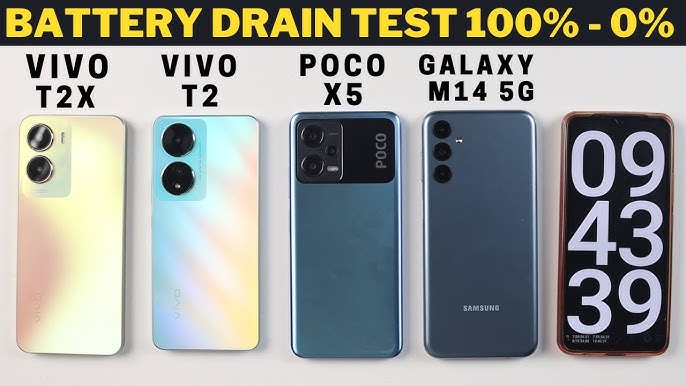
Unpacking the 5G Smartphone Battery Drain: A Comprehensive Comparison and Optimization Guide
The advent of 5G technology has revolutionized mobile connectivity, promising blistering speeds and ultra-low latency. Yet, for many smartphone users, this technological leap comes with a noticeable trade-off: a perceived, and often very real, impact on 5G smartphone battery drain. Are your apps consuming more power than ever, or is it the network itself? This comprehensive guide delves deep into the intricacies of 5G's effect on smartphone power consumption, comparing its demands against previous generations and offering expert insights to help you maximize your device's longevity.
The Energetic Demands of 5G Connectivity
Understanding why 5G can be a significant battery hog begins with grasping the fundamental differences in how it operates compared to 4G LTE. While 5G brings unparalleled speed and responsiveness, it achieves this through more complex and power-intensive mechanisms. It's not merely a faster version of 4G; it's an entirely new architecture with distinct power profiles.
Why 5G Demands More Power: The Technical Landscape
- Higher Frequencies and Shorter Wavelengths: 5G often utilizes much higher frequency bands, particularly mmWave (millimeter-wave), which offers incredible speeds but has limited range and struggles to penetrate obstacles. To compensate, phones need more antennas to maintain a connection, and these antennas work harder, consuming more energy. Even Sub-6 GHz 5G, while better for coverage, still operates at higher frequencies than 4G.
- Beamforming Technology: Unlike 4G's broader signal broadcast, 5G employs advanced beamforming. This technology directs a focused signal directly to your device, improving efficiency and speed. However, the constant calculation and adjustment required for beamforming demand more processing power from the modem and chipset, leading to increased cellular modem efficiency strain.
- Increased Antenna Count: To support various 5G bands and MIMO (Multiple-Input Multiple-Output) capabilities, 5G smartphones integrate more antennas than their 4G predecessors. More active components inevitably mean higher power draw, especially when the device is actively searching for or maintaining a robust 5G signal.
- Constant Network Searching: In areas with inconsistent 5G coverage, your smartphone might constantly switch between 5G, 4G, and even 3G networks to find the best connection. This continuous handover process, known as "network hopping," is incredibly battery-intensive as the modem works overtime to re-establish and optimize connections.
- Enhanced Processing for Higher Throughput: The sheer volume of data 5G can transmit requires more powerful modems and chipsets capable of processing that data at lightning speeds. This increased computational demand translates directly into higher power management requirements and greater battery drain.
Factors Influencing 5G Battery Performance
While 5G's inherent characteristics contribute to increased power consumption, several other variables play a crucial role in the actual smartphone battery drain comparison you experience daily. It's a complex interplay of hardware, software, and environmental factors.
Device Hardware and Chipset Efficiency
Not all 5G phones are created equal. The efficiency of the smartphone chipset and its integrated 5G modem is paramount. Newer chipsets, like the latest Snapdragon or MediaTek Dimensity series, are designed with improved power efficiency in mind, often incorporating dedicated AI engines for better resource management. An older or less optimized 5G modem can significantly exacerbate battery drain.
- Modem Generation: Newer 5G modems are more power-efficient. For instance, an integrated modem within the SoC (System-on-Chip) generally consumes less power than a separate, external modem.
- Battery Capacity: Larger battery capacities (measured in mAh) inherently provide more power. A 5,000 mAh battery will naturally last longer than a 3,500 mAh battery under similar 5G usage, although the drain percentage might still be higher than on 4G.
- Display Technology: High refresh rate (120Hz, 90Hz) OLED or LCD screens, while visually stunning, are major power consumers. Combining a power-hungry display with active 5G usage can rapidly deplete your battery.
Network Signal Strength and Coverage
Perhaps one of the most critical factors is network signal strength. When your phone struggles to find or maintain a strong 5G signal, its modem works harder, boosting power output to communicate with the nearest cell tower. This is akin to shouting louder when someone is far away. Weak 5G coverage, frequent signal drops, or operating in fringe areas will inevitably lead to higher mobile data usage and accelerated battery drain.
Moreover, the type of 5G deployment matters. In areas primarily served by mmWave, which offers blazing speeds but poor penetration, your phone might constantly search for and lose connection, leading to significant battery impact. Sub-6 GHz 5G, with its wider coverage, generally results in more stable connections and less drain.
User Usage Patterns and Software Optimization
Your habits profoundly influence device longevity. Heavy usage of data-intensive applications like 4K video streaming, online gaming, or large file downloads over 5G will naturally consume more battery than light browsing or social media. These activities fully leverage 5G's capabilities, demanding sustained high throughput from the modem and processor.
Furthermore, the smartphone's operating system (OS) and individual app optimizations play a vital role. A well-optimized OS will intelligently manage background processes and network activity. Apps that are poorly coded or constantly refresh in the background, even on 5G, can contribute significantly to unexpected battery drain. Regular software updates often include power management improvements, enhancing overall phone battery optimization.
Comparative Analysis: 5G vs. 4G Battery Performance
To truly understand the impact, let's consider real-world scenarios and direct comparisons between 5G and 4G LTE. While exact figures vary wildly based on device, network, and usage, general trends are clear.
Scenario-Based Battery Drain Assessment
- Video Streaming (High Quality): Streaming 4K video on 5G will typically consume significantly more battery than on 4G. The constant high data transfer rate required for smooth 4K playback pushes the 5G modem to its limits. Expect a 15-30% higher drain rate on 5G compared to 4G for prolonged streaming sessions.
- Online Gaming: Mobile gaming, especially titles requiring low latency and high bandwidth, benefits immensely from 5G. However, this comes at a cost. The combination of intense GPU/CPU usage, a high refresh rate display, and continuous 5G data transfer can lead to rapid battery depletion, often 20-40% faster than on 4G.
- Large File Downloads: Downloading gigabytes of data in minutes is a hallmark of 5G. While incredibly fast, the sustained peak performance required for such downloads will cause a noticeable, albeit short-lived, spike in smartphone power consumption. The battery drain during active, high-speed downloads will be higher than on 4G, but the shorter download time might mean less overall power used for that specific task.
- Idle State/Light Browsing: Even when not actively downloading or streaming, a 5G modem might draw more power in an idle state or during light browsing if it's constantly negotiating with the 5G network, especially in areas with fluctuating signal. However, modern smartphones are designed to intelligently switch to lower power states when 5G isn't actively being used, mitigating this somewhat. The "always-on" nature of some 5G modules can still be a factor.
It's important to note that the most significant battery drain occurs when the 5G modem is actively transmitting or receiving data at high speeds, or when it's struggling to maintain a connection. In perfect signal conditions, the power difference might be less pronounced, but the moments of struggle are what often lead to perceived rapid drain.
Mitigating 5G Battery Drain: Actionable Tips and Best Practices
While 5G inherently demands more power, you're not powerless against rapid battery depletion. Implementing smart strategies and leveraging your phone's features can significantly improve your 5G battery life.
Smart Network Management
- Switch to 4G/LTE: The simplest and most effective tip. If you're in an area with weak 5G coverage, or if you don't need blistering speeds (e.g., just checking emails), manually switch your preferred network type to 4G/LTE in your phone's settings. This prevents your device from constantly searching for a weak 5G signal. Most phones offer an option like "5G Auto" or "LTE/3G/2G (Auto Connect)." Select the "LTE/4G" option.
- Utilize "Smart Data" or "Adaptive Connectivity": Many modern Android phones and iPhones feature intelligent network management. Features like Google's "Adaptive Connectivity" or Samsung's "Smart Data" automatically switch between 5G, 4G, and Wi-Fi based on your usage and network availability, aiming to optimize both speed and power consumption. Ensure these are enabled if available.
- Disable 5G When Not Needed: If you're primarily on Wi-Fi at home or work, there's no need for 5G to be active. Consider turning off cellular data entirely or switching to 4G when you know you'll be connected to Wi-Fi for extended periods.
Optimize Device Settings for Power Efficiency
- Monitor App Background Activity: Restrict apps from running in the background and consuming data over 5G unnecessarily. Go to your phone's app settings and limit background data usage for non-essential applications.
- Leverage Adaptive Battery Features: Both Android and iOS have robust adaptive battery systems that learn your usage patterns and optimize battery life. Ensure these features are enabled (e.g., "Adaptive Battery" on Android, "Optimized Battery Charging" on iOS).
- Adjust Display Settings: The screen is a major power drain. Reduce screen brightness, enable adaptive brightness, and consider using Dark Mode, especially on OLED displays. If your phone has a high refresh rate (e.g., 120Hz), consider switching it to a lower setting (e.g., 60Hz or adaptive refresh rate) when 5G battery drain is a concern.
- Turn Off Unused Connectivity: Disable Bluetooth, Wi-Fi, and GPS when not in active use. While minor individually, collectively they can contribute to overall drain, especially if apps are constantly scanning for nearby devices or locations.
Software and Hardware Considerations
- Keep Software Updated: Operating system updates often include critical power management optimizations and bug fixes that can improve battery health and reduce drain. Similarly, keep your apps updated to ensure they are running the most efficient versions.
- Choose Efficient Hardware: When purchasing a new 5G smartphone, research its chipset and modem efficiency. Look for devices with larger battery capacities and highly optimized processors. Reviews often highlight battery performance under 5G.
- Consider a Battery Pack: For heavy 5G users or those frequently in areas with poor 5G coverage, a portable power bank can be an invaluable accessory, ensuring you always have enough juice.
Frequently Asked Questions About 5G Battery Drain
Users often have specific queries regarding 5G and its impact on their device's power. Here are answers to some common questions.
Does 5G always drain more battery than 4G?
Generally, yes, 5G tends to consume more battery than 4G LTE, especially when actively transferring data at high speeds or when the device is struggling to maintain a strong 5G signal. The higher frequencies, increased antenna count, and more complex processing required for 5G contribute to this. However, in ideal conditions with perfect 5G signal and intelligent modem management, the difference might be less drastic than perceived. The primary difference lies in the potential for higher drain during peak performance or signal instability.
Is mmWave 5G worse for battery life than Sub-6 GHz 5G?
Absolutely. mmWave 5G (millimeter-wave) operates at much higher frequencies and has a shorter range with poor penetration capabilities. This means your phone's modem often has to work much harder, boosting power to connect to distant or obstructed mmWave towers, leading to significantly higher mmWave battery drain. Sub-6 GHz 5G, while still more power-intensive than 4G, offers better coverage and generally results in less severe battery drain compared to mmWave.
How can I check if 5G is causing my battery drain?
Most modern smartphones offer detailed battery usage statistics in their settings (e.g., "Battery" or "Device Care"). Look for a breakdown of power consumption by app and by system components. While it may not explicitly state "5G modem," you can often infer its impact by observing high "Mobile Network" or "Cell Standby" usage, especially if you're frequently in areas with inconsistent 5G coverage or if you're using data-intensive apps over 5G. A direct comparison of battery life when forced to 4G versus 5G can also provide anecdotal evidence.
Will future 5G smartphones be more battery-efficient?
Yes, significant improvements are expected. Chipset manufacturers are continuously innovating to create more power-efficient 5G modems and integrated SoCs. Advancements in modem design, improved software optimization, and the adoption of technologies like Dynamic Spectrum Sharing (DSS) and more efficient network slicing by carriers are all aimed at reducing cellular network performance related battery drain. The goal is to make 5G connectivity as energy-efficient as possible without compromising on speed or reliability.

0 Komentar