
Unraveling the Future: Quantum Computing Quantum Imaging Explained
Delving into the cutting-edge intersection of two of the most transformative technologies of our era, quantum computing quantum imaging explained represents a paradigm shift in how we perceive and analyze the world around us. This revolutionary field harnesses the mind-bending principles of quantum mechanics – superposition, entanglement, and interference – to push the boundaries of traditional imaging, promising unprecedented resolution, sensitivity, and non-invasiveness. As an SEO expert, I understand the critical need to demystify complex subjects, and here, we will explore how quantum phenomena are leveraged to create images with capabilities far beyond classical limits, ultimately enhanced and processed by the immense computational power of quantum computers. Prepare to explore a future where the invisible becomes visible, and data acquisition reaches its quantum peak.
The Quantum Leap in Imaging: Beyond Classical Limitations
For centuries, imaging technologies have been constrained by the fundamental laws of classical physics, encountering limits in resolution, sensitivity, and the ability to image through scattering media. Traditional methods rely on classical light sources and detectors, which inherently face challenges like the diffraction limit and signal-to-noise ratio issues in low-light conditions. This is precisely where quantum imaging emerges as a game-changer, offering a path to overcome these long-standing barriers by exploiting the unique properties of quantum light.
Imagine being able to image biological tissues without invasive procedures, detect minute flaws in materials at the nanoscale, or even peer through dense fog with unparalleled clarity. Quantum imaging makes this possible by utilizing photons in a quantum state, often through quantum entanglement or by using squeezed light. Unlike classical light, which behaves like independent waves or particles, quantum light exhibits correlations that can be exploited to extract more information or to reduce noise, leading to superior image quality and new modalities.
Harnessing Quantum Entanglement for Superior Imaging
One of the most profound concepts in quantum mechanics, quantum entanglement, plays a pivotal role in advanced quantum imaging techniques. When photons are entangled, their properties become intrinsically linked, regardless of the distance separating them. This means measuring the property of one entangled photon instantly reveals information about its partner. In imaging, this can be used for techniques like quantum ghost imaging, where one photon from an entangled pair interacts with the object, while its entangled partner, which never interacts with the object, is detected. By correlating the measurements of both photons, an image of the object can be reconstructed with remarkable clarity, even if the object itself is only illuminated by a "bucket" detector that collects all light without spatial resolution.
- Enhanced Sensitivity: Quantum entanglement allows for imaging with extremely low light levels, minimizing damage to sensitive biological samples.
- Non-Local Imaging: Ghost imaging demonstrates the ability to form images without direct interaction of the imaging light with the detector, opening doors for imaging in difficult environments.
- Improved Resolution: Techniques like quantum lithography and quantum microscopy leverage entangled photons to overcome classical diffraction limits, achieving finer details than ever before.
The Role of Quantum Light Sources
The foundation of quantum imaging relies heavily on the generation and manipulation of quantum light. Sources that produce entangled photon pairs, such as spontaneous parametric down-conversion (SPDC), are crucial. These sources create photons that are correlated in properties like polarization, momentum, or energy. Furthermore, the use of squeezed states of light, where quantum noise in one observable (e.g., intensity) is reduced below the standard quantum limit at the expense of increased noise in a complementary observable, offers another avenue for enhanced imaging. This reduction in noise directly translates to improved signal-to-noise ratio in imaging systems, allowing for clearer images under challenging conditions.
How Quantum Computing Intersects with Quantum Imaging
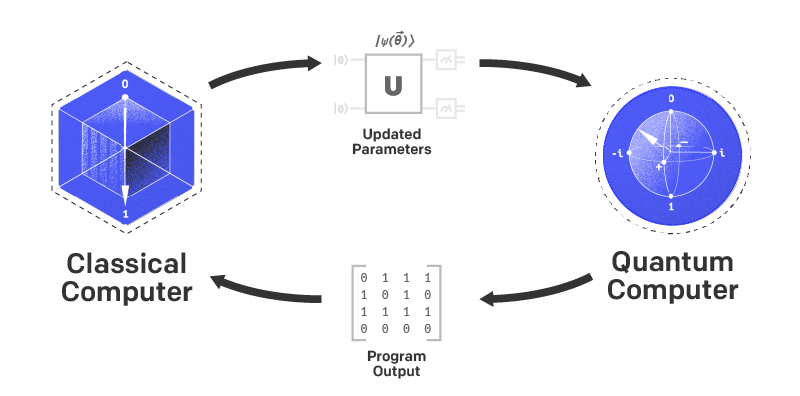
While quantum imaging systems generate incredible new forms of data, the sheer volume and complexity of this quantum information require equally advanced processing capabilities. This is where quantum computing steps in, forming a symbiotic relationship with quantum imaging. Quantum computers, with their ability to perform complex calculations based on quantum principles, are uniquely positioned to process the intricate datasets generated by quantum imaging systems, optimize their performance, and even design new imaging modalities.
The synergy between quantum computing quantum imaging explained is multifaceted. Quantum computers can analyze the quantum correlations within imaging data, reconstruct images with greater fidelity, denoise images more effectively, and even simulate complex quantum optical systems to design better quantum sensors and imaging setups. This integration promises to unlock the full potential of quantum imaging, moving it from theoretical promise to practical application.
Quantum Algorithms for Image Enhancement
Traditional image processing relies on classical algorithms that can become computationally intensive for large, complex datasets, especially those with quantum correlations. Quantum algorithms, designed to run on quantum computers, offer a potential solution. Algorithms like the Quantum Fourier Transform (QFT) or quantum machine learning algorithms could be adapted for tasks such as image reconstruction, pattern recognition, and noise reduction in quantum imaging data. For instance, a quantum computer could efficiently disentangle complex correlations in data from a quantum ghost imaging setup, leading to faster and more accurate image generation.
- Quantum Image Reconstruction: Developing algorithms that can rapidly reconstruct images from non-classical light measurements, potentially faster than classical counterparts.
- Quantum Denoising: Utilizing quantum properties to distinguish signal from quantum noise more effectively, leading to clearer images in low-light or noisy environments.
- Quantum Feature Extraction: Applying quantum machine learning techniques to identify specific features or anomalies within quantum images, crucial for medical diagnostics or material analysis.
Simulating and Optimizing Quantum Imaging Setups
Designing and optimizing quantum imaging systems is an incredibly complex task, often involving intricate quantum optical setups and precise control over quantum states. Quantum computers can simulate these complex quantum systems with a level of detail impossible for even the most powerful classical supercomputers. By simulating the behavior of entangled photons, squeezed light, and their interactions with various materials, researchers can virtually test and refine new imaging techniques and hardware designs before costly physical prototypes are built. This accelerates research and development, paving the way for more efficient and powerful quantum sensors and imaging devices. Consider exploring quantum simulation platforms to understand this capability further: Explore Quantum Simulation.
Unpacking the Mechanism: Quantum Imaging Techniques Explained
The field of quantum imaging encompasses several distinct yet interconnected techniques, each leveraging quantum phenomena in unique ways to achieve superior results. Understanding these mechanisms is key to appreciating the transformative potential of quantum computing quantum imaging explained.
Quantum Ghost Imaging (QGI)
As briefly mentioned, QGI separates the illuminating beam from the detection beam. An entangled photon pair is generated; one photon (the "object" photon) illuminates the target object, and the other (the "reference" photon) travels to a spatially resolving detector. The object photon is collected by a "bucket" detector that measures only intensity, not spatial information. By correlating the timing and intensity signals from both detectors, an image of the object can be reconstructed. This is particularly useful for imaging objects sensitive to high light intensity or in environments where the object beam is highly scattered.
Quantum Microscopy and Metrology
Classical microscopy is limited by the diffraction limit, preventing the visualization of structures smaller than half the wavelength of light. Quantum microscopy overcomes this by using entangled or squeezed light to achieve sub-diffraction-limit resolution. For instance, using entangled photons, researchers have demonstrated imaging with precision beyond the classical shot-noise limit. This has profound implications for biological imaging, allowing scientists to observe cellular structures and processes at unprecedented scales without damaging the sample. Quantum metrology extends these principles to precise measurements, such as temperature, magnetic fields, or distances, with enhanced sensitivity.
Quantum Illumination and Lidar
Imagine a radar or lidar system that can detect objects in extremely noisy or cluttered environments, even when the object is stealthy or highly reflective. Quantum illumination uses entangled light to achieve this. By sending one photon of an entangled pair towards a target and keeping the other as a "reference," the system can detect the presence of the target even if only a tiny fraction of the returning light is received, or if the target is embedded in strong background noise. This has significant implications for defense, security, and autonomous navigation, offering a significant advantage over classical radar/lidar in low signal-to-noise ratio scenarios.
Transformative Applications of Quantum-Enhanced Imaging
The theoretical advancements in quantum computing quantum imaging explained are rapidly translating into practical applications across various sectors, promising solutions to previously intractable problems. The impact will be felt from the hospital room to outer space.
Revolutionizing Medical Diagnostics
One of the most promising areas for quantum imaging is in medicine. The ability to image with low light levels and achieve high resolution without invasive procedures is a holy grail for diagnostics. Quantum imaging could enable:
- Non-Invasive Biopsy: Imaging deep within tissues to detect cancerous cells or abnormalities without the need for surgical removal.
- Early Disease Detection: Identifying subtle changes at the cellular level that indicate disease onset long before symptoms appear.
- Reduced Radiation Exposure: Techniques that rely on non-ionizing quantum light, providing safer alternatives to X-rays or CT scans, especially for sensitive patients like children or pregnant women.
- High-Resolution Endoscopy: Enhancing the clarity and depth of internal imaging during endoscopic procedures.
Advancements in Industrial and Scientific Research
Beyond medicine, quantum imaging is set to transform numerous scientific and industrial fields:
- Material Science: Unprecedented insight into material structures at the nanoscale, enabling the development of new materials with tailored properties. This includes detecting defects in semiconductors or analyzing the structure of novel alloys.
- Quality Control: Non-destructive testing of manufactured components with extreme precision, ensuring product integrity and safety.
- Environmental Monitoring: Highly sensitive detection of pollutants or trace gases, even in complex atmospheric conditions.
- Astronomy and Space Exploration: Overcoming atmospheric turbulence to achieve clearer images of distant celestial bodies, potentially aiding in the search for exoplanets and understanding dark matter. Consider how quantum information science is pushing these boundaries.
Overcoming Hurdles and Charting the Future Path
While the potential of quantum computing quantum imaging explained is immense, the field is still in its nascent stages, facing significant technical and engineering challenges. These include:
- Scalability: Building quantum imaging systems that are robust, compact, and scalable for practical applications.
- Coherence Times: Maintaining the delicate quantum states (like entanglement) for long enough periods and over long distances is challenging due to decoherence from environmental noise.
- Cryogenic Requirements: Many current quantum components require extremely low temperatures, limiting their practical deployment.
- Cost and Complexity: The current cost of quantum light sources, detectors, and quantum computing hardware is prohibitive for widespread adoption.
- Data Processing: Developing the necessary quantum algorithms and software infrastructure to efficiently process the vast amounts of quantum imaging data.
Despite these hurdles, rapid advancements in photonics, quantum material science, and quantum computing hardware are steadily paving the way. Researchers are actively working on room-temperature quantum light sources, more efficient quantum detectors, and fault-tolerant quantum computers. The future will likely see specialized quantum imaging devices integrated with cloud-based quantum computing services, making this powerful technology accessible to a broader range of industries and scientific disciplines. To stay ahead, consider investing in research and development in quantum information science.
Practical Advice for Future Development:
- Interdisciplinary Collaboration: Foster collaboration between quantum physicists, computer scientists, material scientists, and medical professionals to accelerate innovation.
- Standardization Efforts: Work towards establishing common protocols and benchmarks for quantum imaging performance and data formats.
- Talent Development: Invest in education and training programs to cultivate a workforce skilled in quantum technologies.
- Focus on Niche Applications: Identify and target specific high-value applications where quantum imaging offers a clear and immediate advantage over classical methods.
Frequently Asked Questions
What is the core principle behind quantum imaging?
The core principle behind quantum imaging is the exploitation of non-classical properties of light, primarily quantum entanglement and squeezed states. Unlike classical imaging which relies on independent photons, quantum imaging uses photons that are correlated in their quantum states. These correlations allow for enhanced sensitivity, resolution beyond classical diffraction limits, and the ability to image in challenging environments by reducing noise and extracting more information from light-matter interactions. It fundamentally shifts from measuring individual photons to measuring quantum correlations between them.
How does quantum computing enhance quantum imaging?
Quantum computing enhances quantum imaging by providing the advanced computational power necessary to process the complex, correlated data generated by quantum imaging systems. Quantum computers can run specialized quantum algorithms that are more efficient at tasks like image reconstruction, noise reduction, and feature extraction from quantum data. Furthermore, quantum computers can simulate and optimize the design of future quantum imaging hardware and quantum sensors, accelerating the development cycle and enabling the creation of even more powerful imaging modalities. They act as the "brain" for the quantum "eyes."
What are the main advantages of quantum imaging over classical methods?
The main advantages of quantum imaging over classical methods include significantly improved resolution limits, enhanced sensitivity (allowing for imaging with extremely low light levels), superior signal-to-noise ratio, and the capability for non-invasive techniques. It can overcome the classical diffraction limit, image through highly scattering media (like biological tissues), and detect objects in noisy environments more effectively than traditional approaches. This leads to clearer, more detailed, and less damaging imaging for a wide range of applications.
Can quantum imaging be used in medical diagnostics today?
While quantum imaging shows immense promise for medical imaging and diagnostics, it is largely still in the research and development phase. Current prototypes demonstrate its capabilities in laboratory settings, but widespread clinical application is not yet common. Challenges such as scalability, cost, and the need for robust, user-friendly devices need to be addressed. However, ongoing research in areas like advanced microscopy for cellular imaging and non-invasive tissue analysis suggests that quantum-enhanced medical diagnostics could become a reality within the next decade or two.

0 Komentar