
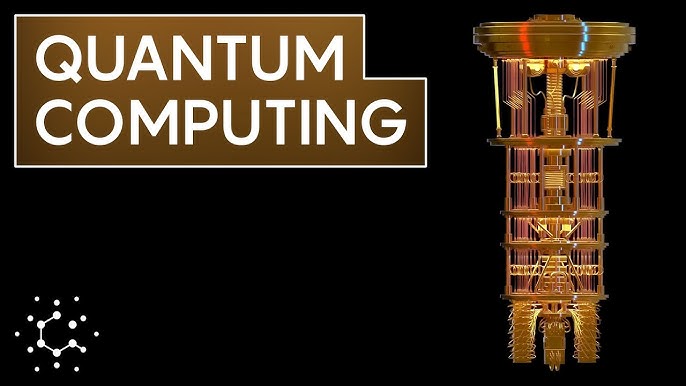
Unraveling the Mystery: Quantum Computing Quantum Entanglement Explained
Embark on a fascinating journey into the heart of cutting-edge technology as we demystify the profound connection between quantum computing quantum entanglement explained. This article will serve as your definitive guide, shedding light on how one of the most perplexing phenomena in quantum mechanics forms the bedrock of the next generation of computational power. Discover the fundamental principles that allow quantum computers to potentially solve problems currently insurmountable for even the most powerful supercomputers, delving deep into the concept of entangled particles and their pivotal role.
Unpacking the Quantum Realm: What is Quantum Computing?
Before we dissect entanglement, it's crucial to grasp the essence of quantum computing itself. Unlike classical computers that rely on bits representing either a 0 or a 1, quantum computers utilize qubits. These remarkable quantum bits leverage two key quantum mechanical phenomena: superposition and entanglement.
Superposition allows a qubit to exist in a combination of both 0 and 1 simultaneously, rather than being restricted to one state. Imagine a coin spinning in the air – it's neither heads nor tails until it lands. This ability to be in multiple states at once drastically increases the information capacity of a single qubit compared to a classical bit. This inherent parallel processing capability is what gives quantum computers their theoretical edge, promising unprecedented computational power for specific types of problems.
The transition from classical bits to qubits is not merely an upgrade; it's a paradigm shift in how computation is conceived and executed. This shift opens doors to solving complex optimization problems, simulating molecular structures for drug discovery, and breaking modern encryption methods, areas where classical algorithms falter due to the sheer scale of possibilities.
The Qubit Advantage: Beyond Binary Limitations
- Superposition: A single qubit can represent a 0, a 1, or both simultaneously. This means N qubits can represent 2^N states concurrently, leading to an exponential increase in processing capacity.
- Interference: Quantum states can interfere with each other, much like waves. This allows quantum algorithms to amplify correct answers while canceling out incorrect ones.
- Measurement: Upon measurement, a qubit collapses into a definite classical state (0 or 1). The challenge lies in performing computations while maintaining the quantum state before collapse.
The Heart of Quantum Power: Understanding Quantum Entanglement
If superposition is the ability of a single qubit to be in multiple states, then quantum entanglement is the phenomenon where two or more qubits become intrinsically linked, regardless of the physical distance separating them. When entangled, the quantum state of one qubit instantaneously influences the quantum state of the other, even if they are light-years apart. This profound connection means that measuring the state of one entangled particle instantly determines the state of its partner. This is the "spooky action at a distance" that famously troubled Albert Einstein.
Entanglement is not merely correlation; it's a deeper, non-local connection. If you have two entangled qubits, A and B, and you measure qubit A to be in the '0' state, you instantly know qubit B is in the '1' state (or vice-versa, depending on how they were entangled), without ever measuring B directly. This defies classical intuition, where information transfer is limited by the speed of light. However, it's crucial to understand that this does not allow for faster-than-light communication, as no useful information can be transmitted this way.
Bell's Theorem and the Reality of Entanglement
The existence of entanglement has been rigorously tested and confirmed through experiments based on Bell's theorem. These experiments have repeatedly shown that the correlations observed between entangled particles cannot be explained by classical physics or local hidden variables. This empirical evidence firmly establishes entanglement as a fundamental aspect of reality, paving the way for its application in advanced technologies like quantum algorithms.
How Quantum Entanglement Powers Quantum Computers
The true power of quantum computing emerges when superposition and entanglement work in concert. While superposition allows qubits to explore multiple possibilities simultaneously, entanglement provides the mechanism for these qubits to interact and process information in a massively parallel fashion. Imagine a network of entangled qubits where the state of each qubit is dependent on the others. This creates a complex, interconnected quantum state that can represent and manipulate vast amounts of information.
In a quantum computer, quantum gates are used to manipulate the states of qubits. These gates, analogous to logic gates in classical computers, can create and modify entangled states. When a quantum algorithm runs, it leverages these entangled states to perform computations on all possible inputs simultaneously. Instead of calculating one solution at a time, the entangled qubits explore all pathways at once, leading to an exponential speedup for certain problems.
For instance, in a search problem, a classical computer would check each item sequentially. A quantum computer, by creating an entangled state that includes all possible items, could potentially find the desired item much faster. The entanglement allows the information about all possible solutions to be intertwined, enabling the algorithm to efficiently sift through them.
The Entanglement Advantage in Quantum Algorithms
- Shor's Algorithm: Utilizes entanglement to efficiently factor large numbers, a task that is computationally intractable for classical computers, forming the basis of modern encryption. This algorithm demonstrates the potential to break current cryptographic standards.
- Grover's Algorithm: Offers a quadratic speedup for searching unsorted databases. While a classical search takes N steps, Grover's algorithm can find the item in approximately the square root of N steps, a significant improvement for large datasets.
- Quantum Simulation: Entanglement is vital for simulating complex quantum systems, such as molecules and materials, which is crucial for drug discovery and materials science. By mimicking the quantum behavior of these systems, researchers can understand their properties at an unprecedented level.
Overcoming Challenges: Harnessing Entanglement in Practice
While the theoretical advantages of quantum entanglement are immense, harnessing it in practical quantum computers presents significant challenges. The delicate nature of quantum states means they are highly susceptible to environmental interference, a phenomenon known as decoherence.
Decoherence occurs when a quantum system loses its quantum properties (like superposition and entanglement) due to interaction with its environment. Even tiny fluctuations in temperature, electromagnetic fields, or vibrations can cause qubits to lose their quantum coherence, collapsing their quantum states and introducing errors. Maintaining entanglement for long enough to perform meaningful computations is a major hurdle for quantum hardware engineers.
Strategies for Maintaining Entanglement:
- Cryogenic Temperatures: Many quantum computing architectures, such as superconducting qubits, operate at extremely low temperatures, often near absolute zero (-273.15°C or 0 Kelvin). This minimizes thermal noise and environmental interactions.
- Vacuum Chambers: Isolating qubits in ultra-high vacuum chambers prevents collisions with air molecules, which can cause decoherence.
- Error Correction Codes: Developing sophisticated quantum error correction codes is crucial. These codes don't fix errors directly but distribute quantum information across multiple entangled qubits, making the overall system more robust against localized errors. This is an active area of research.
- Topological Quantum Computing: This is a promising approach that aims to encode quantum information in "topological" properties that are inherently more robust against local perturbations, potentially offering built-in error resilience.
The journey to build fault-tolerant quantum computers relies heavily on our ability to create and maintain stable, highly entangled quantum systems. Researchers worldwide are exploring various qubit technologies, including superconducting circuits, trapped ions, photonic qubits, and topological qubits, each with its own advantages and challenges in managing entanglement and decoherence.
Future Implications and Real-World Applications
The ability to leverage quantum entanglement for computation promises to revolutionize numerous fields. The transformative potential is vast, extending far beyond simply faster calculations.
- Drug Discovery and Materials Science: Simulating complex molecular interactions at the quantum level could accelerate the discovery of new drugs, design novel materials with unprecedented properties (e.g., superconductors at room temperature), and optimize chemical reactions. This involves understanding the intricate quantum states of atoms and molecules.
- Cryptography: While Shor's algorithm poses a threat to current encryption standards, quantum computing also offers solutions. Quantum key distribution (QKD) leverages entanglement to create inherently secure communication channels, where any attempt to eavesdrop immediately alters the quantum state, making the intrusion detectable.
- Financial Modeling: Quantum computers could optimize complex financial models, portfolio management, and risk analysis, leading to more efficient and robust economic systems.
- Artificial Intelligence and Machine Learning: Quantum algorithms could enhance machine learning capabilities, enabling faster training of complex models, more efficient pattern recognition, and breakthroughs in areas like natural language processing and computer vision. This could lead to true quantum supremacy in AI applications.
- Logistics and Optimization: Solving complex optimization problems, such as supply chain management, traffic flow optimization, and airline scheduling, could lead to significant efficiencies and cost savings across industries.
The path to widespread quantum computing is still long, but the foundational role of quantum entanglement in achieving these breakthroughs is undeniable. As research progresses, our understanding and control over this "spooky" phenomenon will dictate the pace of quantum technological advancement. Explore our other articles on quantum mechanics to deepen your understanding of these revolutionary concepts.
Frequently Asked Questions
What is the core difference between classical and quantum bits?
The core difference lies in their fundamental nature and behavior. A classical bit can only exist in one of two definite states: 0 or 1. It's like a light switch that is either on or off. In contrast, a qubit, due to the principle of superposition, can exist as a 0, a 1, or a combination of both simultaneously. This allows qubits to store significantly more information and perform parallel computations, unlocking massive computational power that classical bits simply cannot achieve.
Can quantum entanglement be used for faster-than-light communication?
Despite the instantaneous correlation observed between entangled particles, quantum entanglement cannot be used for faster-than-light communication. While measuring one entangled particle instantly affects the state of its partner, there's no way to control which state the measured particle will collapse into. This randomness prevents any useful information from being encoded and transmitted faster than the speed of light, adhering to Einstein's theory of relativity. This is often referred to as the "no-communication theorem."
How does decoherence affect quantum entanglement in a quantum computer?
Decoherence is the primary nemesis of quantum entanglement in a quantum computer. It refers to the loss of quantum coherence and the collapse of delicate quantum states (like superposition and entanglement) due to interactions with the environment. When decoherence occurs, the entangled qubits lose their interconnectedness and behave more like classical bits, leading to computational errors and the inability to perform complex quantum algorithms. Mitigating decoherence through techniques like extreme cooling and isolation is critical for building stable and powerful quantum hardware.
What are the current limitations of building quantum computers based on entanglement?
Building functional quantum computers based on entanglement faces several significant limitations. The primary challenges include: scalability, as increasing the number of qubits while maintaining their entanglement and coherence is extremely difficult; decoherence, which introduces errors and limits computation time; and the complexity of implementing robust quantum error correction, which requires a large overhead of additional qubits. Furthermore, the precise control over individual qubits and the high fidelity of quantum gates needed to manipulate entangled states are still areas of active research and development.
What practical steps can someone take to learn more about quantum computing and entanglement?
To deepen your understanding of quantum computing quantum entanglement explained, consider these actionable steps:
- Online Courses: Enroll in introductory quantum computing courses offered by universities (e.g., MIT, Stanford) or platforms like Coursera, edX, or Qiskit.
- Books: Read popular science books like "Quantum Computing for Everyone" by Chris Bernhardt or "Quantum Enigma" by Bruce Rosenblum and Fred Kuttner.
- Hands-on Platforms: Experiment with quantum programming frameworks like IBM's Qiskit, Google's Cirq, or Microsoft's Q#. These platforms allow you to write and run simple quantum algorithms on real quantum hardware or simulators.
- Academic Papers & Blogs: Follow leading research institutions and quantum technology companies for updates and simplified explanations of new breakthroughs.
- Community Engagement: Join online forums or local meetups dedicated to quantum computing to discuss concepts and learn from others.

0 Komentar