
Unraveling the Quantum Enigma: A Deep Dive into Quantum Computing Limitations and Challenges
The promise of quantum computing is nothing short of revolutionary, envisioning solutions to problems currently intractable for even the most powerful supercomputers. From drug discovery and materials science to complex financial modeling and advanced AI, the potential applications are vast and transformative. However, beneath the dazzling headlines and ambitious projections lies a complex reality: the field is grappling with significant quantum computing limitations and challenges that demand immense scientific ingenuity and engineering prowess. Understanding these formidable hurdles is crucial for anyone keen on the future of this groundbreaking technology. This article delves into the core obstacles hindering the widespread adoption and full realization of quantum computers, offering a comprehensive, expert perspective on the journey ahead.
The Fragile Nature of Qubits: Decoherence and Stability Issues
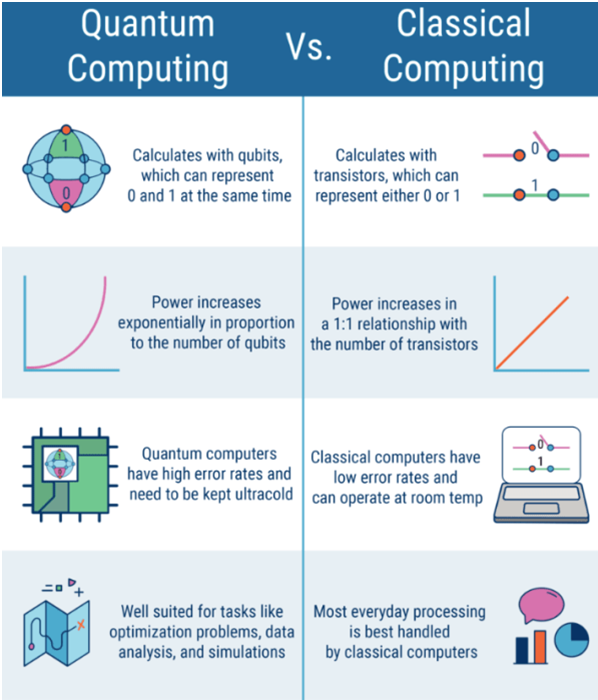
At the heart of any quantum computer are qubits, the fundamental building blocks that store and process information using quantum mechanical phenomena like superposition and entanglement. Unlike classical bits, which are either 0 or 1, qubits can exist in both states simultaneously. However, this inherent power comes with a critical vulnerability: decoherence. Decoherence refers to the loss of quantum properties due to interaction with the surrounding environment.
Maintaining qubit stability is perhaps the most pressing challenge. Even the slightest environmental disturbance – a stray electromagnetic field, a minuscule temperature fluctuation, or even residual vibrations – can cause a qubit to lose its delicate quantum state, effectively collapsing its superposition and entanglement. This rapid loss of coherence limits the time a quantum computation can run before errors accumulate and overwhelm the system.
- Environmental Noise: Quantum systems are incredibly sensitive to external interference. Shielding qubits from noise is a monumental engineering task, often requiring extreme isolation.
- Cryogenic Temperatures: Many leading qubit technologies, such as superconducting qubits, require operation at temperatures just a fraction of a degree above absolute zero (millikelvin range). Maintaining these ultra-cold conditions across a larger system is a significant engineering feat and a major cost driver.
- Interaction with Measurement Apparatus: The act of measuring a qubit inherently causes it to collapse into a definite state, ending its quantum computation. Designing non-destructive measurement techniques or minimizing their impact is vital.
The Herculean Task of Quantum Error Correction
Given the extreme fragility of qubits, errors are not just common; they are an intrinsic part of quantum computation. Unlike classical computers, where errors can often be corrected by simply duplicating information (redundancy), quantum states cannot be perfectly copied (due to the no-cloning theorem). This necessitates an entirely different approach: quantum error correction (QEC).
QEC is a theoretical framework designed to protect quantum information from decoherence and other errors. It works by encoding a single logical qubit into a highly entangled state of multiple physical qubits. While theoretically sound, implementing QEC in practice introduces several profound challenges:
- Qubit Overhead: To protect a single logical qubit, a large number of physical qubits (often hundreds or even thousands) are required. This massive overhead significantly increases the total number of physical qubits needed for any practical quantum computer, making scaling incredibly difficult. For example, some estimates suggest millions of physical qubits would be needed for a fault-tolerant logical qubit capable of breaking RSA encryption.
- Error Thresholds: For QEC to be effective, the error rate of individual physical qubits must be below a certain threshold. Current qubit technologies are steadily improving but are still some distance from achieving the ultra-low error rates required for robust fault-tolerant quantum computing.
- Complex Control Systems: Implementing QEC requires incredibly precise and synchronized control over a large number of entangled qubits, which adds immense complexity to the hardware and software infrastructure.
The pursuit of fault-tolerant quantum computing, where errors are so well-managed that computations can run reliably for extended periods, remains a primary long-term goal and a significant barrier to widespread utility.
Scaling Quantum Computers: From Lab to Industrial Scale
Building a small quantum computer with a few qubits is one thing; scaling it up to hundreds, thousands, or even millions of interconnected qubits is an entirely different beast. Scaling quantum computers presents a multi-faceted challenge encompassing fabrication, connectivity, and performance consistency.
Manufacturing and Fabrication Hurdles
- Precision Engineering: Quantum chips require nanometer-level precision in their fabrication, demanding advanced lithography and material science techniques. Defects, even microscopic ones, can render qubits unusable or introduce unpredictable behavior.
- Uniformity and Quality Control: Ensuring that all qubits on a chip behave identically and consistently is crucial for reliable computation. Achieving this uniformity across a large array of qubits is a significant manufacturing challenge.
- Interconnectivity: As the number of qubits grows, so does the complexity of connecting them. Each qubit needs to be individually addressable and capable of interacting with its neighbors. This often involves intricate wiring, control lines, and readout mechanisms that become exponentially more challenging with scale.
Maintaining Coherence at Scale
The problem of decoherence is exacerbated as the number of qubits increases. More qubits mean more potential interactions with the environment and with each other, making it harder to isolate and protect their delicate quantum states. This is a primary reason why today's "Noisy Intermediate-Scale Quantum" (NISQ) devices, while demonstrating impressive capabilities, are limited in their coherence times and the depth of computations they can perform.
Researchers are exploring various architectural innovations, such as modular designs where smaller quantum processors are networked together, similar to distributed computing. However, even these approaches introduce new challenges related to entanglement distribution and robust communication between modules. [Link to Quantum Network Architectures]
Diverse Hardware Technologies and Their Specific Obstacles
There isn't one universal qubit technology; instead, a vibrant ecosystem of competing approaches is being explored, each with its own set of strengths and quantum hardware challenges.
- Superconducting Qubits: (e.g., IBM, Google) Require extremely low temperatures (millikelvin), complex microwave control electronics, and are susceptible to external noise. Scaling up involves intricate 3D integration.
- Trapped-Ion Qubits: (e.g., IonQ, Honeywell) Offer long coherence times and high gate fidelities. Challenges include precise laser control for individual ion manipulation, scalability of ion traps, and relatively slow gate speeds compared to superconducting qubits.
- Photonic Qubits: (e.g., Xanadu, PsiQuantum) Operate at room temperature and are less susceptible to decoherence. However, they struggle with probabilistic gate operations, requiring massive optical setups and efficient single-photon sources and detectors. Scaling requires integrated photonics.
- Semiconductor Spin Qubits: (e.g., Intel, QuTech) Leverage existing silicon manufacturing techniques, potentially offering scalability advantages. Challenges include precise control over individual electron spins and maintaining coherence in a solid-state environment.
- Topological Qubits: (e.g., Microsoft) Theorized to be inherently more robust against local noise dueishing longer coherence times due to their unique properties. However, their physical realization is incredibly complex and still largely experimental.
Each of these platforms requires significant investment in specialized engineering, materials science, and fundamental physics research to overcome its specific technical barriers.
The Quantum Algorithm and Software Frontier
Even with advanced hardware, a quantum computer is only as powerful as the algorithms it can run. Developing practical quantum algorithms that genuinely offer a "quantum advantage" over classical methods is a significant intellectual challenge. While algorithms like Shor's (for factoring) and Grover's (for searching) exist, finding new algorithms for real-world problems remains an active area of research.
Beyond Theoretical Algorithms: Practical Software Development
- Quantum Programming Languages: The development of user-friendly and efficient quantum programming languages and compilers is still in its nascent stages. Tools like Qiskit (IBM) and Cirq (Google) are evolving, but the ecosystem is far less mature than for classical computing.
- Debugging and Verification: Debugging quantum programs is inherently difficult due to the probabilistic nature of quantum mechanics and the challenge of observing quantum states without disturbing them. Verifying the correctness of quantum computations is also a complex task.
- Hybrid Algorithms: Many current approaches involve "hybrid" classical-quantum algorithms, where a quantum processor handles the computationally intensive parts of a problem, while a classical computer manages the optimization and control. Optimizing these interactions is a key area of focus.
Bridging the gap between theoretical quantum mechanics and practical software development requires a new generation of interdisciplinary experts proficient in both quantum physics and computer science. [Explore more about Quantum Software Development]
Economic and Investment Hurdles
Developing quantum computing technology is incredibly expensive. The R&D costs are astronomical, involving specialized equipment, highly skilled personnel, and years of fundamental research before any commercial return on investment can be realized. This makes it a high-risk, high-reward venture that requires sustained, long-term funding.
- High Capital Expenditure: Setting up and maintaining quantum computing labs requires significant upfront investment in cryostats, lasers, specialized electronics, and cleanroom facilities.
- Operating Costs: The energy consumption of cooling systems and control electronics, along with the salaries of highly specialized researchers, contributes to substantial ongoing operational costs.
- Uncertain ROI: Given the early stage of the technology, the exact timeline for widespread commercialization and the specific killer applications that will generate significant revenue remain uncertain. This can deter some investors seeking short-term returns.
Public funding from governments and strategic investments from large tech companies are currently driving much of the progress, highlighting the long-term strategic importance of this technology.
The Critical Talent Gap
Perhaps one of the most understated yet crucial quantum computing limitations and challenges is the significant talent gap. The field requires an extremely specialized skill set that blends advanced physics, computer science, mathematics, and engineering.
- Shortage of Experts: There are simply not enough quantum physicists, quantum engineers, quantum programmers, and quantum algorithm developers to meet the growing demand from academia, industry, and government.
- Interdisciplinary Nature: The truly impactful work often occurs at the intersection of these disciplines, making it challenging to find individuals with the breadth of knowledge required.
- Education and Training: Universities are rapidly developing new curricula, but it takes years to cultivate the deep understanding and practical skills necessary to contribute meaningfully to quantum computing research and development.
Addressing this talent shortage will require concerted efforts in education, workforce development, and fostering interdisciplinary collaboration globally. Building robust educational pipelines is critical for the sustained growth of the quantum ecosystem.
Frequently Asked Questions
What is the biggest limitation of quantum computers today?
The single biggest limitation currently is decoherence and the resulting challenge of quantum error correction. Qubits are extremely fragile and lose their quantum properties rapidly due to environmental noise. This makes it incredibly difficult to build fault-tolerant quantum computers that can perform complex, long-running computations without errors accumulating beyond control.
Why are quantum computers so hard to build?
Quantum computers are hard to build due to the extreme engineering precision required to isolate and control individual qubits, often at ultra-low temperatures. Challenges include manufacturing qubits with high uniformity, developing complex control electronics, designing robust interconnectivity for scaling, and overcoming the inherent fragility of quantum states against environmental noise.
When will quantum computers be widely available?
While small-scale quantum computers are already accessible via cloud platforms for research and development, widely available, powerful, fault-tolerant quantum computers are still likely a decade or more away. Significant breakthroughs are needed in quantum error correction, qubit stability, and scalability before they can tackle problems that are entirely out of reach for classical supercomputers in a commercially viable way. The current focus is on NISQ (Noisy Intermediate-Scale Quantum) devices, which offer early insights but are not yet fault-tolerant.
What are the main types of errors in quantum computing?
The main types of errors in quantum computing stem from decoherence, which causes qubits to lose their quantum state. This includes phase errors (loss of information about the relative phase of superposition states) and bit-flip errors (a qubit flipping from 0 to 1 or vice-versa due to noise). Gate errors, where quantum operations are not performed perfectly, also contribute significantly to computation failures.

0 Komentar